WHAT WE ATE
- Original Ramen – 60/100, Penang, 2 Jan 2026
- Black Garlic Ramen – 60/100, Penang, 2 Jan 2026
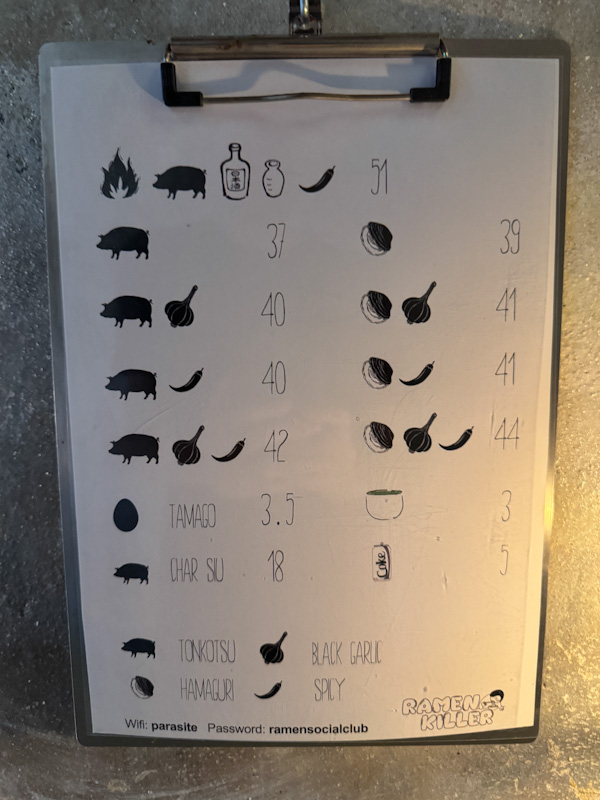
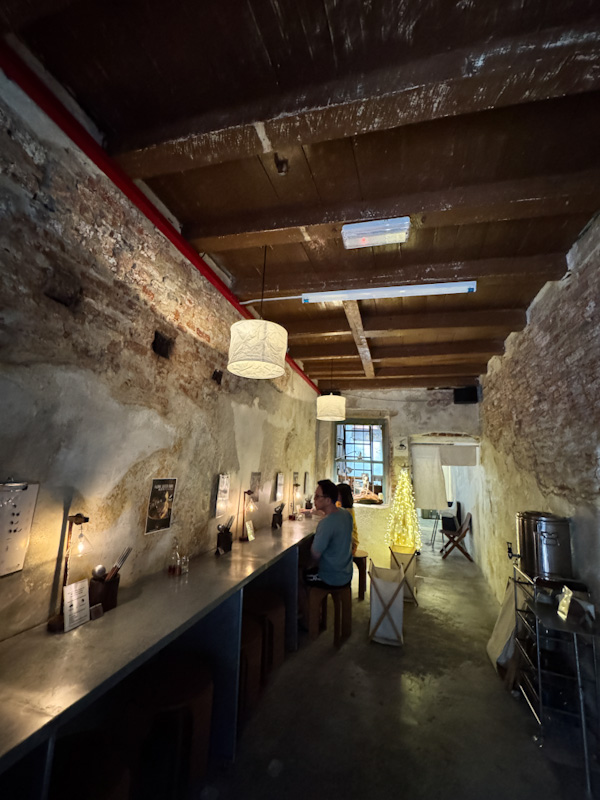
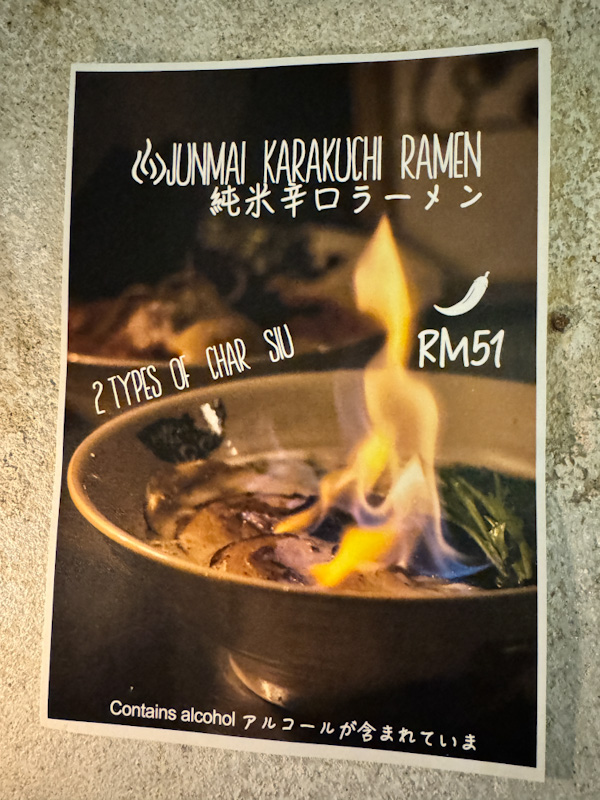
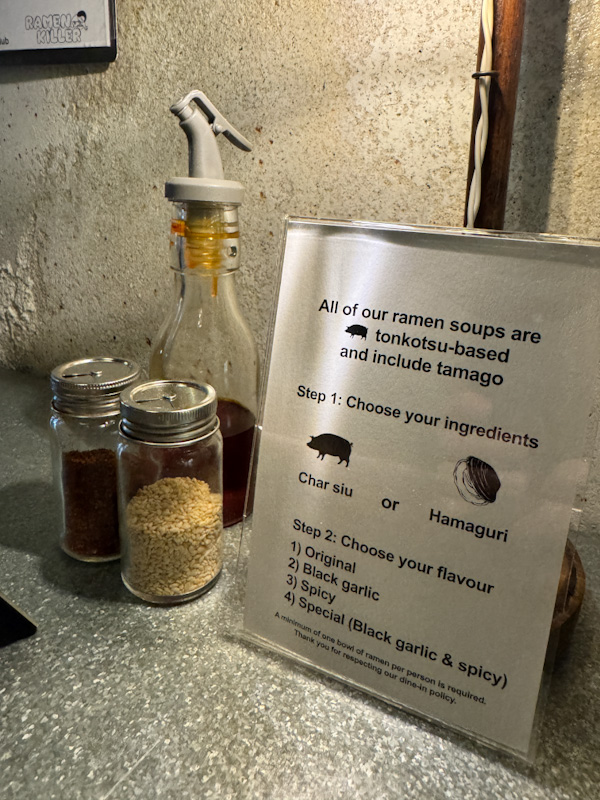
Ramen Killer, Penang (George Town): a reservation-only ramen bar that keeps its own door half-hidden
If you’re searching for Ramen Killer in Penang, here’s the quick orientation: it’s a reservation-only Japanese ramen bar in George Town, most often associated with Beach Street (Lebuh Pantai) and frequently tagged around “516, Beach Street / 516 Lebuh Pantai”, with posts also noting it’s near Khling Cafe. The store leans hard into controlled access, not foot traffic. Expect no walk-ins, very limited seating (often cited as about 10 seats), and limited portions per day (you’ll see “50 bowls” mentioned repeatedly across social posts).
What’s notable, and why it’s become a “bookmark first, eat later” kind of Penang ramen spot, is the way it structures the visit: booking is done online via a link shared on their socials, and multiple posts claim the exact address is revealed only after you’ve reserved. It’s basically a small-batch, timed-entry approach to ramen, which is uncommon in a city where most bowls are built for spontaneous makan. If you’re building a George Town food trail, this is the one you plan like an appointment.
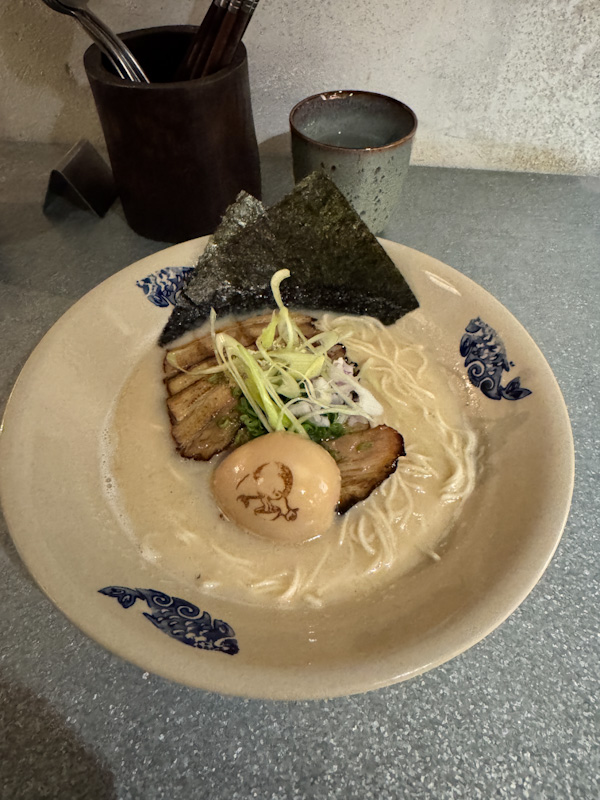

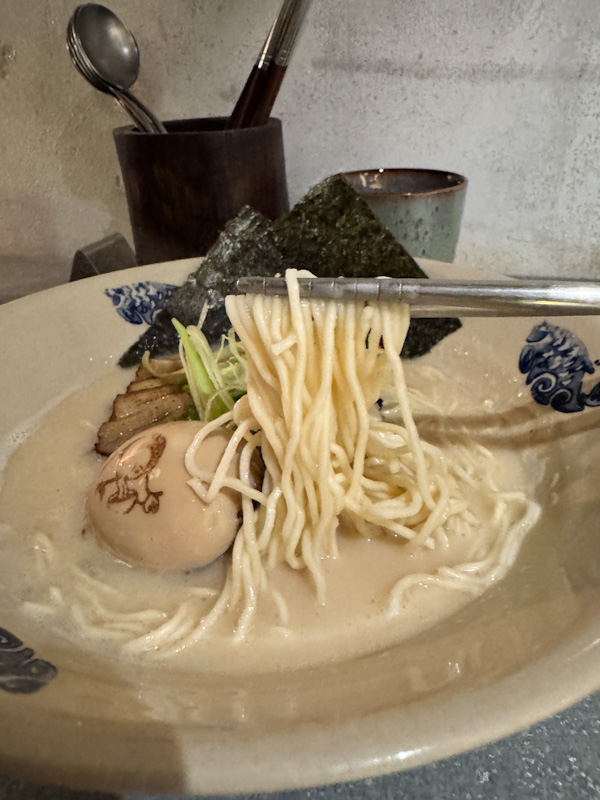

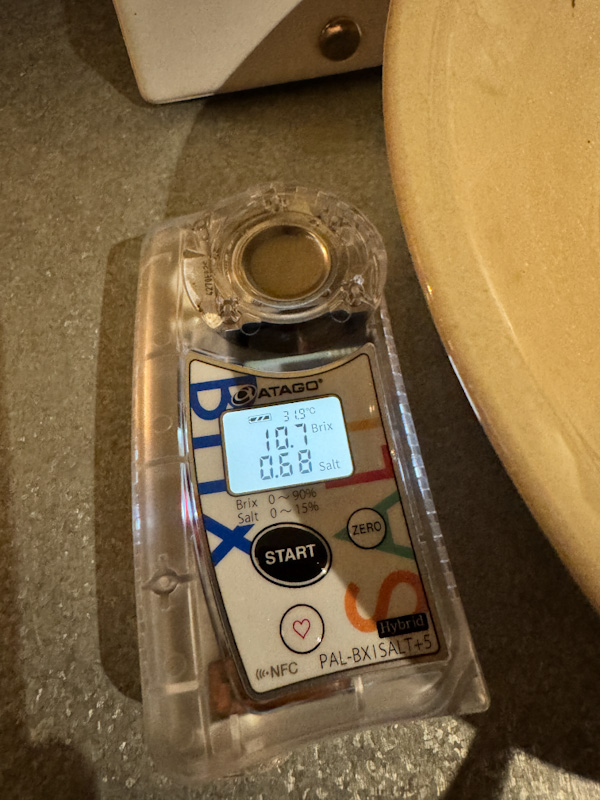
Original Ramen: 60/100
Noodle: 30/35
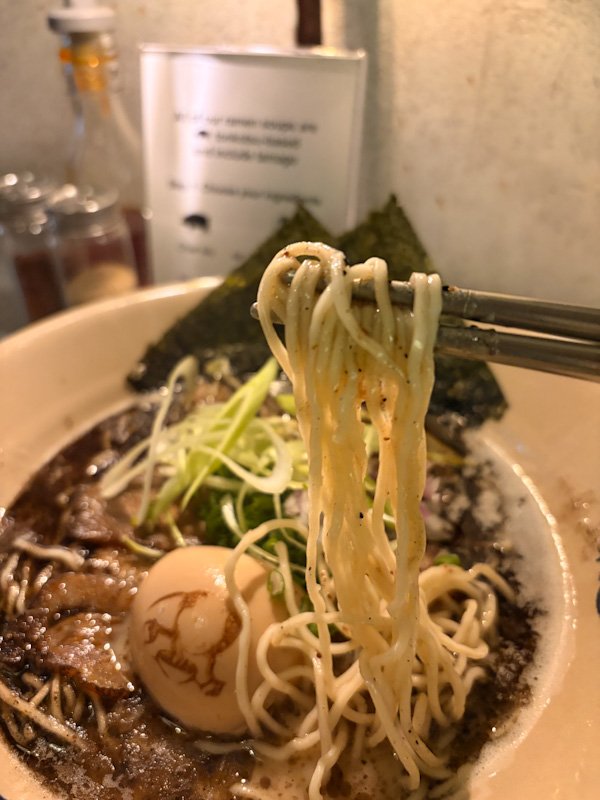
Medium-thin, wavy noodles served firm and al dente. Texture is the standout here, delivering a strong, satisfying bite that holds up well through the bowl. Mouthfeel is assertive and engaging rather than soft or yielding. In terms of taste, there is a nice earthy wheat flavour without any unpleasant kansui notes. When slurped, peppery notes surface clearly, linking the noodle experience closely to the soup’s seasoning profile.
Soup: 20/35
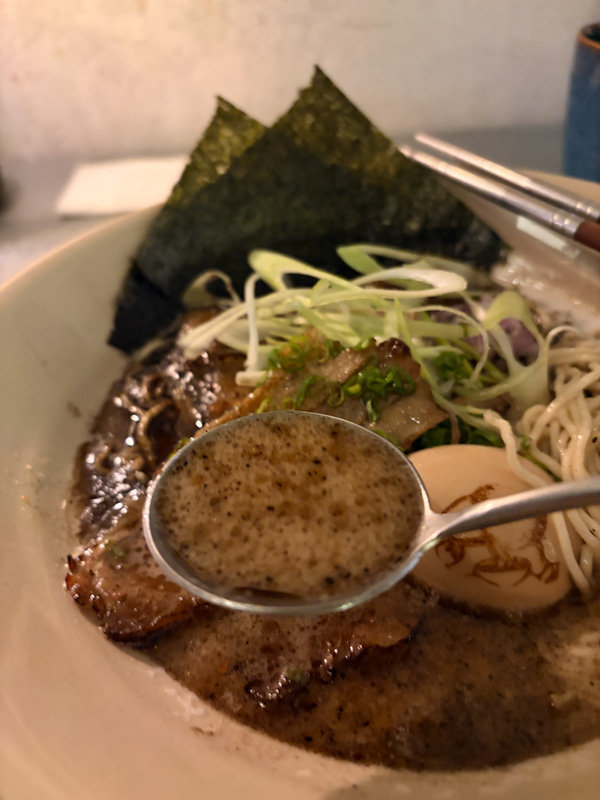
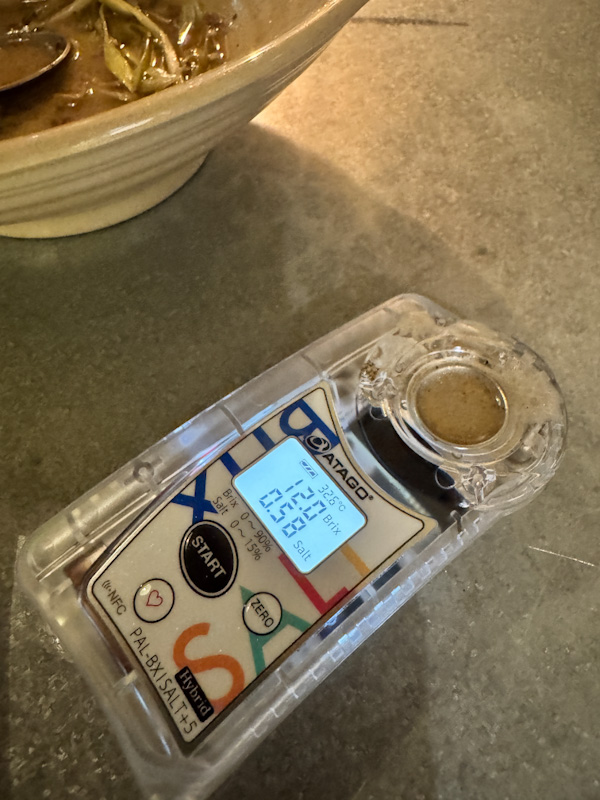
The head opens milky and lively, with a savoury profile driven by prominent peppery notes. The body thins out quickly, feeling light and lacking depth. Toward the end, the soup finishes with milky soy milk-like notes. On the positive side, it stays clean, not oily, and avoids the overwhelming soya bean heaviness common in many cookie-cutter tonkotsu bowls. On the downside, strong wok hey combined with heavy white pepper usage leaves a distinctive bitter taste lingering at the finish. Overall layering feels flat and thin, with little interpolation between head, body, and end.
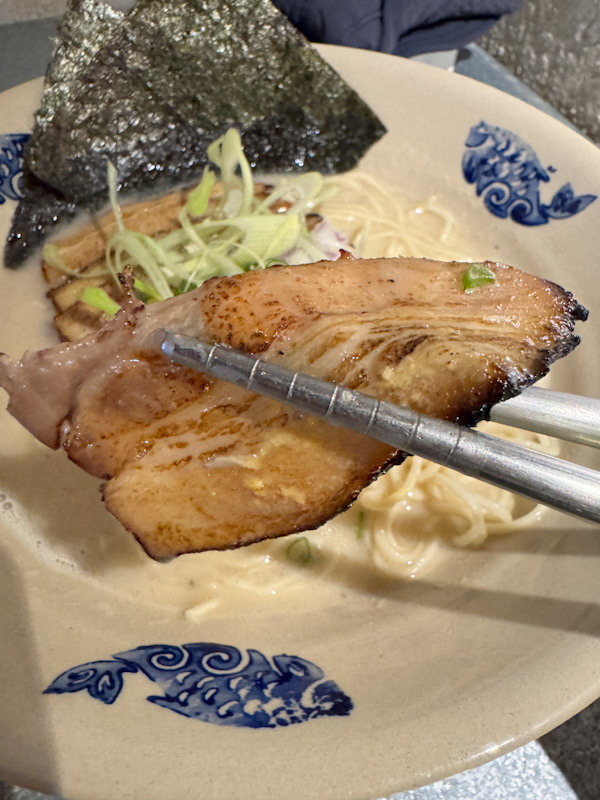
Meat: 5/20
The pork is sliced razor-thin but comes in a decently generous overall portion. Cut from pork belly, the texture is tough, dry, and cardboard-like. It sits awkwardly somewhere between a traditional chashu and pork jerky. Mouthfeel is uneven, with the fatty sections remaining chewy but lacking juiciness. Flavour-wise, the aburi smokiness is clearly present but lacks punch. The marination is acceptable but unremarkable, registering as mildly savoury. Due to the thin cut, some portions are slightly burnt, resulting in bitterness being the dominant note in those bites.
Other Toppings: 5/10
- Negi is fresh but not piquant enough to meaningfully layer flavour, and it appears to be the smaller local variant.
- Shiranegi is tough and slightly fibrous.
- The diced onion is cut too small, leading to a muted taste, and would benefit from a chunkier cut.
- Seaweed contributes a pleasant umami note.
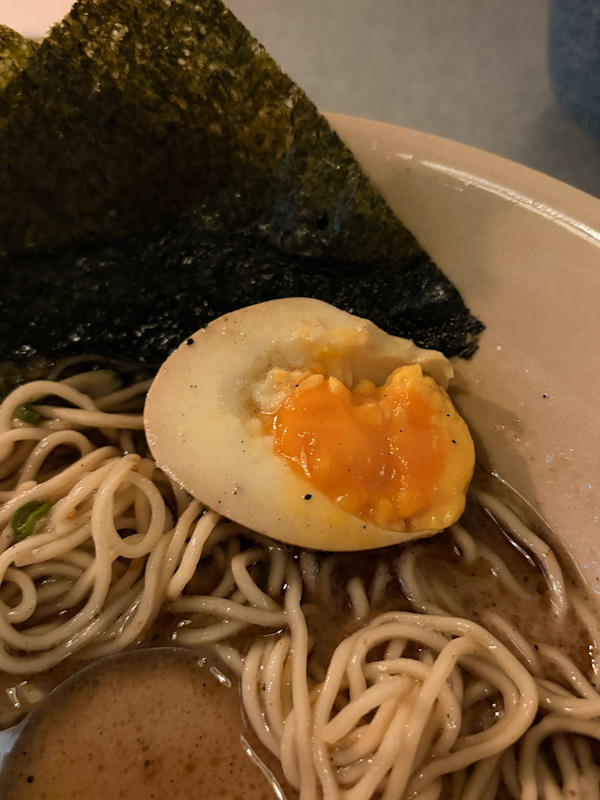
- The half marinated egg is savoury with a perfectly gooey texture and stands out as the most reliably executed topping.
Summary
This bowl shows signs of effort and experimentation, but there is still room to grow. The balance is off in several key areas. While the noodles perform well, the soup lacks richness and depth, particularly through the body, and the layering does not develop meaningfully. The tare is clearly lacking or missing, which leaves the broth feeling incomplete. There is intent here, but refinement is needed before the components come together cohesively.
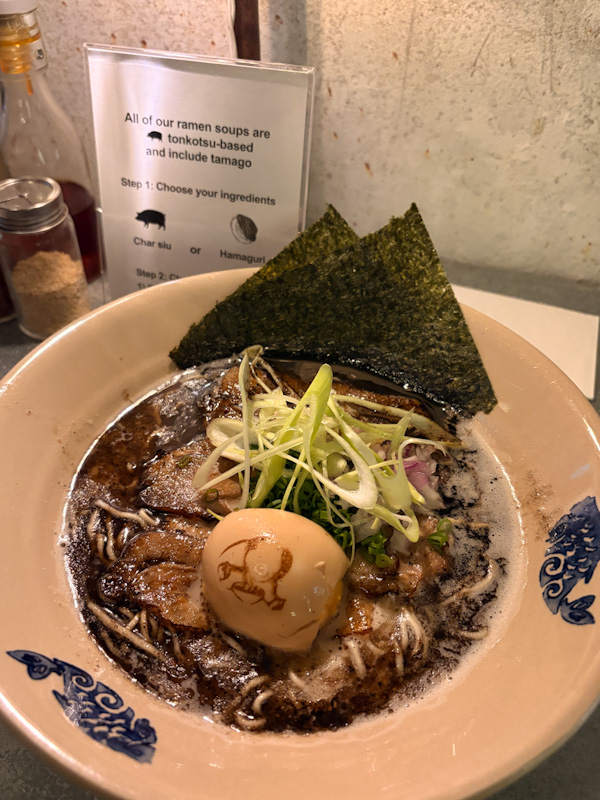
Black Garlic Ramen: 60/100
Noodle: 30/35
The same medium-thin, wavy noodles are used here, served firm and distinctly al dente. Texture remains the strongest element of the bowl, with a confident bite that resists softening even as the soup cools. The mouthfeel is assertive and slightly tacky, engaging the teeth rather than dissolving on contact. Wheat flavour comes through cleanly, earthy without any distracting alkaline edge.
Soup: 20/35
The head opens with clear garlic mayu aroma and flavour. The body carries a mildly savoury profile with a hint of heat, giving it slightly more presence compared to the original bowl. The end, however, cuts quickly into bitterness. While the initial buildup is interesting, the soup flattens fast. The combination of wok hey, peppery notes, and burnt garlic amplifies the bitterness issue, making it even more pronounced in this version.
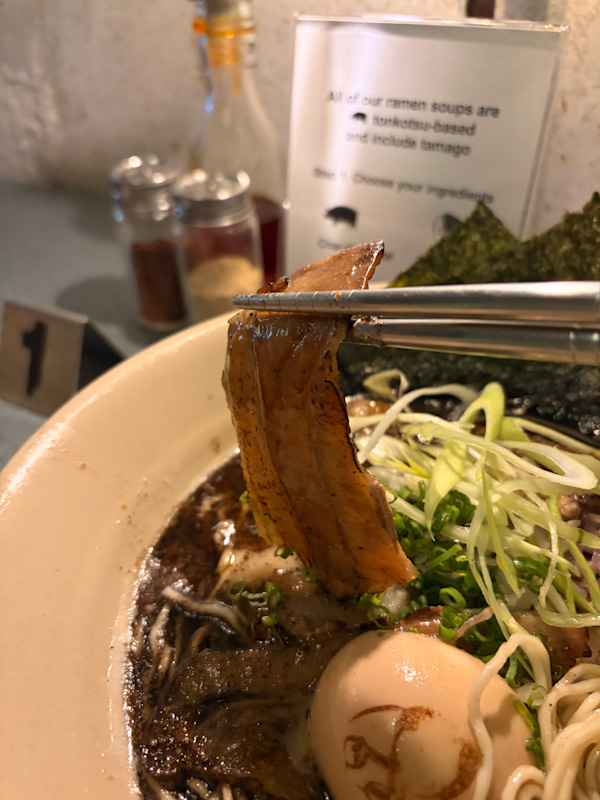
Meat: 5/20
Same chashu is used here. The chashu is sliced razor-thin but arrives in a reasonably generous portion. Cut from pork belly, the texture is tough and dry, landing awkwardly between traditional chashu and something closer to pork jerky. Mouthfeel is inconsistent, with fatty sections remaining chewy yet still lacking juiciness. The aburi smokiness is evident but muted, and the marination registers as mildly savoury without much character. Due to the thin cut, some slices tip into being slightly burnt, where bitterness becomes the dominant note and further compounds the issues already present in the soup.
Other Toppings: 5/10
The toppings mirror those used in other bowls here, with mixed results.
- Negi is fresh but lacks the piquant lift needed to meaningfully layer flavour, and it appears to be the smaller local variant.
- Shiranegi is on the tougher side and slightly fibrous.
- The diced onion is cut too finely, muting its aromatic impact and suggesting a chunkier cut would serve the bowl better.
- Seaweed contributes a clean, pleasant umami note.
- The half marinated egg is the standout, savoury with a perfectly gooey centre and the most reliably executed component in the bowl.
Summary
This black garlic ramen shows flashes of intent but struggles with familiar, fundamental issues. Balance is off in key areas, particularly in how bitterness is allowed to dominate the finish. While the body is marginally improved by the addition of black garlic tare, it is also the very element that sharpens the ending and exposes the lack of depth beneath. The noodles remain a high point, but the soup and protein fail to support them meaningfully. Overall, the bowl feels structurally unstable, with richness and layering needing more work before the individual components can come together cohesively.
DISCLAIMER
One man’s meat is another man’s poison.
Find out more about our palettes and how we evaluate our ramen here. 😉