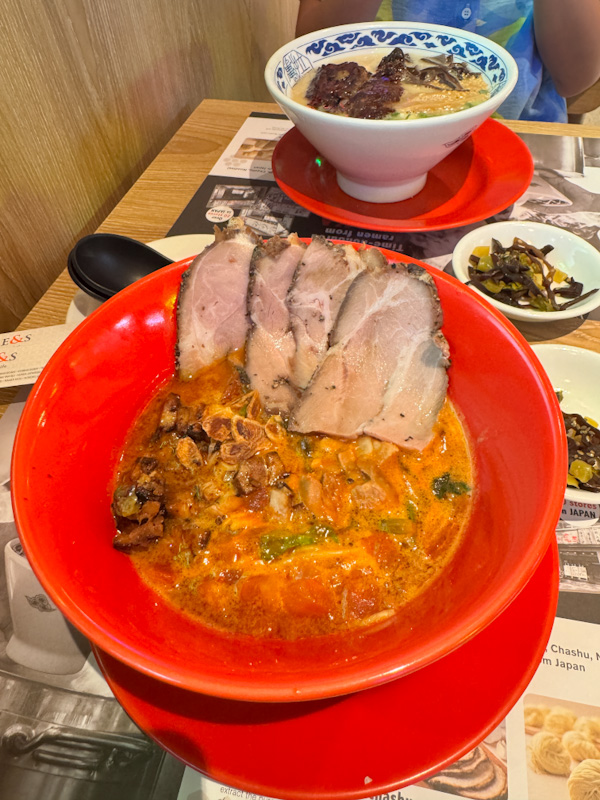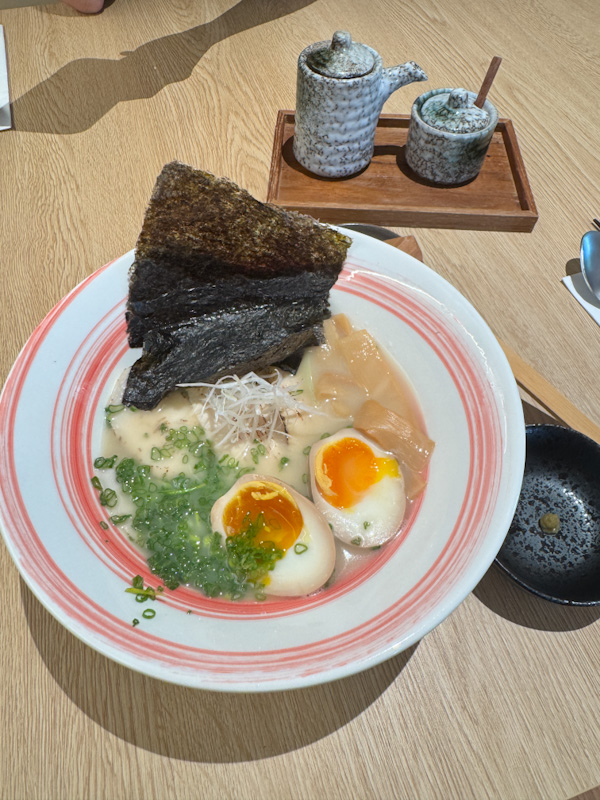
As of this 2026 guide, I’ve reviewed over 450 bowls of ramen, spanning multiple countries.
– Singapore: 279+ bowls
– Japan: 151+ bowls
– Other countries: 20+ bowls

While this guide focuses exclusively on Singapore ramen, my reference point is informed by extensive eating across Japan and beyond, which helps calibrate technique, balance, and stylistic intent. This context shapes how I judge balance, restraint, and intent, not just impact.
ABOUT THIS GUIDE
How This Singapore Ramen Guide 2026 Was Compiled
This is a Singapore-only guide. Only ramen restaurants and stalls physically operating in Singapore are considered.
All bowls referenced in this guide were personally dined in by me. Takeaway, delivery, or third-party impressions are excluded. Where possible, the bowls included here are based on revisits within the past 12 months, so the list reflects how these shops are performing now, not how they once were.
Fixed Evaluation Framework
To minimise subjectivity and fandom, I evaluate each bowl using a consistent framework that breaks ramen down into its core components:
- Noodle – shape, tension, mouthfeel, and flavour
- Soup / Sauce – assessed in layers, from the opening notes (head), through the body, to the finish
- Meat / Protein – cut, execution, texture, and how well it integrates with the bowl
- Other Toppings – whether they contribute meaningfully to balance and cohesion
This same framework is used across all reviews on AhBoyLikeRamen, allowing for more consistent comparison across styles and shops.
Consistency Over One-Off Brilliance
Authenticity matters more to me than a single great bowl prepared for a private invite. I prefer to visit anonymously and at irregular intervals, so what I’m served reflects what a regular customer is likely to get. Shops that maintain standards across repeat visits, and across multiple outlets where applicable, are also prioritised over those that shine once but fail to hold up over time.
What Does Not Automatically Qualify
This guide is not about finding the richest, thickest, most extravagant, or most value-for-money bowl. I place heavy emphasis on balance, clarity, and structure. Bowls that rely heavily on gimmicks, excessive oil, overpowering tare, or sheer portion size to create impact tend to score poorly with me. The same applies to styles where excess masks underlying weaknesses in technique or intent. Restraint, when done well, is often harder to execute than excess.
Why Pricing Is Not Factored In
Pricing is intentionally excluded from the scoring process. Ramen prices are influenced by factors beyond the bowl itself, including rental, staffing, location, and business model. Once price is introduced, evaluation inevitably drifts toward service, ambience, and perceived value, which moves the focus away from the ramen. This guide is therefore a judgement of the bowl alone, on its own terms.
WHY THIS 2026 GUIDE IS DIFFERENT
Over the past two years, I’ve spent extended time eating ramen across Japan, including attending workshops and classes that focus on technique and preparation. Understanding what happens during the cooking process, from soup extraction to tare construction and noodle handling, has sharpened my ability to detect nuance, imbalance, and overcompensation in a bowl. Flavours that once felt bold now reveal their shortcuts more quickly.
Equally important is exposure to breadth, not just volume. Eating across a wide range of cities and regional contexts has improved my sense of proportion. It has become easier to recognise when richness is doing real work, and when it is masking weak structure. Between 2024 and 2025, I spent close to a quarter of my life in Japan, covering 47 cities over multiple extended trips, which provided a deeper and more varied benchmark than before. As a result, the 2026 guide places firmer emphasis on clarity, restraint, and coherence. Bowls that rely on excess to impress tend to fall away faster, while those with clean flavour structure and intent hold up better on repeat visits. This shift doesn’t change what I look for in ramen, but it does sharpen how quickly I recognise it.
The State of Ramen in Singapore (2026)

The past year has been a difficult one for Singapore’s F&B scene, and ramen has not been spared. Rising operating costs, sustained rental pressure, and more cautious consumer spending have reshaped the landscape, resulting in the closure of several well-known names in 2025.

Long-running operators exited not because of sudden loss of relevance, but because the economics became increasingly hard to justify. Established brands such as Santouka closed their Clarke Quay outlet after 17 years in operation, while Kanada-ya exited Singapore entirely, shutting all remaining outlets across multiple malls. Even well-backed concepts were not immune, with TORIJIN, a pilot by Les Amis Group, closing earlier in the year. These departures marked the end of an era where scale and brand recognition alone were enough to survive.

What’s notable, however, is what emerged alongside these closures. Despite the challenging environment, 2025 saw a steady wave of new ramen shops entering the market. Many of these newcomers were smaller, more focused, and less interested in mass appeal. Instead of chasing maximalist bowls or social media spectacle, several leaned into clearer flavour structures, tighter menus, and more deliberate expressions of style, whether through shoyu-forward profiles, tori-based broths, or fish-led approaches. The appearance of shops such as Soshiji, Tori-san and Yakizakana Ramen signals a shift toward greater stylistic diversity, even as overall market conditions remain tough.

Taken together, the current ramen landscape in Singapore feels more polarised but also more defined. The middle ground is thinning. What remains are either operators with the discipline to execute consistently under pressure, or newer entrants willing to be precise rather than expansive. For diners, this means fewer safe, generic bowls, but a higher likelihood that a shop surviving today has a clearer point of view than before.
BEST RAMEN IN SINGAPORE 2026: BY CATEGORY
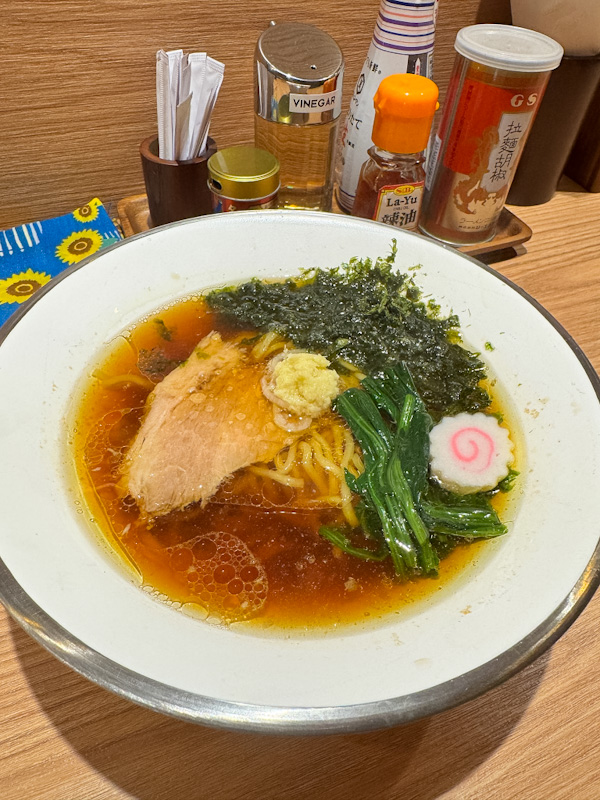
Best Shoyu Ramen in Singapore: Ginger Shoyu Ramen by Soshiji らーめん そしじ
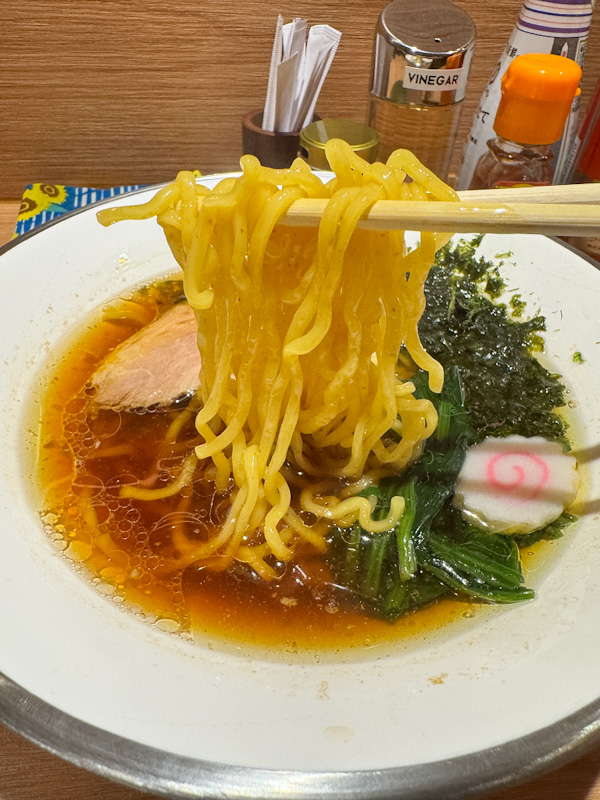
Dish to order: Ginger Shoyu Ramen
Style: Shoyu (Nagaoka-inspired ginger shoyu)
Why it made the list:
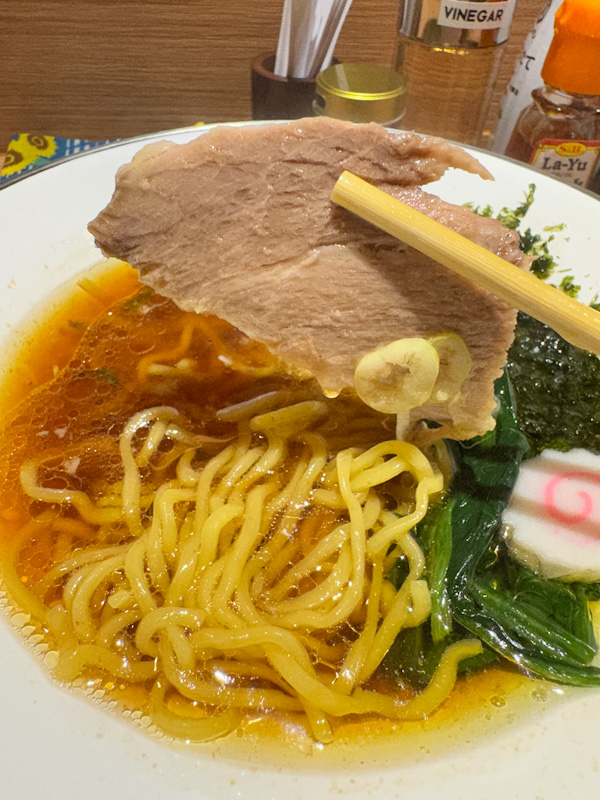
This bowl exemplifies what well-executed shoyu ramen should be: structured, warming, and quietly confident. The broth opens with aromatic chicken oil before settling into a deep, savoury soy body, threaded throughout with ginger that adds warmth without sharpness. What stands out most is restraint. The flavours build gradually, finishing clean and tangy, with no reliance on excess oil or theatrics to create impact. The medium-thick curly noodles are an ideal match, delivering a taut, mochi-mochi bite with enough wheat character to engage the broth rather than disappear into it.
Who is this bowl for:
This is shoyu ramen for diners who value structure over punch. Ideal if you enjoy ramen that is warming but not heavy, savoury without being aggressive, and balanced enough to eat regularly. It’s especially suited for those who find overly rich or oily bowls fatiguing, and prefer flavour that unfolds rather than overwhelms.
What to know before ordering:
The chashu leans on the leaner side, favouring structure over juiciness. If you enjoy additional savoury depth, the kombu ginger available at the table adds a pleasant salty lift without disrupting the broth’s balance.
Best Shio Ramen in Singapore: Shio Ramen by Enishi
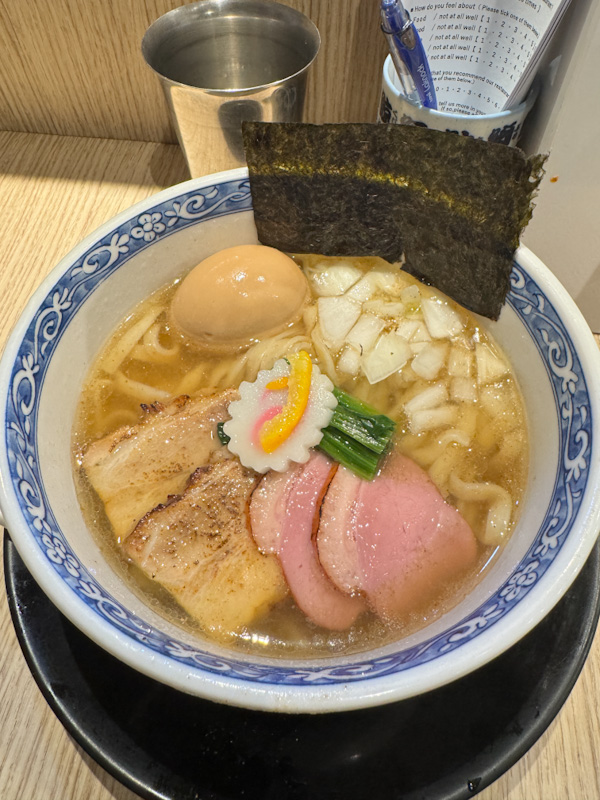
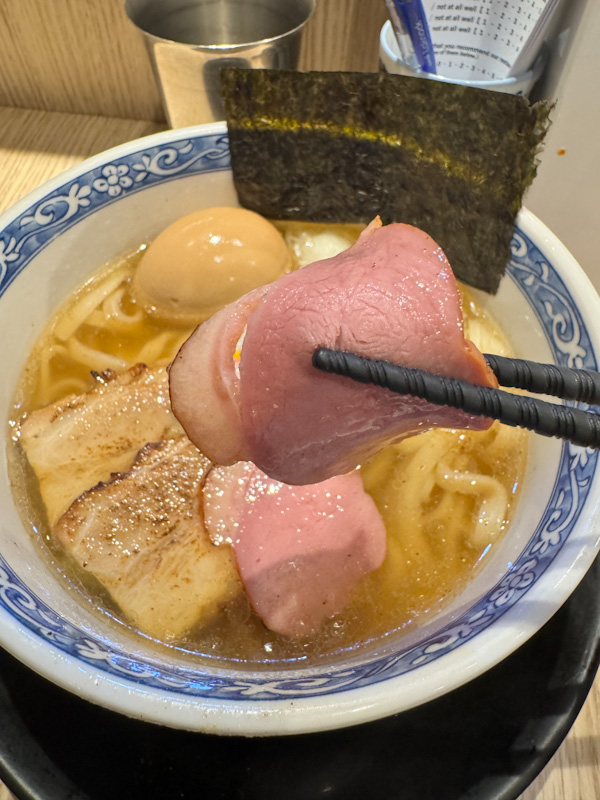
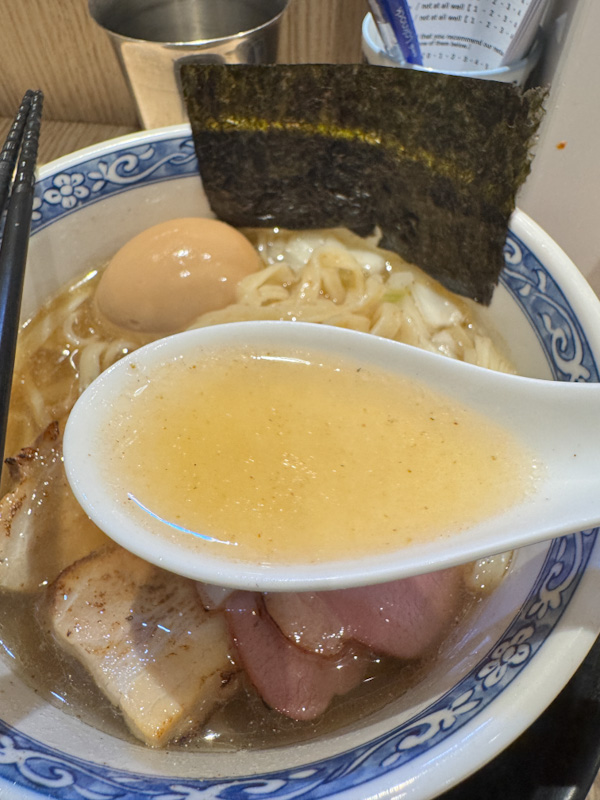
Dish to order: Shio Ramen
Style: Yuzu-infused Shio
Why it made the list:
This bowl stands out for its clarity and composure, which is exactly what great shio ramen should deliver. The broth is crisp and clean, opening with a gentle citrus lift from yuzu before settling into a mellow sweetness and well-calibrated umami. It doesn’t demand attention, but it quietly holds the bowl together, allowing each component to register without competition.
What elevates this shio beyond most is the protein execution. The pairing of grilled chashu and smoked duck adds depth and contrast without overwhelming the soup. The pork belly is firm yet yielding, while the duck brings a savoury smokiness that integrates seamlessly with the light broth. Even with the noodles running softer than ideal on this visit, the overall structure remains coherent, anchored by a soup that knows exactly what it wants to be.
Who is this bowl for:
This is shio ramen for diners who prioritise clean flavours and balance over noodle theatrics. Ideal if you enjoy light, composed bowls where the broth leads quietly and proteins add dimension rather than weight. It’s especially suited for those who find heavy or oily ramen tiring, and prefer something calm, savoury, and easy to finish.
What to know before ordering:
Noodle texture can skew softer than expected, which may disappoint if you’re particular about bite. That said, the strength of the broth and protein pairing carries the bowl comfortably even when the noodles aren’t at their peak. Or you can also tell the chef upfront you want harder noodles when ordering.
Best Tonkotsu Ramen in Singapore: Kurobuta Toroniku Shoyu Ramen by Yokohama Ramen
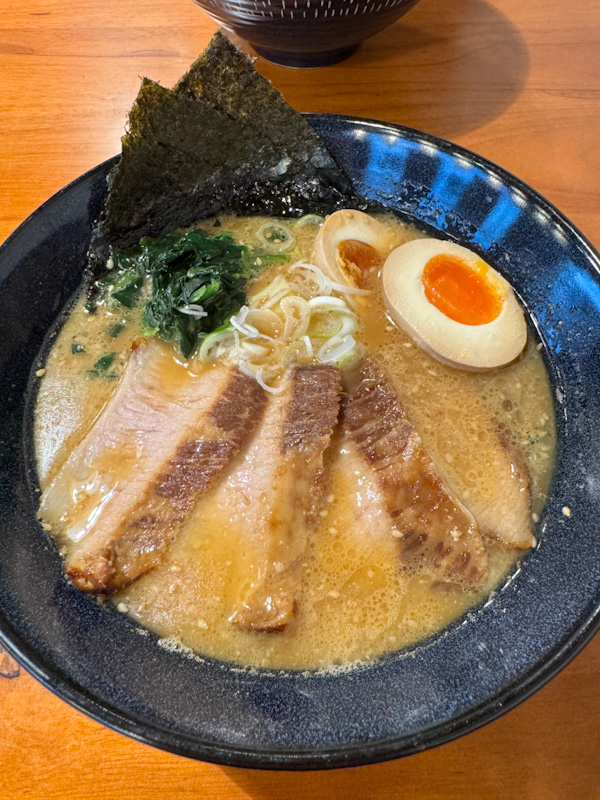
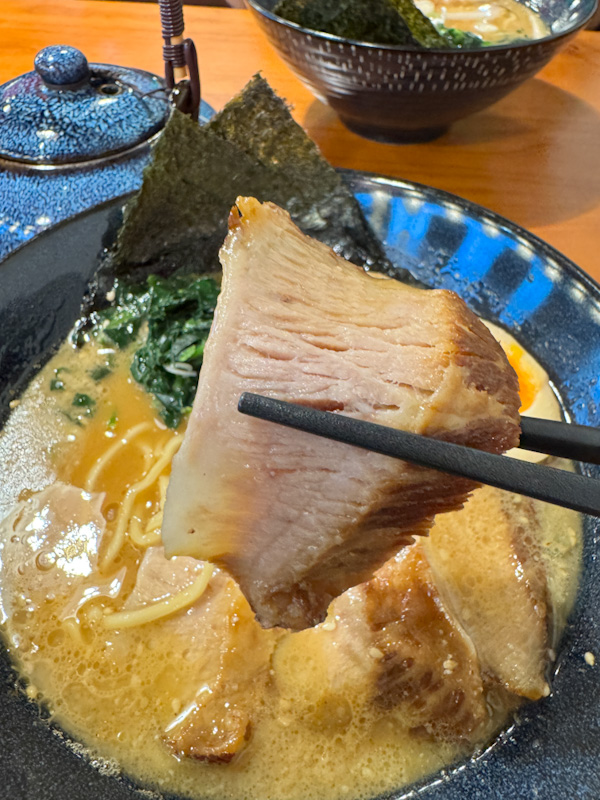
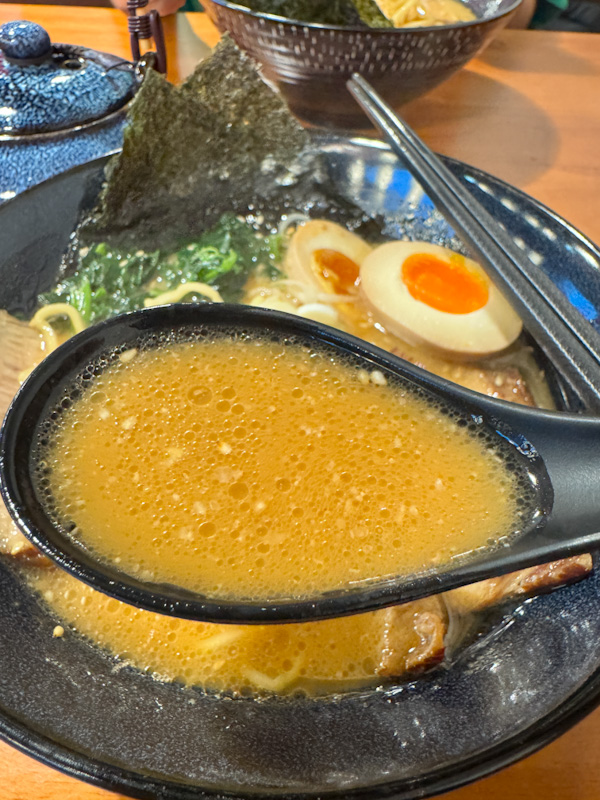
Dish to order: Kurobuta Toroniku Shoyu Ramen
Style: Yokohama Iekei
Why it made the list:
This bowl represents a more measured interpretation of tonkotsu, one that prioritises structure and ingredient quality over sheer saturation. The broth opens savoury and pork-forward, carrying a gentle sweetness and clean saline line through the body, without tipping into the heavy, lip-coating intensity that often defines the style. Instead of overwhelming, it stays controlled, allowing the other elements to remain clearly legible.
Where this ramen truly distinguishes itself is in execution. The noodles are exemplary, holding a firm, resilient bite throughout the bowl, and providing a stable backbone for the soup. The toroniku, made from Hokkaido-imported Kurobuta pork cheek, delivers the depth that many tonkotsu bowls attempt to force through broth alone. Soft, melting, and richly savoury, it brings a level of pork richness that feels deliberate rather than excessive, anchoring the bowl with confidence.
Who is this bowl for:
This is tonkotsu ramen for diners who want pork richness without heaviness. Ideal if you enjoy premium pork cuts, excellent noodle texture, and a cleaner, less oppressive tonkotsu profile. It suits those who find ultra-thick, fatty broths overwhelming, but still want the comfort and savoury depth associated with the style.
What to know before ordering:
If you’re chasing a deeply creamy, lip-coating tonkotsu, this may feel restrained. The strength here lies in the toroniku and noodle execution rather than broth intensity, making it a more measured take on the genre.
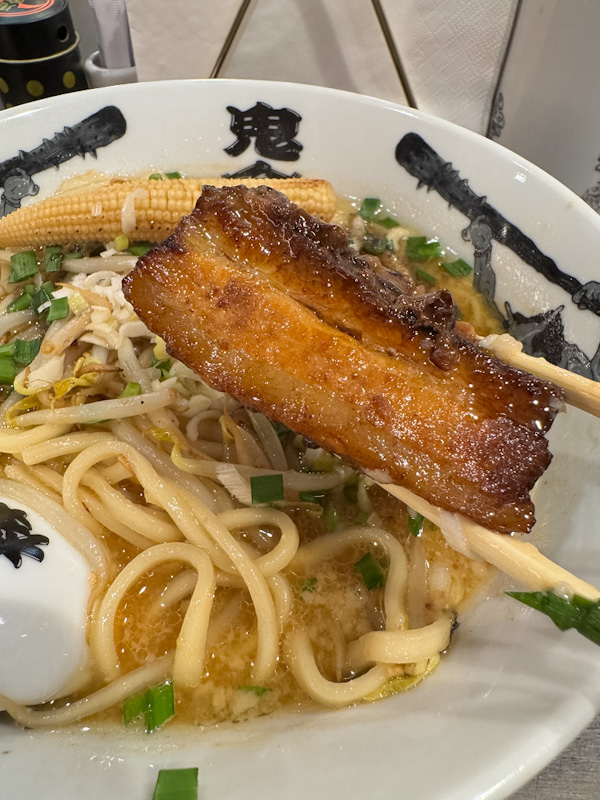
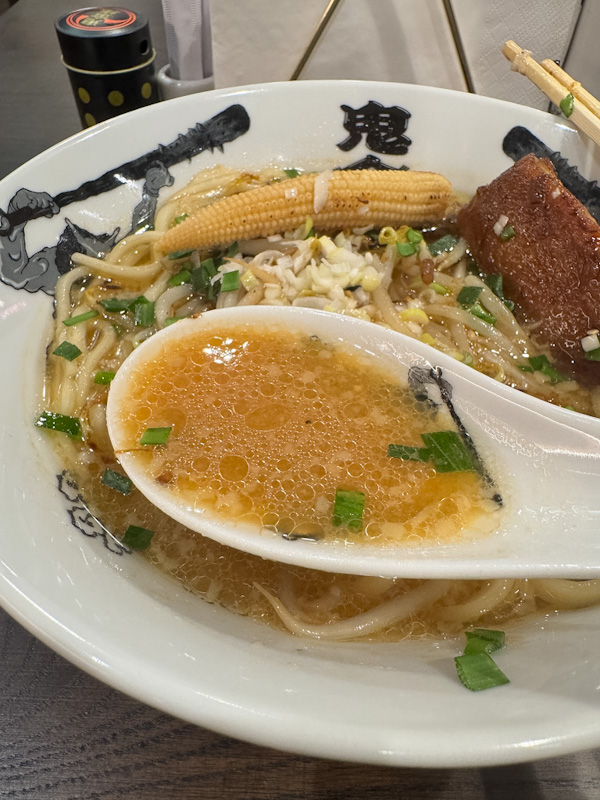
Best Miso Ramen in Singapore: Karashibi Miso Ramen by Kikanbo 鬼金棒
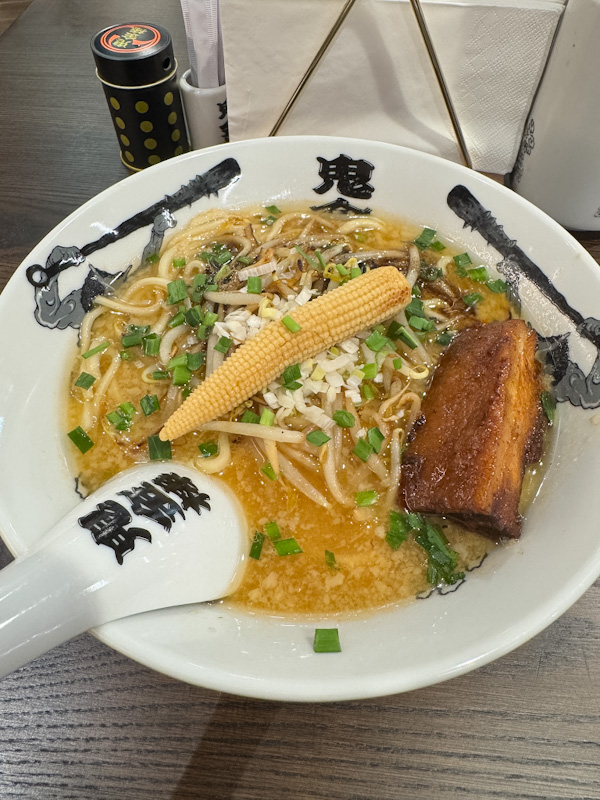
Dish to order: Karashibi Miso Ramen
Style: Spicy miso
Why it made the list:
This is a straightforward call. At the time of writing, there is no other miso ramen in Singapore that comes close to the technical standard and completeness of Kikanbo.
The noodles set the foundation. Thick, flattish, and substantial, they deliver a firm, chewy resistance with just enough mochi-like bounce to stay engaging without becoming gummy. Their clean wheat profile holds its own against the density of the soup, ensuring the bowl never collapses into a one-note affair.
The miso broth is compact and forceful in its sequencing. Savoury notes hit first, followed by a nutty, lightly sweet body, before settling into a lingering miso umami finish. Rather than unfolding slowly, the flavours arrive in deliberate bursts, each peaking and receding with intent. Even with chilli dialled down and sansho kept restrained, the broth retains weight and presence, anchored by oil that gives it a clingy, palate-coating texture.
What completes the bowl is contrast. The braised pork belly is bold and indulgent, occasionally edging toward heaviness, but the supporting toppings pull things back. The baby corn, in particular, stands out: smoky, tender, and unexpectedly sweet, providing relief and texture in a bowl that could otherwise tip into excess.
Who is this bowl for:
This is miso ramen for diners who want density, impact, and assertive flavour. Ideal if you enjoy hearty noodles, rich broths, and bowls that make no attempt to be subtle. It suits those who see miso ramen as an indulgence rather than an everyday option, and who appreciate intensity more than restraint.
What to know before ordering:
The bowl runs rich and oily, especially toward the end, and the pork belly can feel heavy if you’re sensitive to grease. Chilli and sansho levels are customisable, and adjusting them meaningfully changes the experience. Expect queues — this outlet is consistently busy.
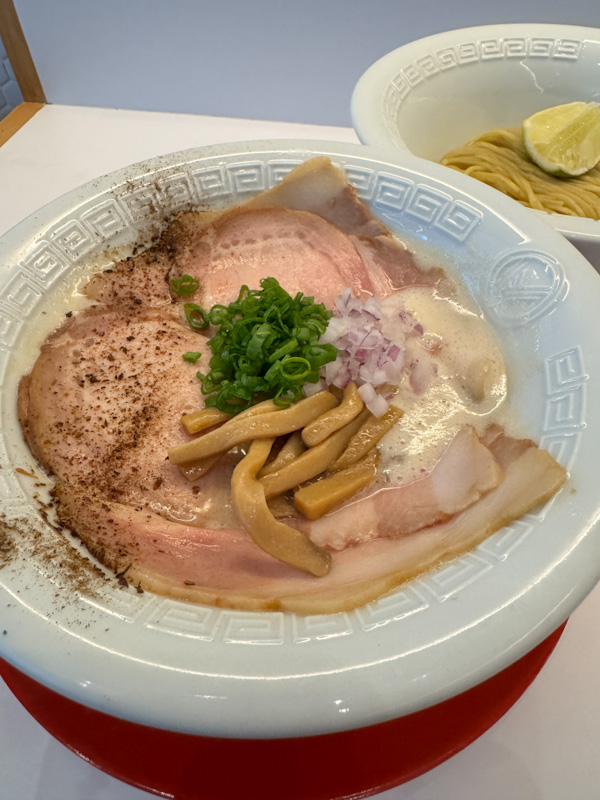
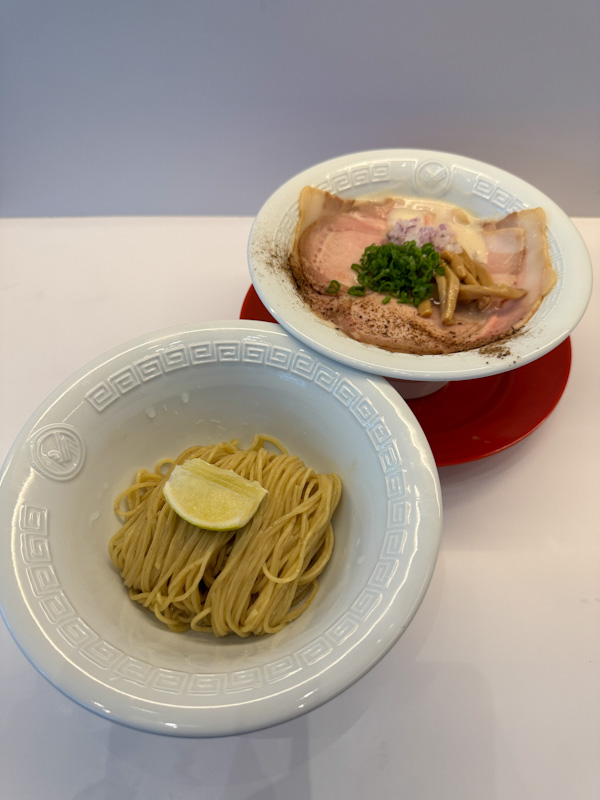
Best Tsukemen Ramen in Singapore: Toripaitan Tsukemen by Mensho X
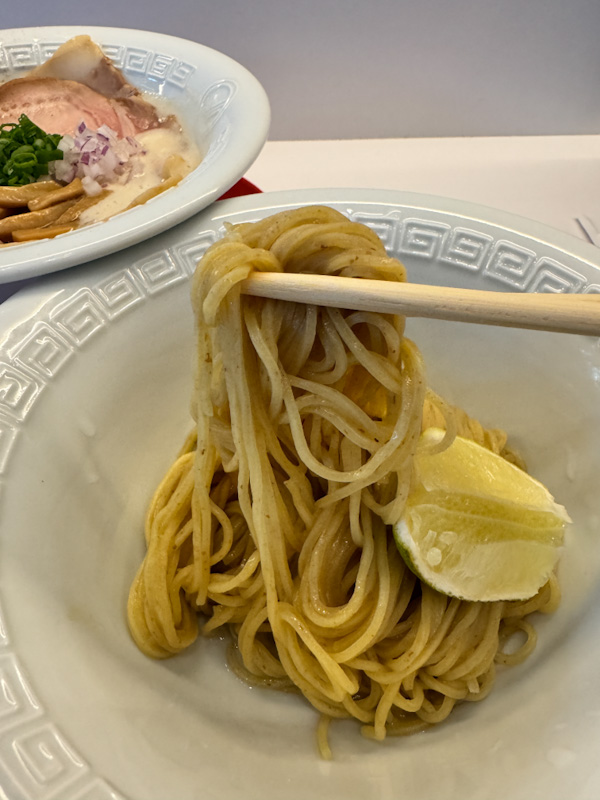
Dish to order: Toripaitan Tsukemen
Style: Dipping noodles
Why it made the list:
The noodles immediately set this bowl apart. Thin, straight, and lightly speckled, they carry a quiet, refined elasticity rather than the overt mochi-mochi bounce common to tsukemen. There’s an earthy, almost soba-like nuttiness to the wheat that gives them an artisanal character, allowing them to engage the soup without being swallowed by it.
The toripaitan dipping soup is where Mensho X fully asserts its intent. Instead of opening with richness, it begins with a sharp, citrus-driven acidity that snaps the palate awake before easing into a creamy, savoury chicken body. The transition is controlled and layered, finishing with a subtle sweetness and nutty undertone that keeps each dip engaging rather than fatiguing. It’s a rare tsukemen broth that evolves across the bite instead of simply coating it.
Proteins and toppings reinforce this sense of restraint and precision. The pork ribeye chashu is tender, balanced, and respectful of its own flavour, while the mushroom “menma” and porcini dust add texture and aroma without spectacle. Even the lime is purposeful, brightening the noodles and amplifying the broth’s acidity rather than acting as a garnish.
Who is this bowl for:
This tsukemen is for diners who enjoy thoughtful, non-traditional ramen. Ideal if you appreciate acidity, layered structure, and noodles that lean elegant rather than indulgent. It’s not comfort food, and it doesn’t try to be. Instead, it rewards attention and curiosity, making it especially appealing to those who enjoy modern, boundary-pushing bowls.
What to know before ordering:
The sour opening and unconventional noodle profile may surprise first-timers. If you’re expecting a heavy, fish-powder-driven tsukemen, this will feel very different. Approach it with an open palate and let the structure reveal itself over time.
Best Mazesoba Ramen in Singapore: Mochi Mochi Mazemen by Mensho X
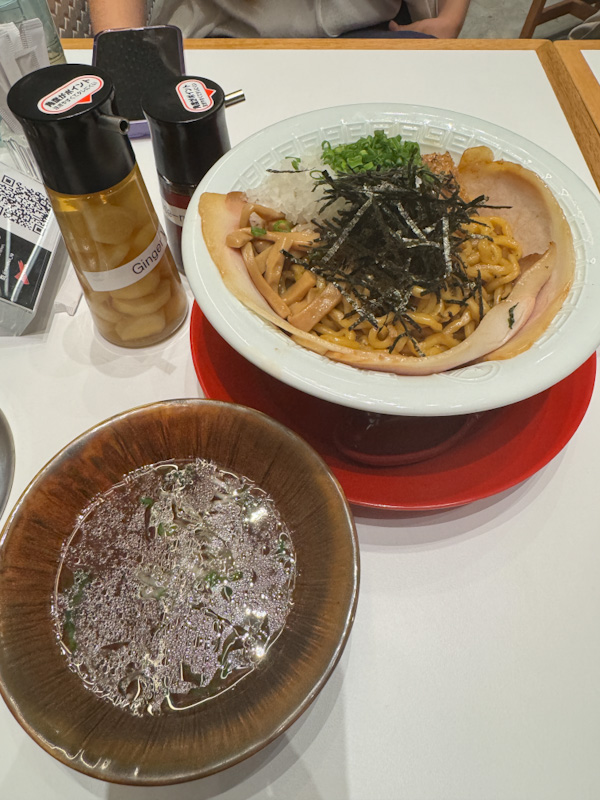
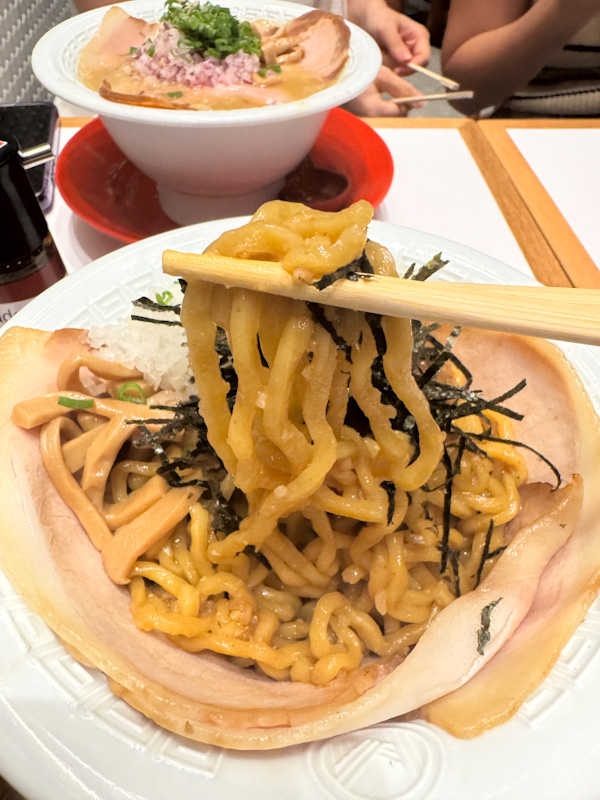
Dish to order: Mochi Mochi Mazemen
Style: Dry noodles
Why it made the list:
This was the hardest category for me to settle on.
Singapore has no shortage of strong mazesoba, and the decision came down to a short list that included Yokohama Ramen, Keitaku, Menya Kokoro, Nikutosake, and Ume San 100. Each executes their own style competently, and on any given day, several of these could be satisfying choices.
What ultimately set Mensho X apart was distinctiveness. If I had to choose just one bowl that best represents what mazesoba can be beyond comfort and familiarity, this was it. The noodles are thick, curly, and genuinely mochi-mochi, delivering a chew that feels intentional rather than excessive. There’s a clear wheat-forward character that gives the bowl density and substance, allowing it to stand up to the sauce without losing identity.
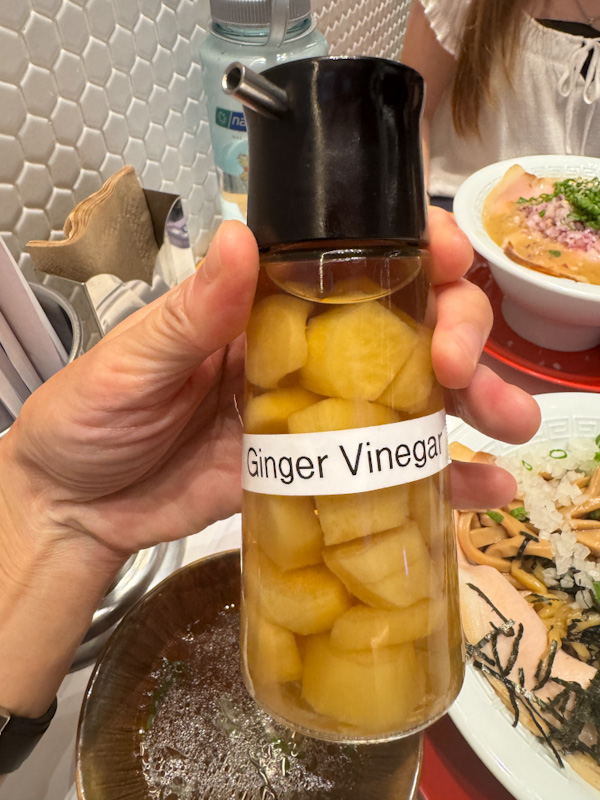
The sauce structure reinforces that individuality. A dense, umami-rich base clings to the noodles with conviction, while the ginger vinegar, added in measured rounds, lifts and amplifies flavour rather than simply cutting through it. The balance feels tuned, not improvised. Even the clear side soup plays a supporting role, refreshing the palate without pulling focus from the noodles.
Protein and toppings complete the picture with restraint. The chicken chashu is thin, tender, and evenly cooked, contributing clean savoury notes with a subtle sweetness. Supporting elements, from pickled mushrooms to seaweed and a small scoop of rendered fat, add texture and body without pushing the bowl toward greasiness. Together, they create a mazesoba that feels deliberate, considered, and recognisably its own.
Who is this bowl for:
This is mazesoba for diners who enjoy distinctive, noodle-driven bowls and are curious about expressions that move beyond the familiar. Ideal if you value chew, wheat flavour, and layered umami more than heat or maximalist seasoning. It’s especially appealing if you’ve already tried the usual mazesoba suspects and want something that feels clearly different.
What to know before ordering:
The chilli oil is optional and meaningfully alters the profile. If you’re tasting this for the first time, consider starting without it to understand the base balance before introducing heat.
Best Light & Clean Ramen in Singapore (Low Oil, Clean Finish): Niigata Shoyu Ramen by Sanpoutei
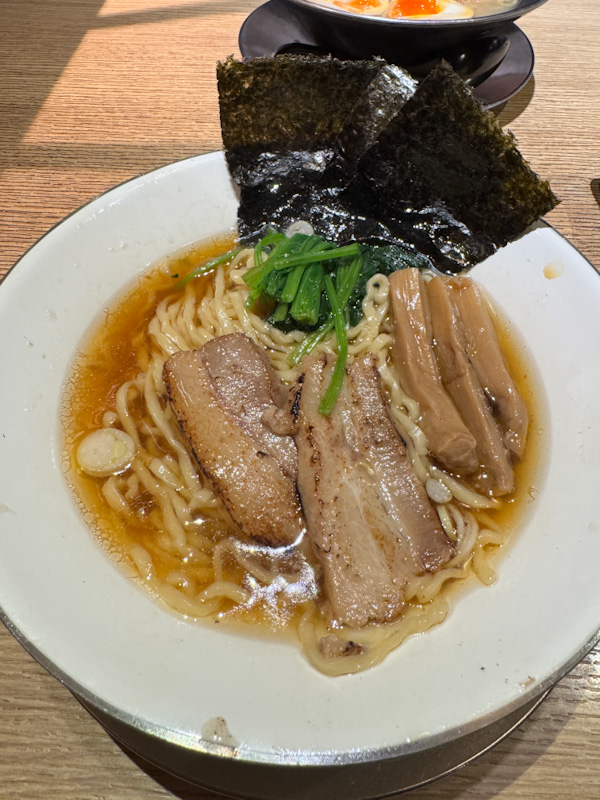
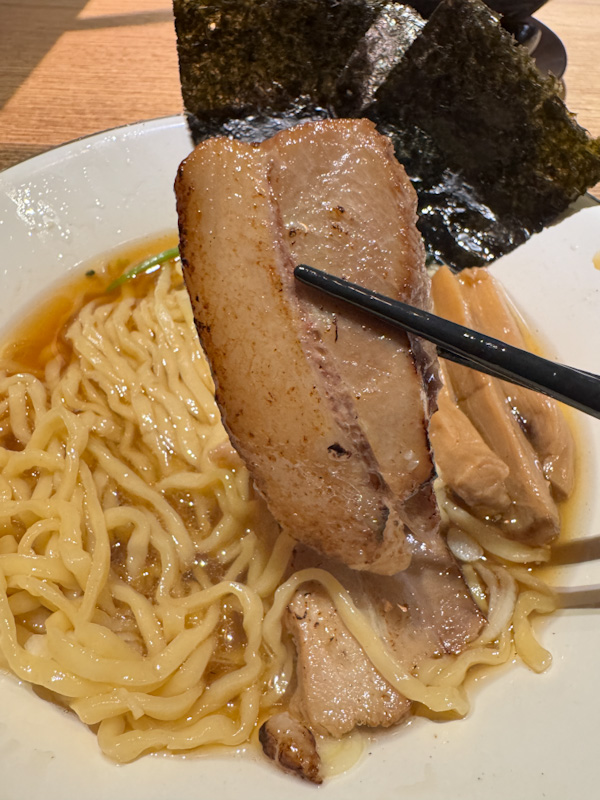
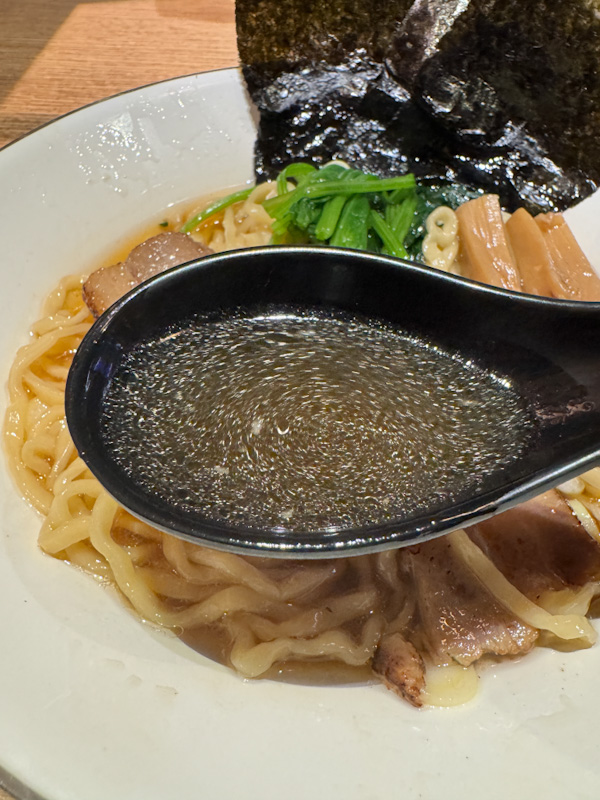
Dish to order: Niigata Shoyu Ramen
Style: Classic Chintan Shoyu
Why it made the list:
This bowl captures what light and clean ramen should feel like when executed with intent. Sanpoutei’s Niigata Shoyu Ramen is built on restraint, but never feels thin or underpowered.
There’s nothing immediately “wow” about it, and that’s precisely its strength. The shoyu broth opens with deep savouriness before settling into a balanced, measured body that glides across the palate without oiliness or weight. The soy aroma lingers briefly, then fades into a dry, clean finish. It doesn’t demand attention or try to impress; instead, it warms you gently and leaves you wanting another sip.
The noodles reinforce this sense of comfort and control. Thick and slightly flat, they offer structure without resistance, sitting comfortably between softness and bite. Their faint nutty wheat note rounds out the broth, staying clean on the palate with none of the alkaline harshness that can distract in brighter yellow noodles. Together, noodle and soup work in quiet alignment rather than competition.
Supporting elements stay deliberately minimal. The upgraded pork belly adds gentle richness through caramelisation and a touch of smokiness without tipping the bowl toward heaviness, while bamboo shoots and negi contribute texture and lift. Nothing is excessive, and nothing feels ornamental.
Who is this bowl for:
This is ramen for diners who value clarity, balance, and a clean finish. Ideal if you tend to avoid oily or overly rich bowls, or if you’re looking for something comforting and warming rather than exciting. It’s the kind of ramen you reach for when you want to feel settled, not stimulated.
What to know before ordering:
If you’re chasing bold impact or dramatic flavours, this may feel understated. The appeal here lies in comfort, restraint, and a finish that stays light to the very last sip.
Best Rich & Heavy Ramen in Singapore (High Fat, High Impact): KOTTERI Collagen Ramen by Morinaga Ramen Izakaya
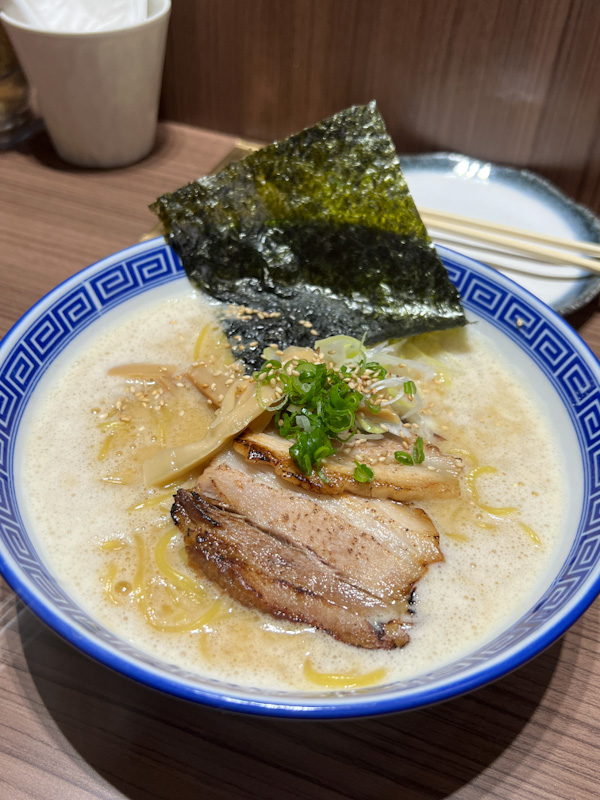
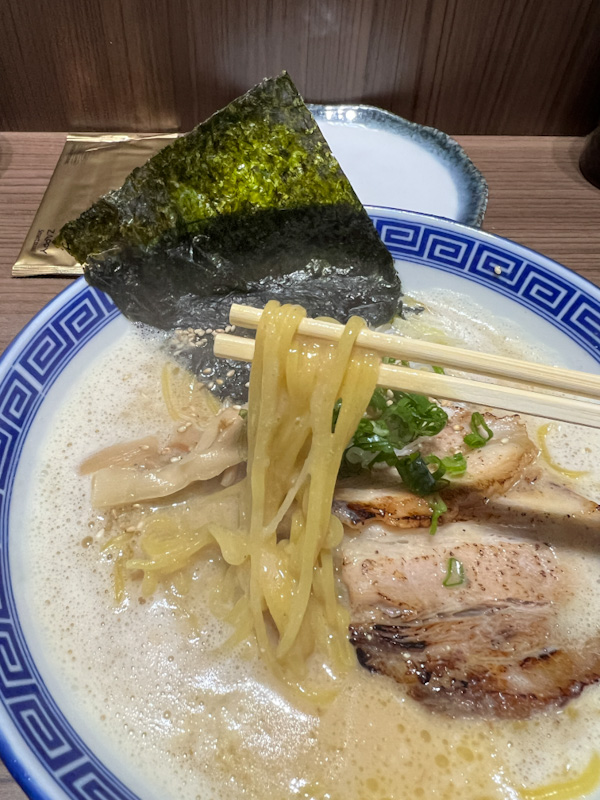
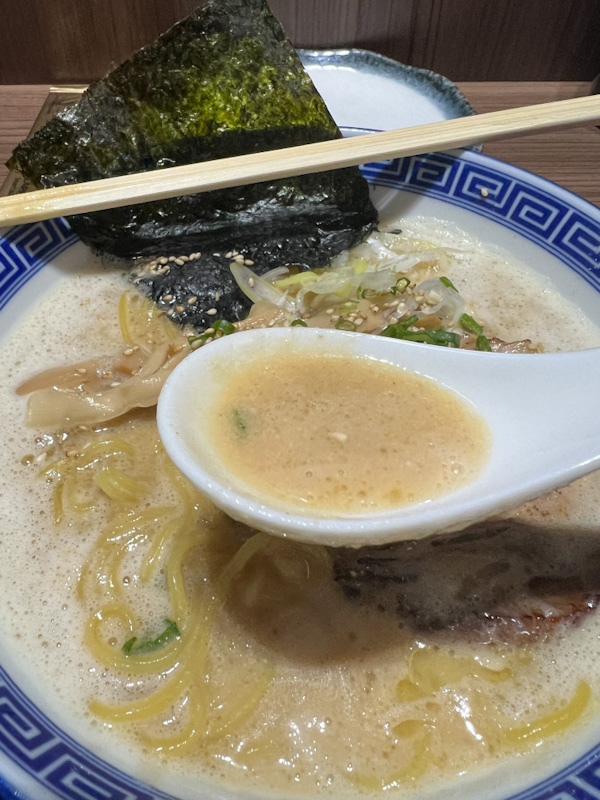
Dish to order: KOTTERI Collagen Ramen
Style: Kyoto-style ultra rich Toripaitan
Why it made the list:
Authentic kotteri ramen, as it exists in Japan, is still largely missing in Singapore. That deeply emulsified richness, the foamy surface, the dense yet rounded mouthfeel — it’s a style that rarely translates well outside its home context. Within that reality, Morinaga’s KOTTERI Collagen Ramen comes closer than anything else I’ve encountered locally.
This bowl doesn’t attempt to mimic kotteri through brute force. Instead, it approaches the style with control and clarity. The collagen-heavy soup arrives crowned with a foamy, cappuccino-like head, immediately signalling density and depth. The texture is lush and viscous, yet notably clean for its weight. Rather than tipping into gamey heaviness, the broth opens nutty and gravy-like, settles into a savoury, meaty body, and finishes with a gentle sweetness and faint shoyu aroma that lingers without fatigue. That this level of impact is achieved with relatively low salinity speaks to construction, not excess.
The supporting elements are tuned to this richness. Medium-thin straight noodles retain their bite even as they soak, providing structure against the broth’s viscosity. The aburi-grilled pork belly chashu adds a second layer of indulgence: caramelised, smoky, and substantial, asking for a few deliberate chews before releasing its flavour. It’s richness with texture, not collapse.
Toppings are familiar but purposeful. Negi and bamboo shoots introduce lift and contrast, while seaweed and toasted sesame echo the broth’s nutty undertones. Nothing here is ornamental. Everything exists to pace a bowl that could easily have tipped into excess, but doesn’t.
Who is this bowl for:
This is ramen for diners who actively crave heaviness and mouth-coating texture, and who understand that true kotteri is as much about feel as flavour. Ideal if you’re looking for the closest local approximation to the rich, foaming bowls you’d expect in Japan, rather than a toned-down, everyday ramen.
What to know before ordering:
This is a slow, filling bowl. Expect lingering richness and a full-bodied finish. It rewards patience more than speed, and is best approached when you’re prepared to sit with its weight.
Best Modern & Experimental Ramen in Singapore: Tomato Paitan by Raakki Ramen Bar & Slow-cooked Oyster Broth (Koeru) by Next Shikaku
This category recognises bowls that depart from traditional ramen templates, whether through non-classical ingredients, alternative protein strategies, or contemporary flavour construction. Rather than measuring them against orthodox styles, these bowls are judged on whether the ideas hold together as ramen — structurally, texturally, and in how they eat from start to finish.
In a ramen landscape that is still relatively conservative, these entries stand out not for shock value, but for showing what ramen can be when technique is applied with intent and restraint.
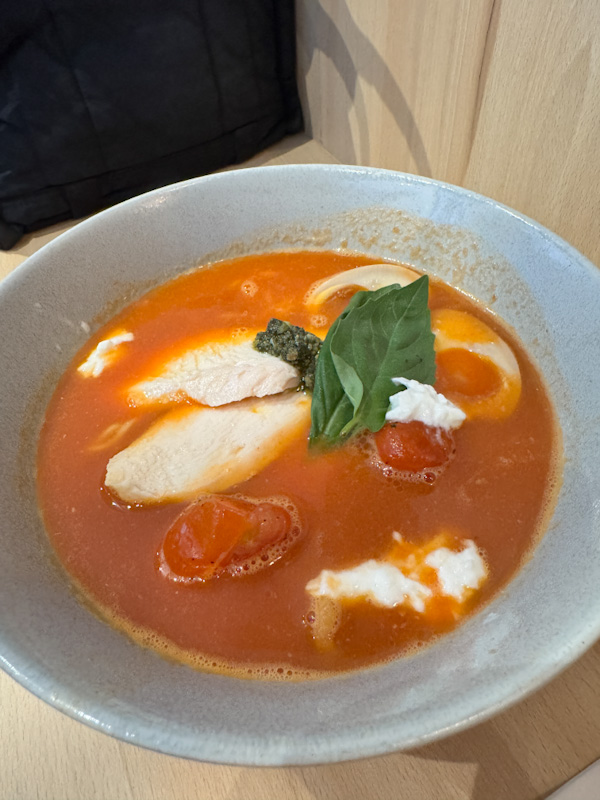
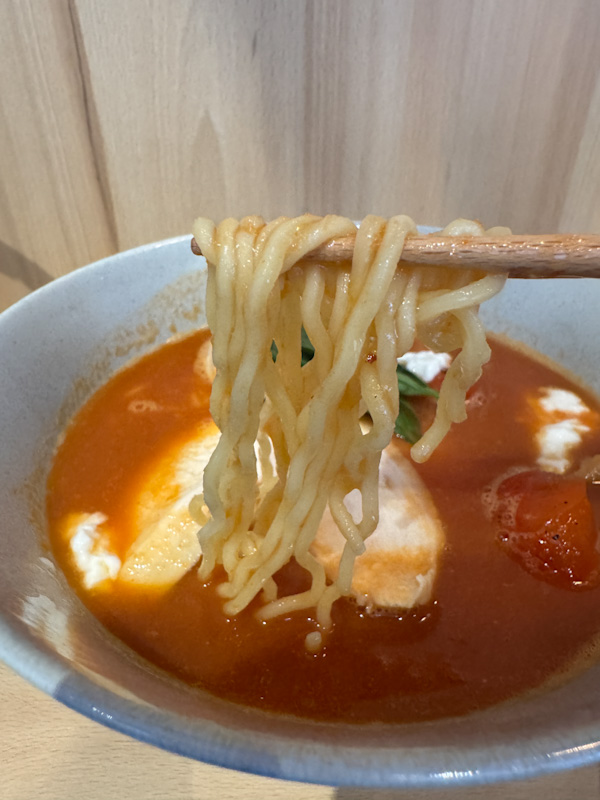
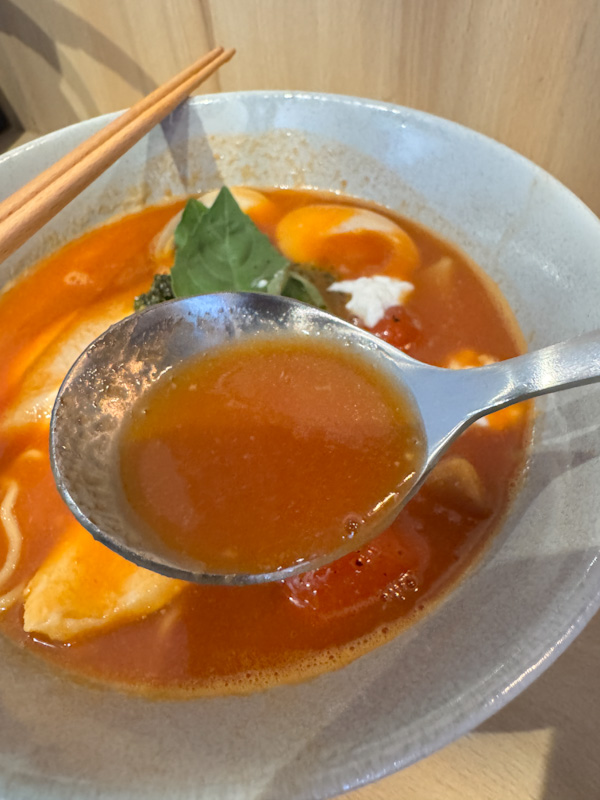
Dish to order: Tomato Paitan
Style: Tomato-blend
Why it made the list:
Tomato ramen is notoriously difficult to get right. Too thin and it feels like soup pasta; too rich and it turns cloying. Raakki’s Tomato Paitan lands in a narrow middle ground where the idea holds together as ramen, not novelty.
The soup is thick and bisque-like, opening with a gentle sourness before moving into a savoury, rounded body, and finishing with a natural tomato sweetness. Despite its density and high concentration, the aftertaste stays crisp and clean, avoiding the fatigue that often undermines tomato-based broths. As it cools, the soup thickens further, revealing just how deliberately it’s been built.
The noodles play a crucial supporting role. Medium-thick, curly, and cooked al dente, they pull in just enough of the soup with each slurp while maintaining their firmness even as they sit. There’s a quiet wheatiness to them, free of alkaline harshness, which allows the broth’s complexity to remain the focus rather than competing for attention.
Layering is where this bowl distinguishes itself. Thai basil introduces a bright, almost minty freshness that cuts through the richness mid-meal. Pesto paste deepens the savoury notes once fully integrated, while bamboo shoots and grilled tomatoes add texture and contrast. Not every element lands perfectly — the burrata can skew gummy depending on condition, and the chicken plays a more supporting role than starring one — but the overall composition remains coherent and intentional.
Who is this bowl for:
This is ramen for diners who enjoy modern interpretations that still behave like ramen. Ideal if you’re open to acidity, herbaceous notes, and flavours that move beyond the usual soy and pork framework, but still want structure and balance rather than shock value.
What to know before ordering:
This was a seasonal special when I visited and may not always be available. The bowl is rich and concentrated, but not heavy in the traditional sense. Expect a bisque-like texture and let the flavours evolve as the soup cools.
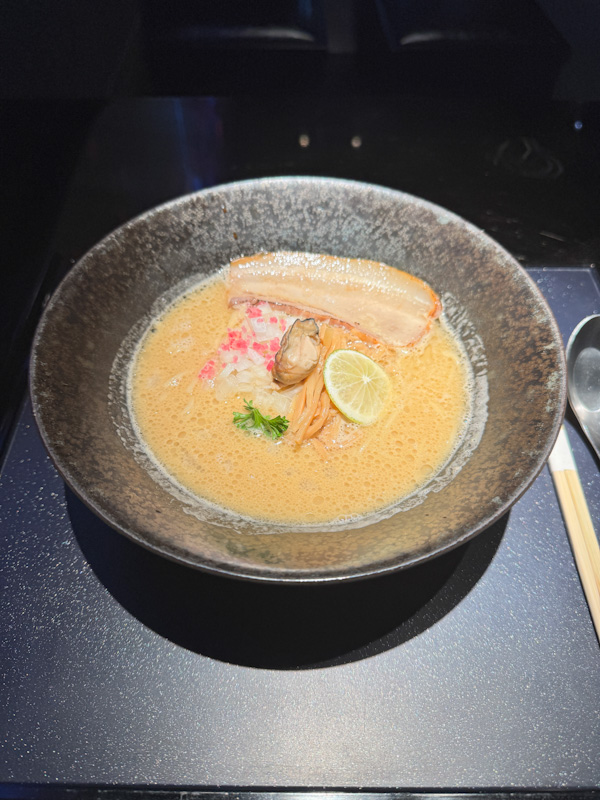
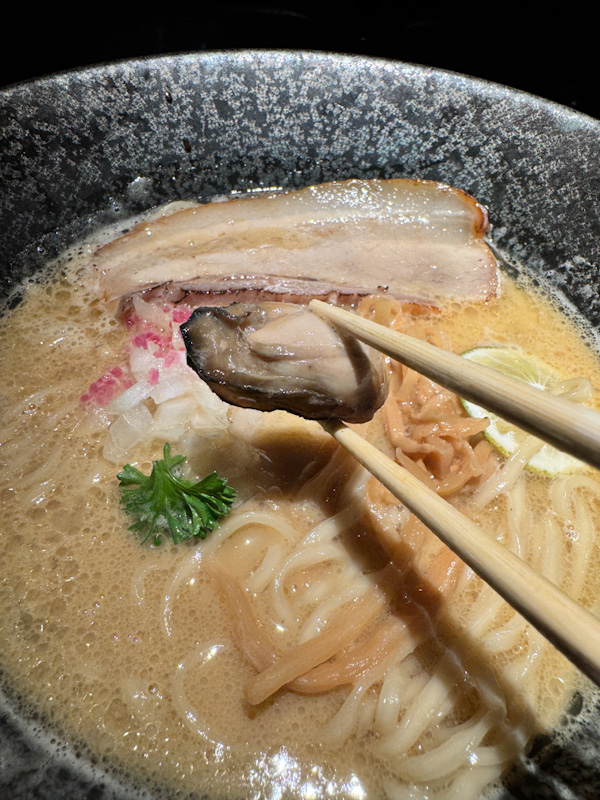
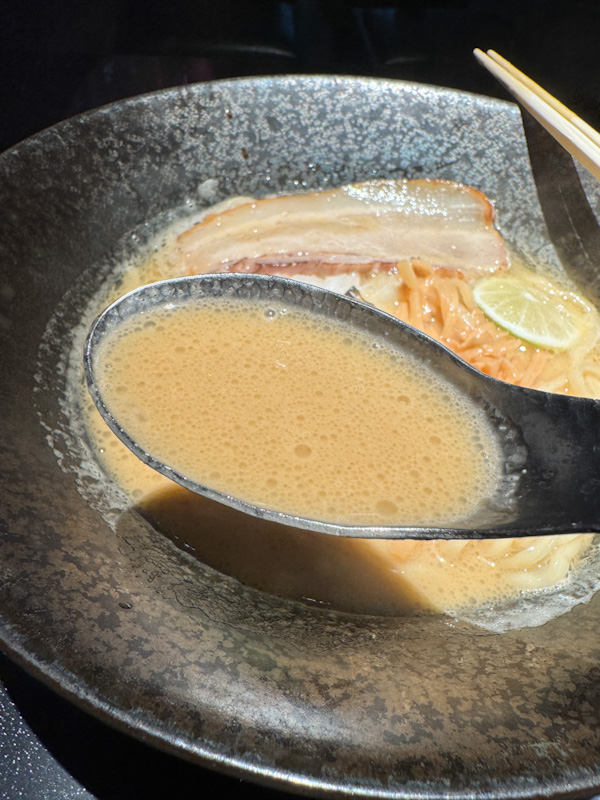
Dish to order: Slow-cooked Oyster Broth (Koeru)
Style: Oyster-blend
Why it made the list:
If Raakki’s Tomato Paitan represents modern ramen through acidity and freshness, Koeru takes the opposite route — depth, savouriness, and marine umami, pushed to its logical extreme.
The broth is the clear centre of gravity. It opens with an assertive bonito hit before settling into a thick, creamy body that carries layered savoury and sweet notes. There’s an unexpected nuttiness to the sweetness, almost edging toward something chocolatey, which gives the soup dimension beyond simple shellfish intensity. The consistency is dense and lip-smacking, coating the palate generously without tipping into muddiness. It’s bold, but carefully constructed.
The noodles are more than capable of holding their ground. Medium-thick, wavy, and slightly flat, they deliver a tacky, chewy bite that clings just enough to make each mouthful feel substantial. The pronounced wheat flavour reinforces the broth rather than disappearing into it. The hand-kneaded, low-hydration approach adds to that tactile satisfaction, giving the bowl a grounded, almost rustic feel that suits the soup’s weight.
Protein execution here is quietly outstanding. The pork chashu is thick-cut and restrained in seasoning, letting the quality of the meat speak. The oyster, however, is the defining element — soft, melting, and intensely oceanic, releasing a concentrated briny sweetness as it breaks down. It doesn’t just sit in the bowl; it actively invites you to collapse it into the soup, deepening the broth with each bite.
Toppings are minimal but highly effective. Finely diced onions scatter brightness throughout the bowl, constantly resetting the palate against the richness. Bamboo shoots add texture and gentle tang, while a slice of lime provides just enough acidity to round off the edges without disrupting the soup’s core identity.
Who is this bowl for:
This is ramen for diners who chase umami density and savoury depth. Ideal if you enjoy seafood-forward flavours, thick broths, and bowls that feel immersive rather than refreshing. It’s especially rewarding for those who appreciate oyster character and aren’t shy about intensity.
What to know before ordering:
This is a rich, flavour-heavy bowl. Expect lingering umami and a slow, deliberate eating pace. If you’re sensitive to marine flavours or prefer lighter finishes, this may feel overwhelming — but for the right palate, it’s deeply satisfying.
Best New Ramen Shop (Opened 2025-2026): Soshiji らーめん そしじ
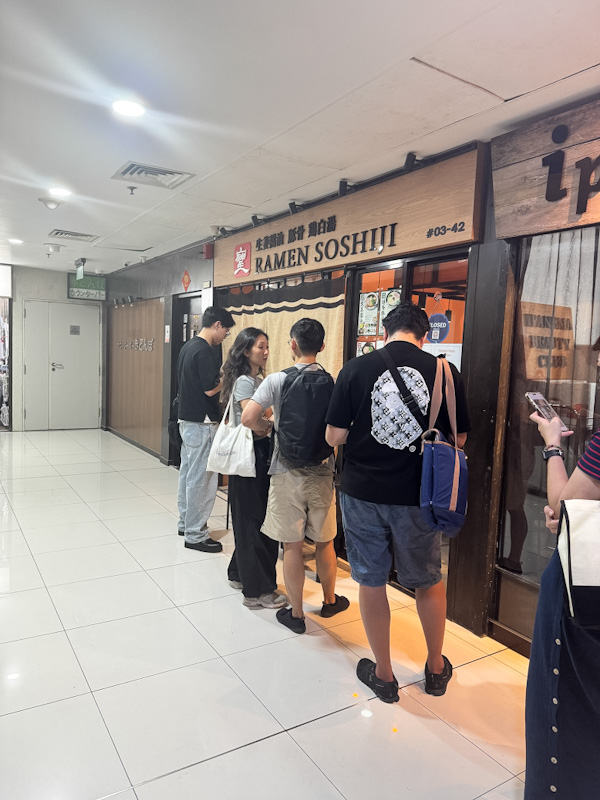
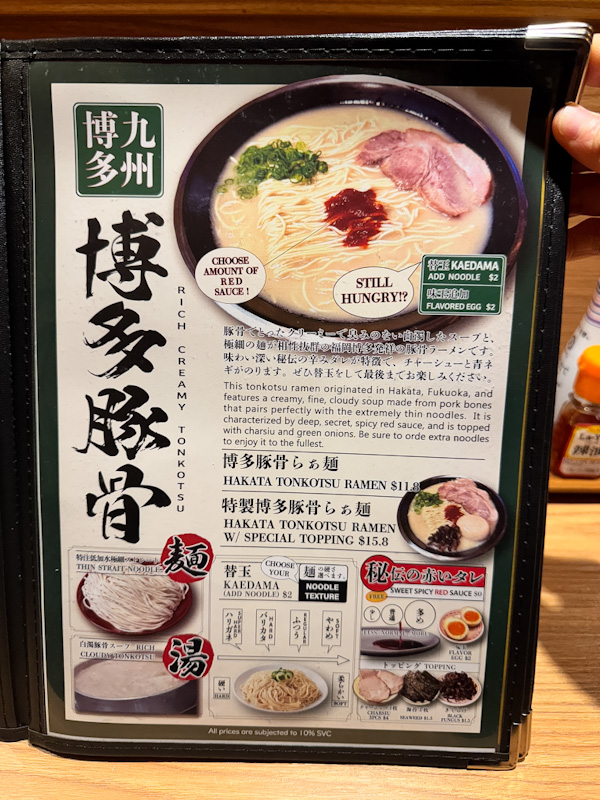
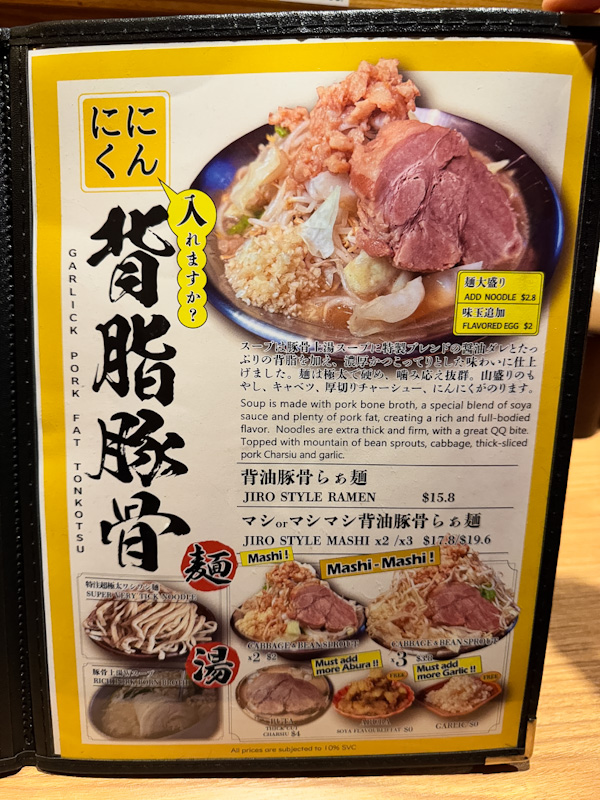
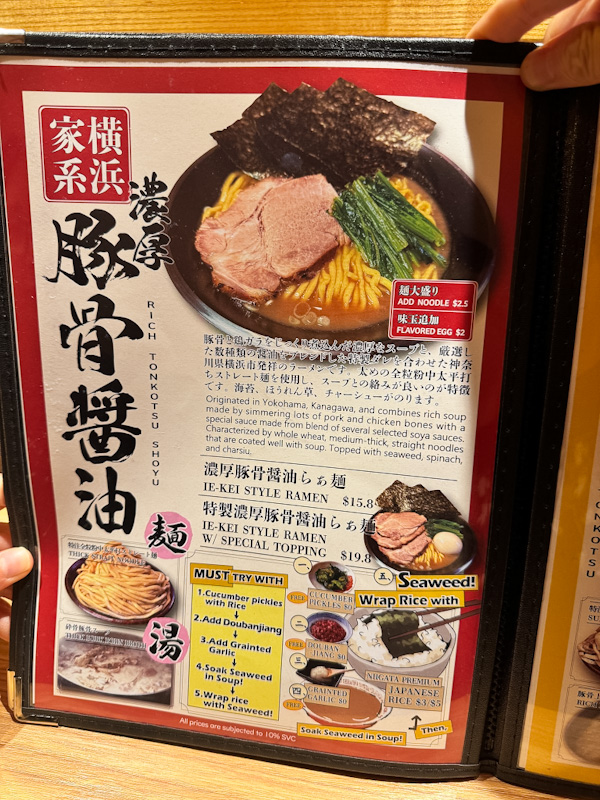
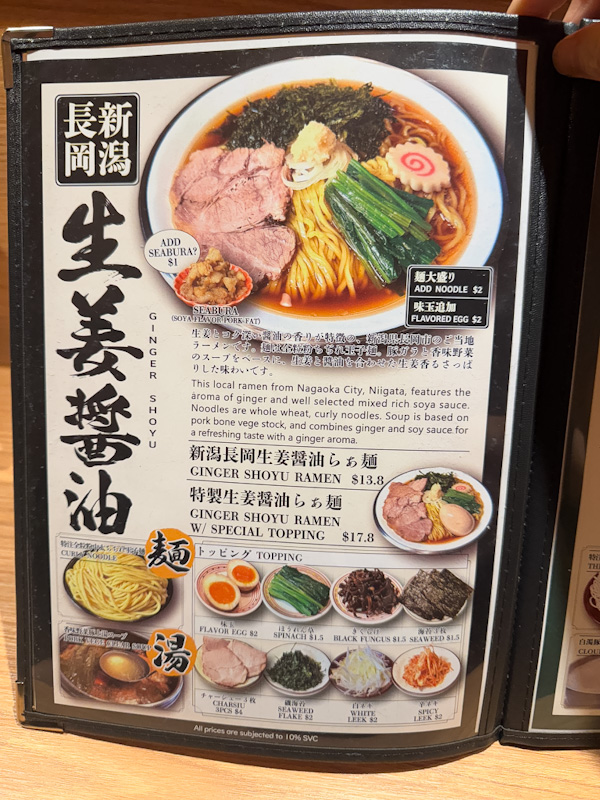
Why it made the list:
What sets Soshiji apart isn’t polish or novelty. It’s authenticity backed by cultural understanding.
This is a Japanese-founded shop, led by a Japanese chef, and it shows — not just in technique, but in how the menu is conceived. Instead of defaulting to a generic, one-size-fits-all tonkotsu lineup, Soshiji’s menu cuts across multiple region-specific ramen styles, each with its own logic and intent.
You see it in the range: from Nagaoka-style ginger shoyu, to pork-back-fat-heavy Jiro-style ramen, Yokohama Iekei, Hakata-style tonkotsu, and even Nagoya-style mazesoba. These aren’t loosely inspired interpretations or marketing labels. They’re recognisable styles, presented with enough fidelity that anyone familiar with ramen in Japan can immediately place them.
That breadth matters. It signals a shop that understands ramen not as a single genre, but as a regional food culture, where styles exist because of climate, history, and local taste. In Singapore’s ramen landscape — still dominated by faceless tonkotsu templates and diluted hybrids — this level of specificity is rare.
Just as importantly, the execution doesn’t feel performative. The bowls are composed with restraint, and the menu avoids padding for mass appeal. This isn’t a shop trying to teach customers what ramen is. It’s one that assumes you’re willing to meet it halfway.
For a new opening, that confidence is notable. Soshiji didn’t arrive trying to be everything to everyone. It arrived already knowing what it wanted to represent.
Who is this shop for:
This is a ramen shop for diners who are curious about Japanese ramen beyond the usual stereotypes. Ideal if you’ve eaten ramen in Japan, or want to understand how different regional styles behave and feel. It’s especially rewarding for repeat visits, where the menu reads less like a checklist and more like a map.
What to know before ordering:
This is not a trend-driven shop. Some styles will feel heavier or more specific than what casual diners expect. Go in with an open mind, and treat it less like a quick fix and more like a place to explore. Queue is extremely long so don’t arrive expecting to eat immediately.
Most Improved Ramen Shop (Return Visit): Tonkotsu Kazan VOLCANO Ramen 豚骨火山ラーメン
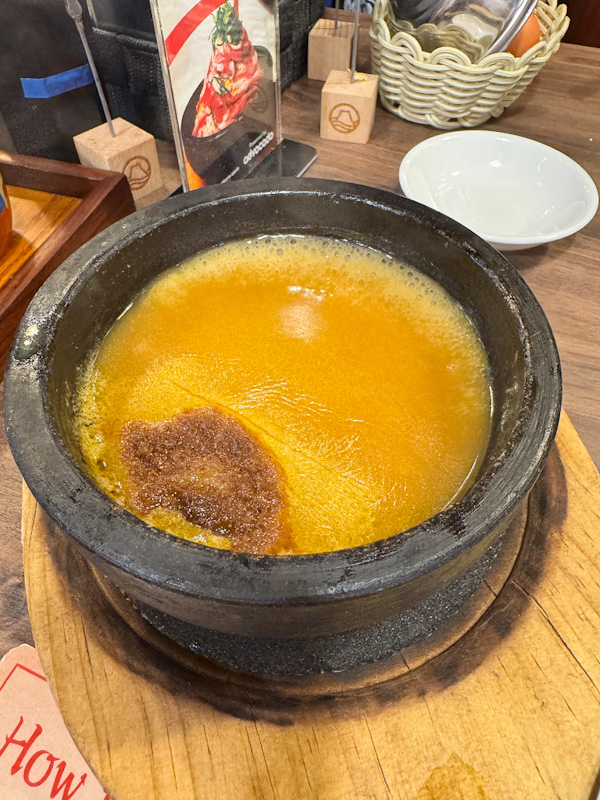

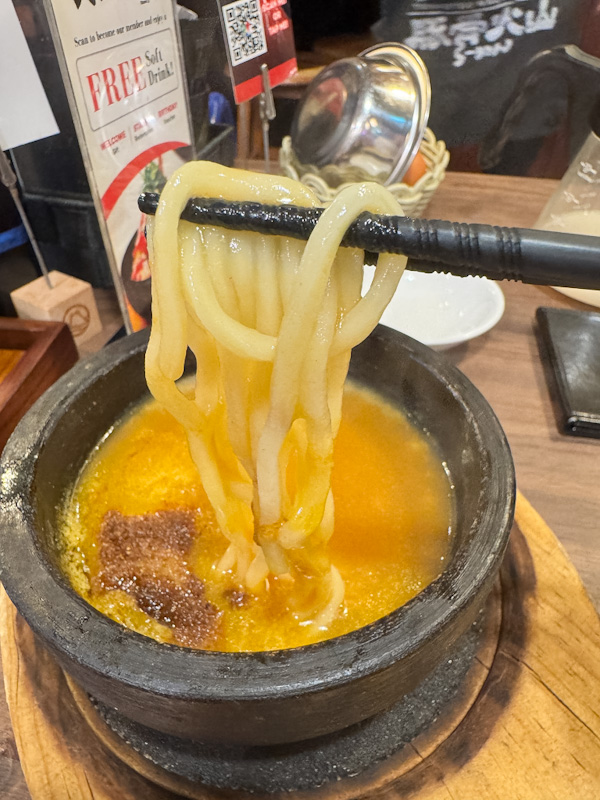
Why it made the list:
This pick is about change observed over time, not first impressions.
Tonkotsu Kazan was a shop I had largely written off. Several earlier visit in 2022 left little impression beyond the spectacle. The food felt serviceable, the dining room was quiet, and there was little to suggest it deserved serious attention beyond its visual gimmick.
Coming back in late 2025 told a very different story.
The Ishiyaki Hot Stone Tsukemen showed a marked improvement across fundamentals. The noodles were thick, weighty, and confidently chewy, with a clear wheat aroma and a controlled mochi-mochi elasticity that held up well even under heat. This wasn’t an afterthought noodle. It had intention.
The dipping sauce, served aggressively hot in a stone bowl, was layered rather than blunt. A sharp savoury opening gave way to a rounded bonito-led body, followed by a zesty, lightly sour finish that kept the richness in check. There was still some oiliness, but acidity and temperature control prevented the bowl from collapsing under its own weight.
Protein execution was where the improvement was most obvious. The pork belly chashu was tender, richly flavoured, and noticeably better than before — the fat melting cleanly, the lean remaining juicy, and the seasoning integrated rather than surface-level. Even the supporting elements felt more considered, from the custard-like egg to the bamboo shoots and the lemon used to reset the palate.
Perhaps most telling was the atmosphere. The dining room was busy, with a queue forming outside. This wasn’t a quiet weekday fluke. The shop felt re-energised, and the food reflected that momentum.
This wasn’t a reinvention, but a course correction — and a successful one.
Who is this bowl for:
This is a shop worth revisiting if you’ve previously dismissed it, especially if you enjoy hearty, high-temperature ramen experiences with theatrical presentation that’s now backed by stronger execution. It’s particularly appealing for diners who enjoy tsukemen with acidity and heat working together to manage richness.
What to know before ordering:
The volcano concept is still part of the experience, but it no longer carries the meal on its own. The food has caught up. That said, oiliness can still surface in heavier bowls, so pacing and palate resets matter.
Closing Note

If there’s one thing this 2026 guide has reinforced for me, it’s that ramen is best understood over time, not in snapshots. Trends come and go, shops open and close, and bowls evolve quietly between visits. What matters isn’t just who’s loudest or newest, but who can execute with clarity, consistency, and intent.

Singapore’s ramen scene is still developing, sometimes unevenly, but that’s not necessarily a weakness. It leaves room for shops that take regional styles seriously, for experiments that actually hold together as ramen, and for course corrections that reward diners who are willing to revisit with an open mind.

This list isn’t meant to be definitive or static. It’s a reflection of where the scene stands right now, filtered through repeat eating, comparison, and context shaped by time spent in Japan and elsewhere. Some bowls here are exciting, some are comforting, some are heavy, and some are intentionally quiet. All of them earned their place by how they eat, not how they look on opening week.

As always, eat widely, revisit often, and trust your palate. Ramen reveals itself slowly, and the best bowls usually do too.