
WHAT WE ATE
- Yuzu Shio Ramen, 75/100 (17 Dec 2025, Raffles City)
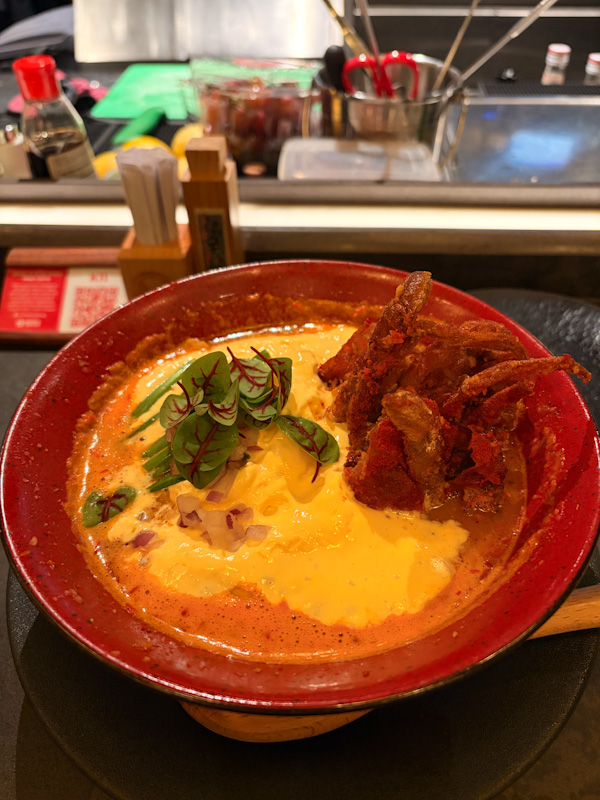
- Chili Crab Ramen, 55/100 (17 Dec 2025, Raffles City)
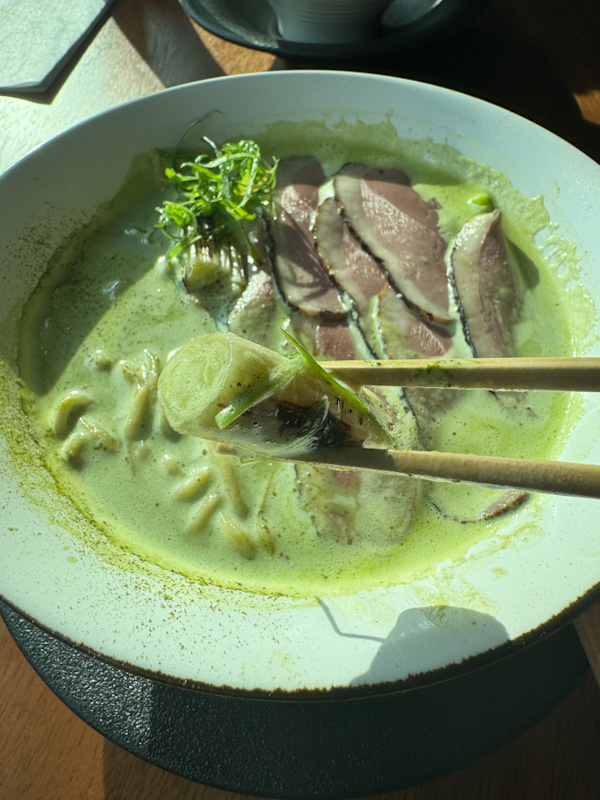
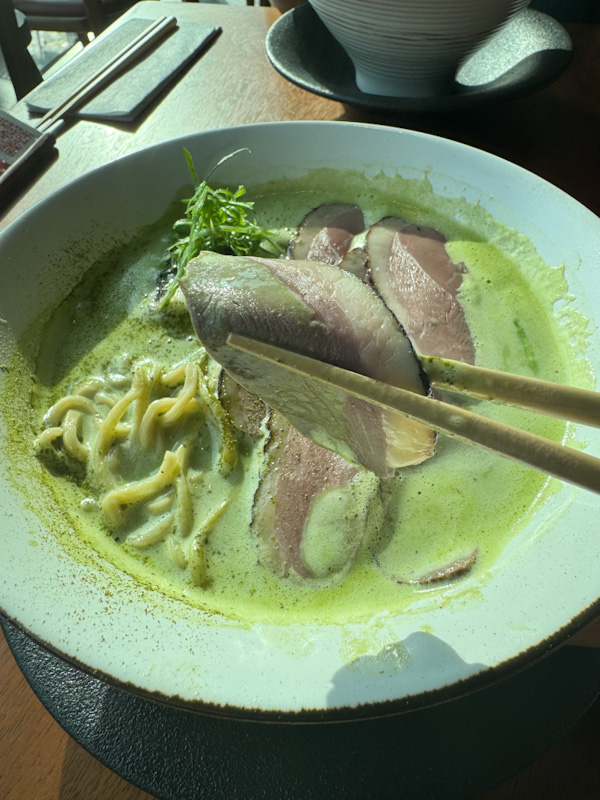
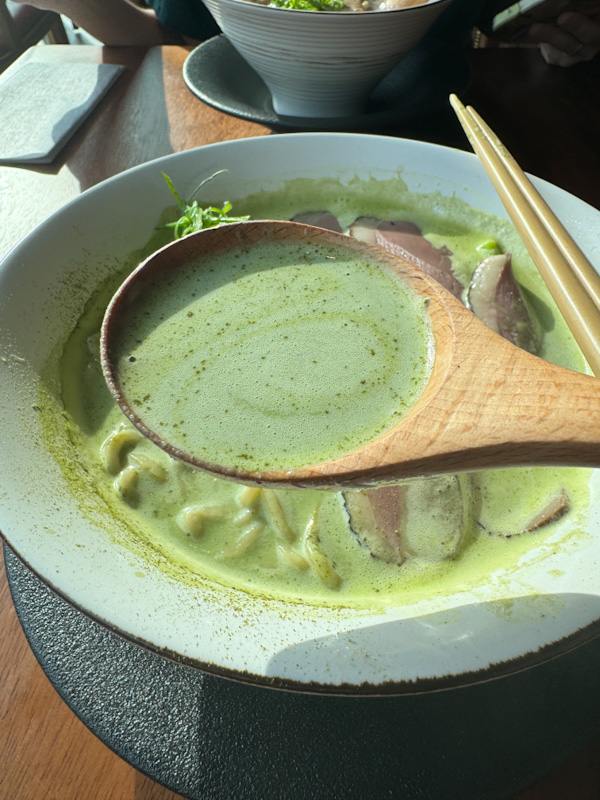
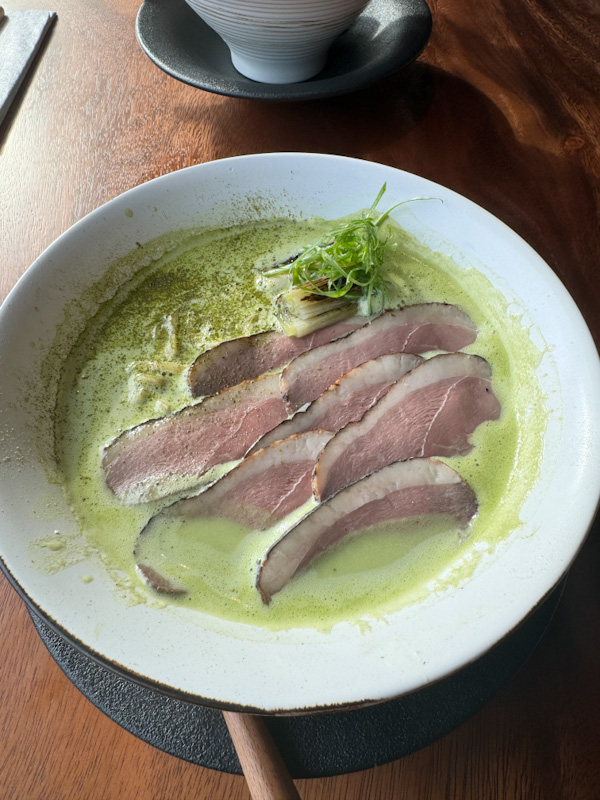
- Matcha Ramen, 60/100 (14 Sep 2024, Raffles City)
- Toripaitan Ramen, 65/100 (14 Sep 2024, Raffles City)
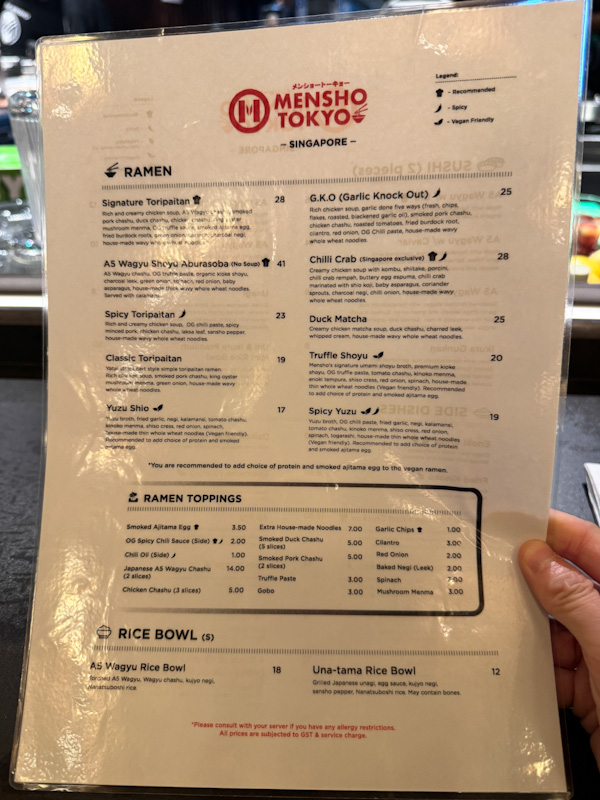
Mensho Tokyo Singapore is the local outpost of MENSHO, a Tokyo-born ramen brand led by chef Tomoharu Shono, known internationally for pushing technique and ingredients beyond the usual “tonkotsu vs shoyu” playbook. The Singapore restaurant is located at Raffles City Shopping Centre (Level 3), making it one of the most talked-about Japanese ramen spots in the City Hall area since its official opening on 27 July 2024.
What makes Mensho Tokyo notable is the brand’s “process-first” obsession. This is one of those places that wants you to notice the engineering behind a bowl, including in-house noodle production using a Yamato noodle-making machine, plus a menu that leans into both signature house styles (like toripaitan) and more left-field seasonal or limited concepts depending on the outlet. If you are the kind of ramen nerd who enjoys seeing how a shop builds identity through workflow and equipment choices, Mensho Tokyo Singapore is worth putting on the radar before you even start debating what to order.
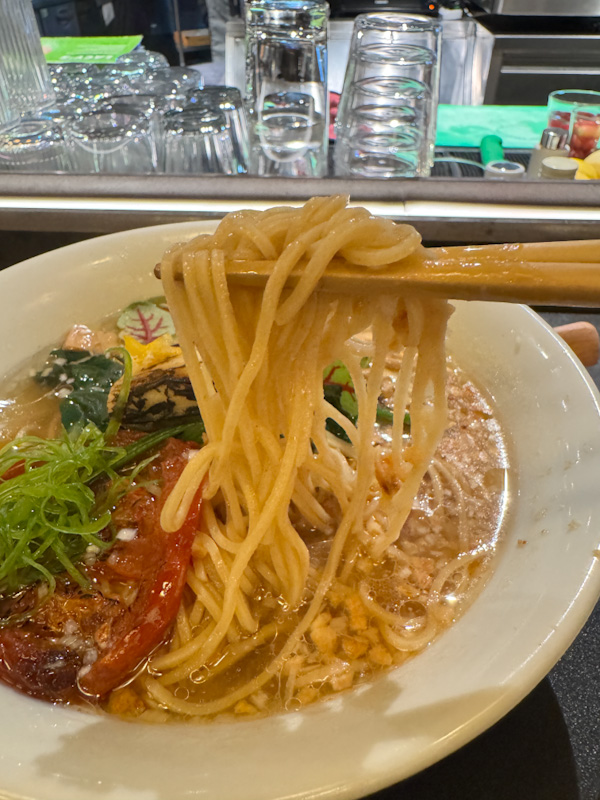
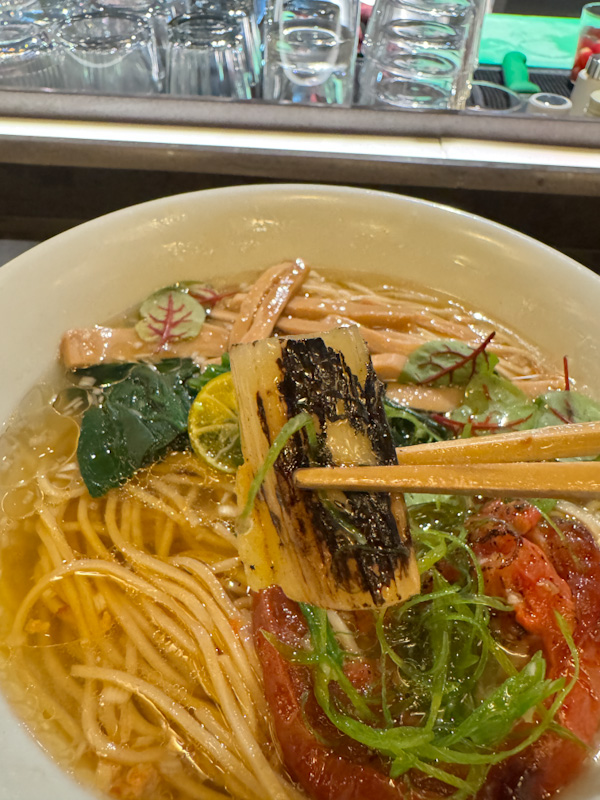
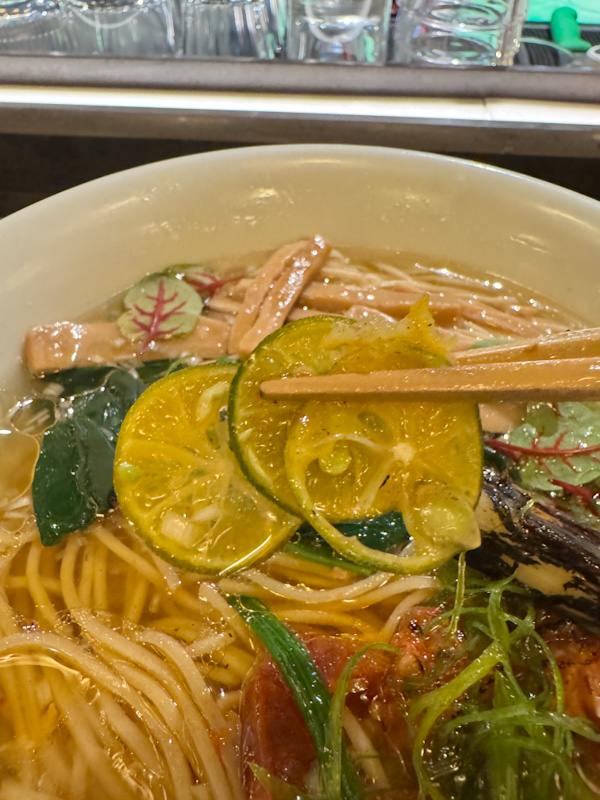
Yuzu Shio Ramen: 75/100
Noodle: 30/35
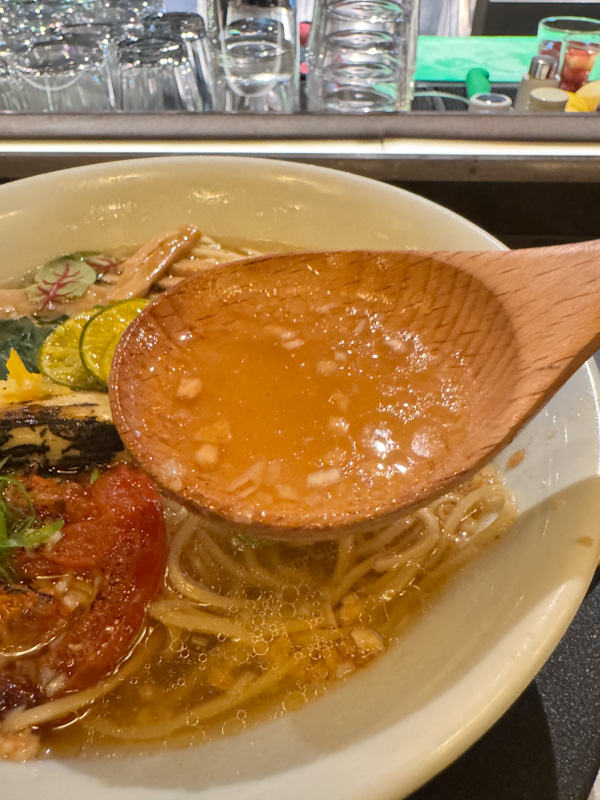
The noodles are medium-thin and straight, cooked al dente with a snappy, firm bite that holds up well through the meal. Mouthfeel is clean and precise, with a satisfying resistance that avoids any soggy collapse. Flavour-wise, there is a subtle, rounded wheat taste with no alkaline sharpness, which works well given the citrus-led soup. The noodle absorbs the fruity sourness nicely, carrying hints of yuzu into each bite. Technically sound and pleasant to eat, though it ultimately lacks a strong individual character and functions more as a capable conduit than a statement noodle.
Soup: 25/35
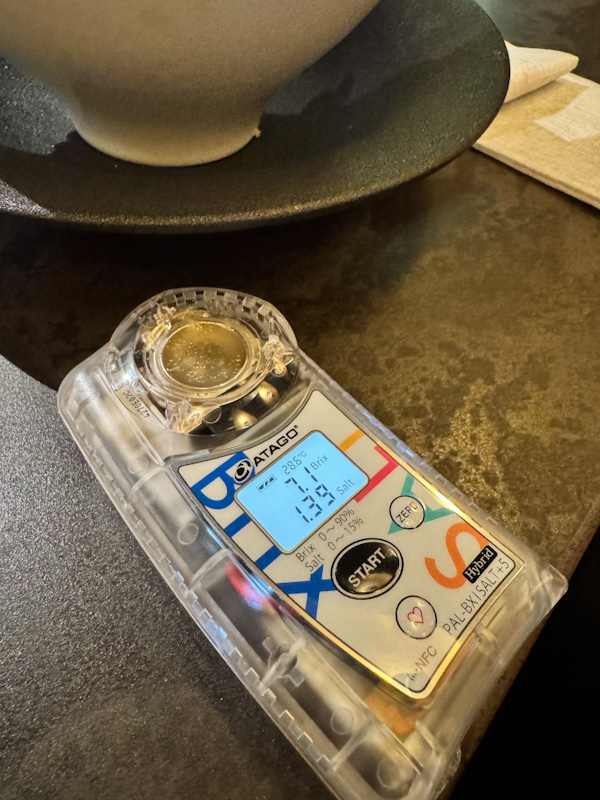
The head opens with a clear garlic aroma, followed by a pronounced and layered sour kick driven by yuzu and calamansi. The acidity is bright and sharp but not flat, giving the opening a lively, almost sparkling quality. As it transitions into the body, the soup rounds out into a smooth, savoury core that stabilises the citrus without muting it. The finish lingers with umami and garlic notes, leaving a persistent aromatic trail. For a Shio, the soup shows surprising depth and layering, though it leans slightly oily. Reducing the garlic oil would improve clarity and allow the salt and citrus interplay to read more cleanly.
“Meat”: 10/20
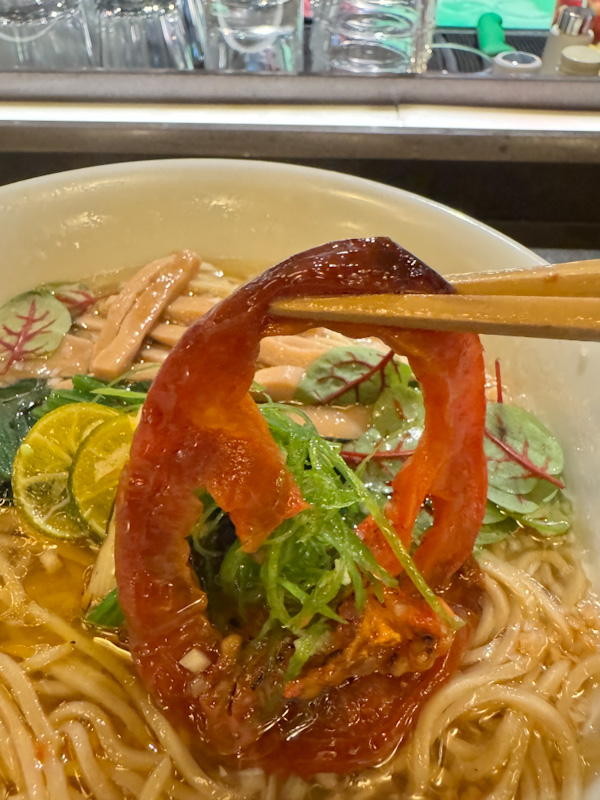
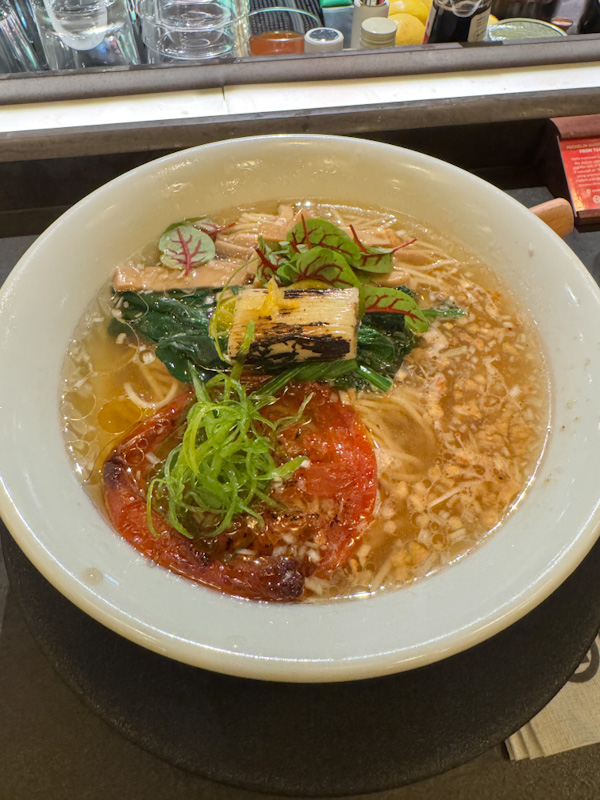
As a vegan bowl, the protein comes in the form of a tomato chashu, essentially a thin slice of tomato with light aburi marks on one side. The cut is thin, and the texture is soft and tender, barely holding its shape. There is a pleasant sourness and gentle fruity sweetness, which makes it enjoyable in isolation. However, as a hero topping, it lacks the savoury weight and textural presence needed to anchor the bowl. It reads more as an accent than a centrepiece, and does not fully justify its role as the primary protein.
Other Toppings: 10/10
The supporting toppings are where this bowl quietly excels.
- Calamansi slices add an extra layer of acidity, sharper and more aromatic than lime, allowing the diner to fine-tune the sourness with precision.
- The menu lists shiso cress, though in both appearance and taste it resembles sorrel leaves, contributing a fresh, lightly fruity tartness that integrates well with the soup.
- The marinated kinoko mushrooms are springy and satisfying, adding depth and contrast.
- Blanched spinach absorbs the broth effectively, becoming a flavour carrier rather than filler while adding a hint of vegetal bitterness.
- Sliced green negi brings a subtle, juicy piquancy, while the large piece of leek stands out for its mellow, earthy sweetness and juiciness without fibrous resistance.
Summary
This Yuzu Shio Ramen is a thoughtfully constructed vegan bowl with a clear focus on citrus layering and balance. The soup remains the highlight, showing more complexity than expected for a Shio, while the toppings provide structure and interest throughout the meal. The noodle performs reliably but does not stand out, and the tomato chashu struggles to assert itself as a true hero element. Overall, it is a competent and enjoyable interpretation that demonstrates solid technical understanding, even if a few refinements could push it further.
Chili Crab Ramen: 55/100
Noodle: 30/35
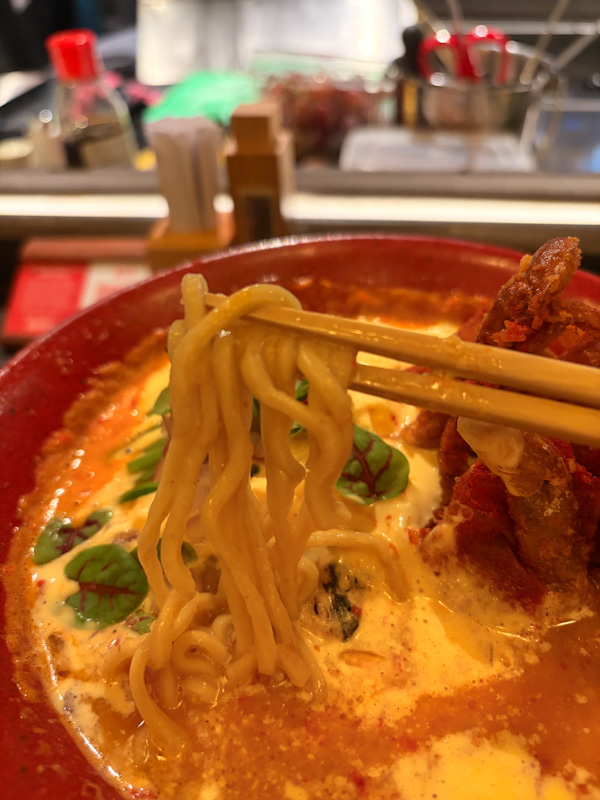
The noodles are medium-thick and curly, leaning towards a heartier profile. Texture is slightly doughy on the surface but remains firm at the core, giving it a reassuring structural integrity. Mouthfeel is chewy and substantial, with a slight tendency to cling to the teeth, which is oddly satisfying rather than distracting. Flavour is where the noodle performs best, carrying a sweet, earthy wheat taste that feels deliberate and well-developed. On its own, this is a strong noodle that could easily anchor a more restrained soup.
Soup: 10/35
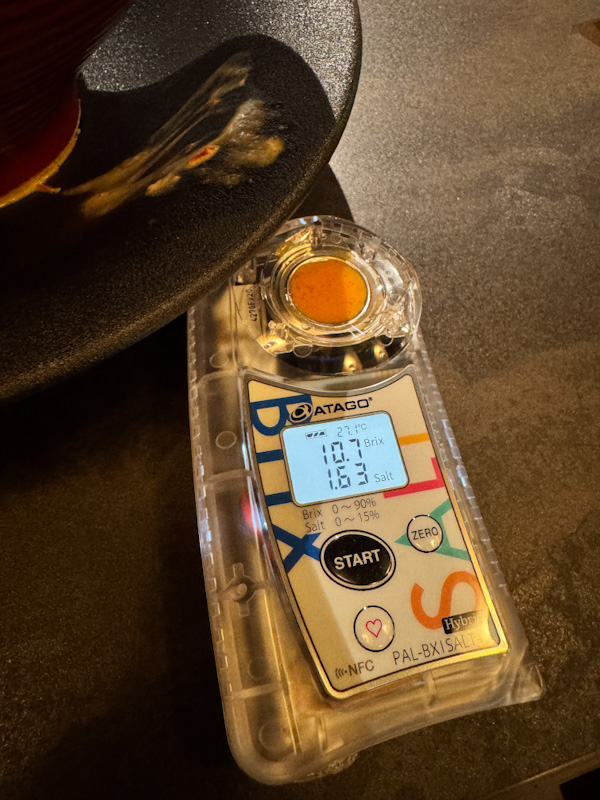
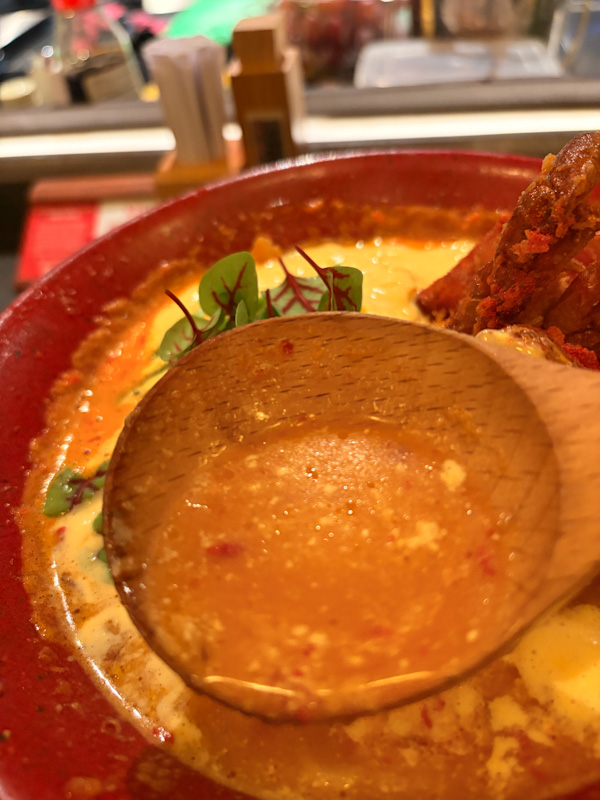
The soup opens with a creamy, savoury sweetness that initially hints at chilli crab familiarity. That promise, however, is fleeting. The body offers only a brief glimpse of sweetness before quickly giving way to spice. At the finish, a sharp burn lingers and continues to build with each sip. The unfortunate result is that the spice overstays its welcome, gradually flattening whatever layered flavours exist beneath it. Over time, the bowl becomes monotonous, with heat dominating and nuance fading. The balance is off, and the lack of modulation makes the soup tiring rather than engaging.
Meat: 10/20
There are two proteins here, chicken chashu and soft shell crab. The chicken slice is firm and springy while remaining tender enough to chew comfortably. Its natural sweetness and umami manage to cut through the spice, offering moments of relief and a mildly addictive savoury note. The soft shell crab arrives crispy in theory but is already half soggy by the time it reaches the bowl. Portions not submerged in soup retain some crunch, suggesting it would have benefited from being served separately. The vibrant red batter is visually striking but largely superficial. Flavour-wise, the crab tastes like crab, though its delicacy is largely overwhelmed by the spice. It looks impressive but does little to elevate the eating experience.
Other Toppings: 5/10
There is no shortage of toppings, but the execution feels cluttered. The spice dominates to the point where individual elements struggle to register. Rather than complementing the bowl, the toppings feel lost within it.
- Asparagus brings some crunch and juiciness but fades quickly.
- “Charcoal” negi seems to be missing the smokiness and lacks clarity.
- Spicy onions contribute more heat without adding dimension.
- The menu lists coriander sprouts, though they appear to be replaced with sorrel leaves, which is too subtle against the aggressive spice profile.
Summary
This bowl is a clear reminder of how crucial balance is, especially when working with bold flavours. On paper, the ingredients suggest something potentially compelling, but the execution struggles to harmonise them. The spice overwhelms the soup’s structure, dulls the toppings, and limits the crab’s expression. As a chilli crab interpretation, it also falls short, lacking the creamy richness that defines the dish. The ambition is evident, but the bowl ultimately feels more exhausting than satisfying.
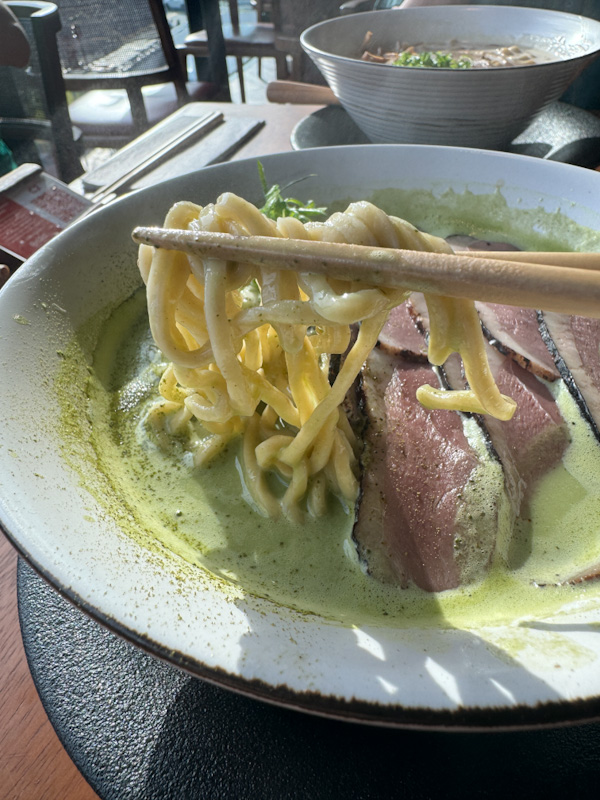
Matcha Ramen: 60/100
Noodle: 35/35
The noodles are the clear highlight of this bowl. Thick, wavy, and closer in form to tsukemen noodles, they arrive al dente with a snappy, springy bite that is immediately satisfying. Texture is spot on, with enough chew to feel substantial without turning rubbery. Flavour-wise, there is a distinctive earthy sweetness that points to high-grade flour rather than alkaline trickery. Knowing that these noodles are made fresh in-house adds context to their quality, especially when you can see the chef milling flour and running the dough through a Yamato noodle-making machine. It has been a while since I have encountered noodles in Singapore that are this enjoyable on their own, let alone within a bowl.
Soup: 10/35
The soup is a creamy chicken matcha base finished with whipped cream, and it is admittedly a risky proposition. The head offers a fleeting sweetness with salty savoury undertones, suggesting a paitan foundation trying to surface. Very quickly, however, the matcha takes full control. The body becomes dense and grassy, reminiscent of unsweetened soy milk loaded with matcha powder and salt. By the finish, a lingering bitterness settles in and refuses to let go. The issue here is balance. Matcha and paitan are both assertive elements, and instead of complementing each other, they compete. The result is a soup that feels heavy, acrid, and difficult to return to, even for someone who enjoys both matcha and creamy chicken broths independently.
Meat: 5/20
The meat shows moments of promise but ultimately disappoints. On its own, there is a pleasant umami note, but texture is the main problem. Most slices are overcooked, turning tough and stringy. Out of eight generous slices, only one stands out as tender, juicy, and chewy, carrying a faint smoky savoury aroma that hints at what could have been. Unfortunately, the dominant bitterness of the matcha soup masks much of the meat’s flavour, making it hard to appreciate even the better pieces. It feels like a missed opportunity, especially given the portion size.
Other Toppings: 10/10
The toppings are mostly well_refsined and provide some relief from the intensity of the soup. Leek, negi, and asparagus form the supporting cast.
- The leek is inconsistent, with only one piece retaining its juiciness and mild sweetness, while the others are limp, mushy, and overcooked.
- The finely sliced negi performs much better, offering a clean, piquant aroma that cuts through some of the heaviness.
- The asparagus strips are cooked just right, maintaining a crunchy texture and a gentle sweetness.
Despite the uneven execution of the leek, the toppings overall are solid and thoughtfully chosen.
Summary
This bowl is a study in contrast. The noodles are exceptional and easily among the best I have had locally in recent memory, while the toppings largely do their job. The soup, however, struggles with balance, allowing matcha bitterness to overwhelm both the broth and the proteins. The ambition is admirable, and the technical skill is clearly present, but the harmony between components is lacking. With a more restrained hand on the matcha, this could have been something far more compelling.
Toripaitan Ramen: 65/100
Noodle: 35/35
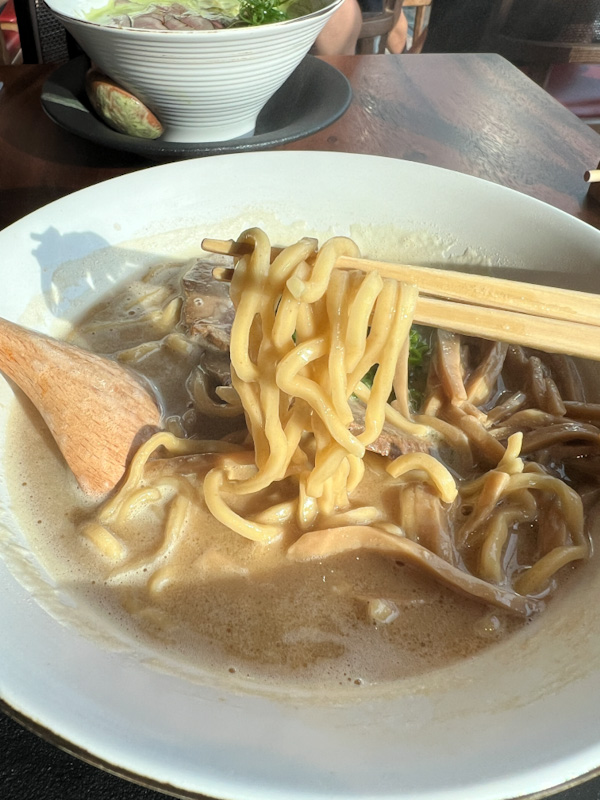
The noodles here are the same thick, wavy ones used across the menu, and they continue to perform at a consistently high level. Cooked al dente, they deliver a springy chew with a snappy bite that remains satisfying from the first mouthful to the last. Texture is confident and well-controlled, with no slackness even as the bowl cools. Flavour shows a clear earthy sweetness that points towards high-grade flour rather than heavy alkaline presence. Being made fresh in-house using a Yamato noodle-making machine is not just a marketing detail. It shows in both structure and taste. These noodles are easily the backbone of the bowl and do much of the heavy lifting.
Soup: 20/35
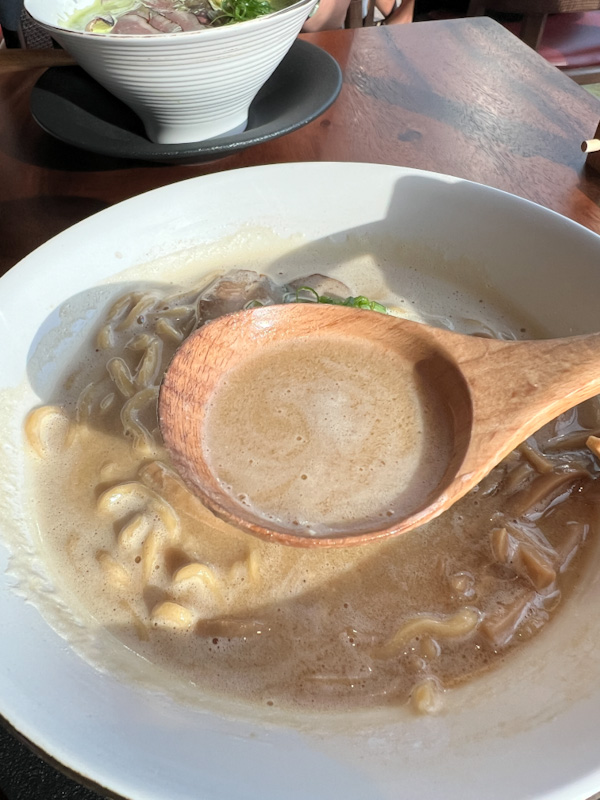
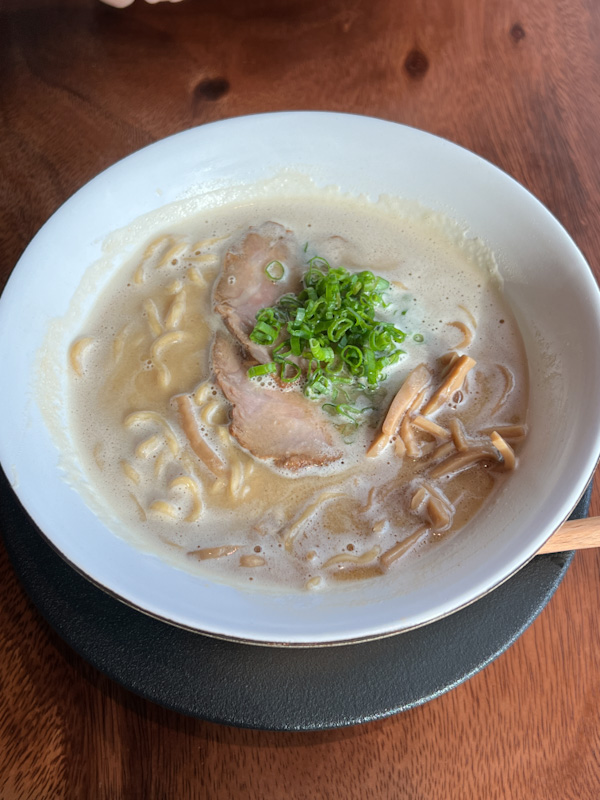
The toripaitan soup arrives rich and frothy, opening with a gentle sweetness that signals a collagen-heavy chicken base. The body settles into a savoury, creamy profile that feels comforting but also predictable. As the bowl progresses, the flavour remains largely unchanged, and the lack of modulation makes the experience feel repetitive. There is also a slightly grainy, powdery mouthfeel that sits awkwardly against the otherwise plush texture of the soup. While technically sound and reasonably enjoyable, the soup lacks depth and evolution, which limits its long-term engagement.
Meat: 5/20
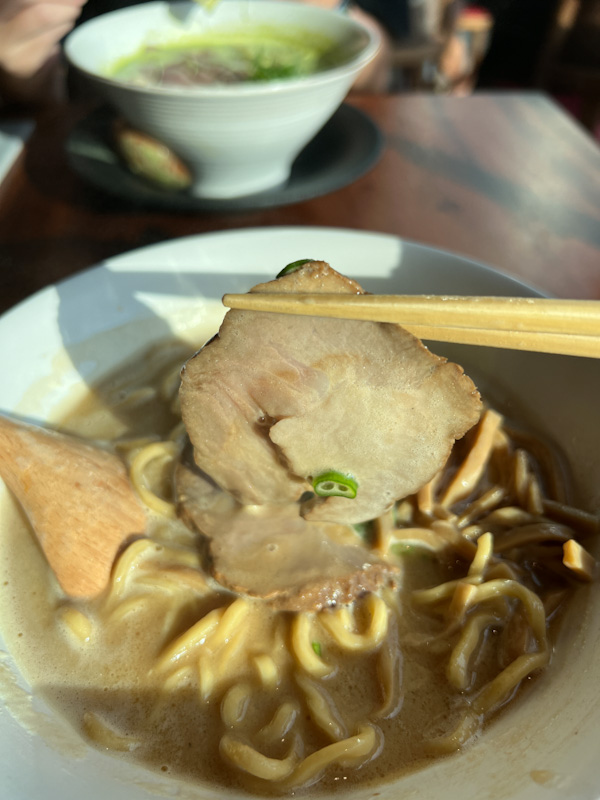
The smoked chashu underperforms once again. The promised smokiness barely registers, leaving behind only a mild savouriness that struggles to assert itself against the richness of the soup. Texture is the main issue here, with the meat coming across as tough, dry, and stringy. It does not integrate well into the bowl and feels more like an obligation than a complement. Given how robust the soup is, the protein needed either more fat or a clearer flavour identity to hold its ground.
Other Toppings: 5/10
The toppings are restrained and functional.
- Menma-style fermented king oyster mushrooms provide a modest balance of sweetness and savouriness, adding some textural contrast.
- Negi contributes its usual aromatic piquancy but remains firmly in supporting territory.
Everything is competently prepared, but the toppings do little to elevate the bowl or introduce additional layers of interest. They neither detract nor excite.
Summary
This Toripaitan Ramen is anchored by excellent noodles, which remain the standout element of the bowl. The soup is rich and approachable but suffers from a lack of progression, while the protein continues to be a weak point in both texture and flavour presence. The toppings are serviceable but uninspired. Overall, it is a decent bowl built on strong fundamentals, though it stops short of being memorable due to its one-dimensional profile and underwhelming meat component.
DISCLAIMER
One man’s meat is another man’s poison.
Find out more about our palettes and how we evaluate our ramen here. 😉
For the Toripaitan ramen, the body texts under “Soup” and “Noodle” are the same. Typo?
Thanks for letting me know! I’ve updated it!