WHAT WE ATE
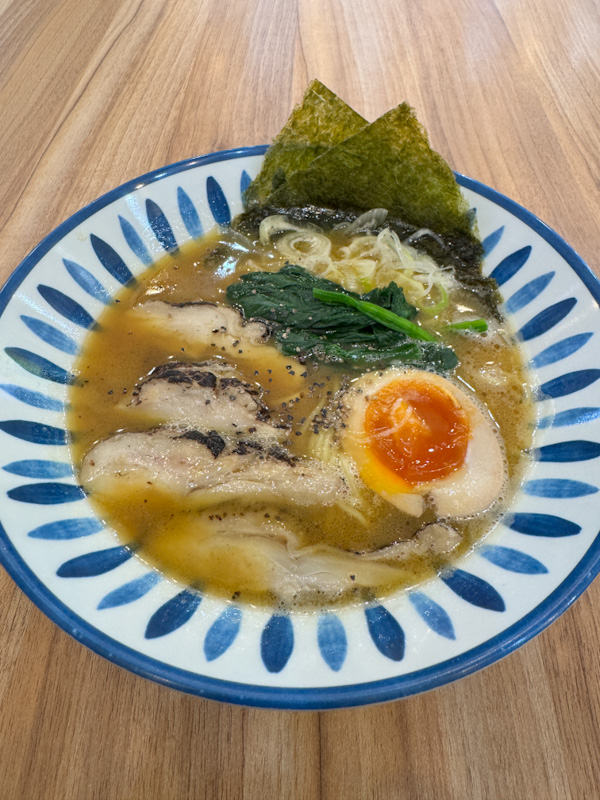
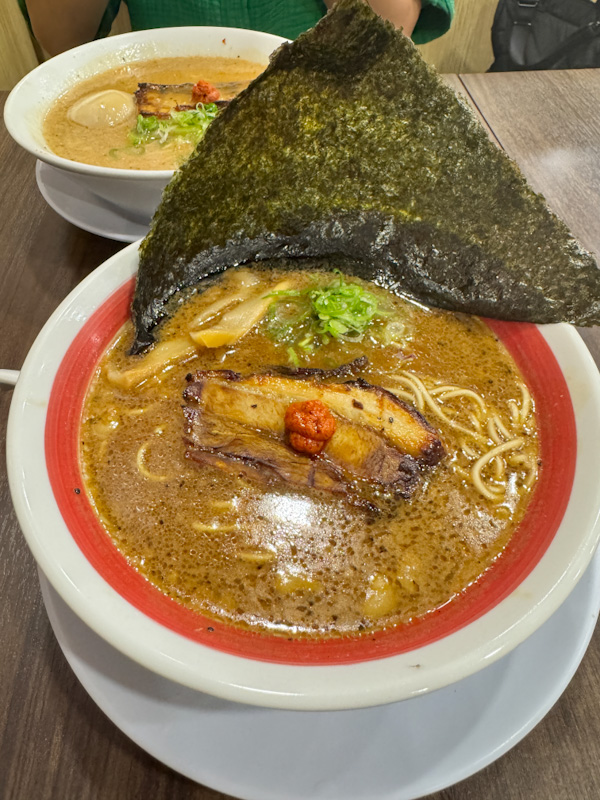
- Soymilk Toripaitan Chicken Ramen 豆乳拉麵, 90/100 (21 Feb 2026, Telok Ayer)
- Sakura Yuzu Broth 櫻花柚子, 85/100 (21 Feb 2026, Telok Ayer)
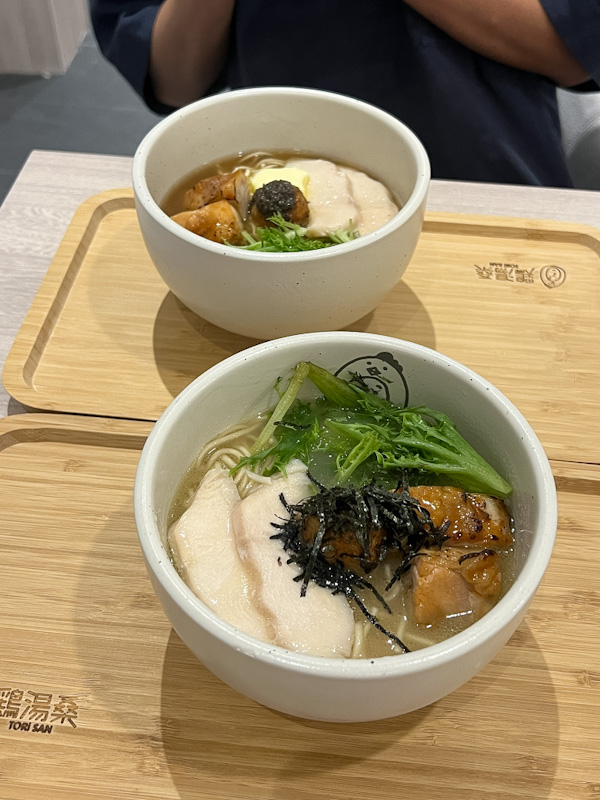
- Signature Tori Paitan Ramen, 75/100 (4 Oct 2025, Telok Ayer)
- Truffle and Porcini Ramen, 80/100 (4 Oct 2025, Telok Ayer)
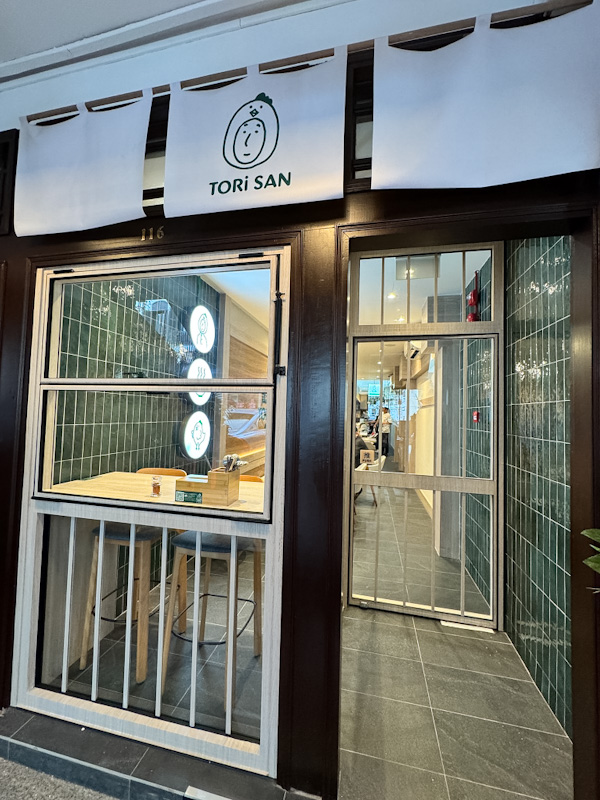
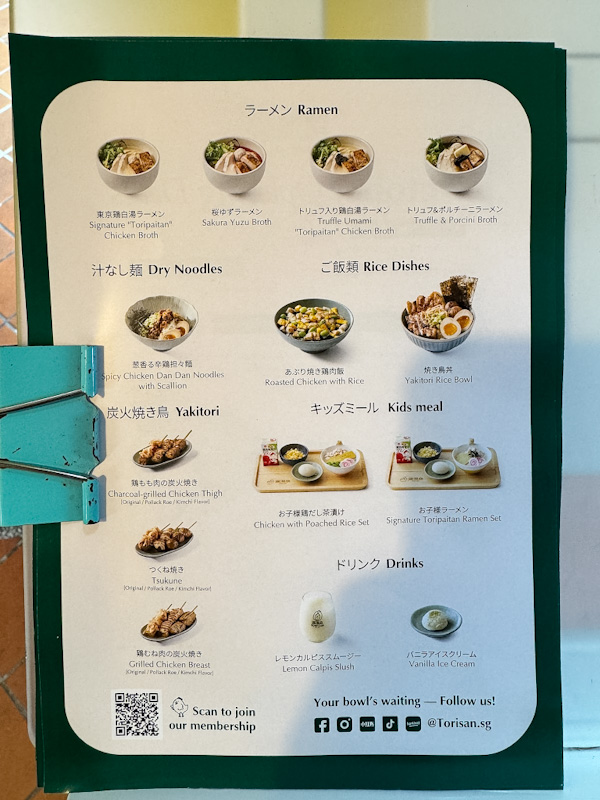
Taiwan’s Tori San (雞湯桑) has opened its first international outlet in Singapore, bringing its signature Tokyo-style toripaitan ramen to Telok Ayer. The brand, best known in Taipei for its silky chicken-based broth, sits under the “Chicken Soup Uncle” group — a name already familiar among Taiwan’s ramen fans for its meticulous, soup-driven craft.
Unlike the heavier tonkotsu styles that dominate Singapore’s ramen scene, Tori San focuses purely on chicken, combining Japanese paitan techniques with a refined French-influenced stock method. The result is a modern ramen bar experience built around chicken ramen and yakitori, with a few local exclusives like the dan dan ramen making their debut here.
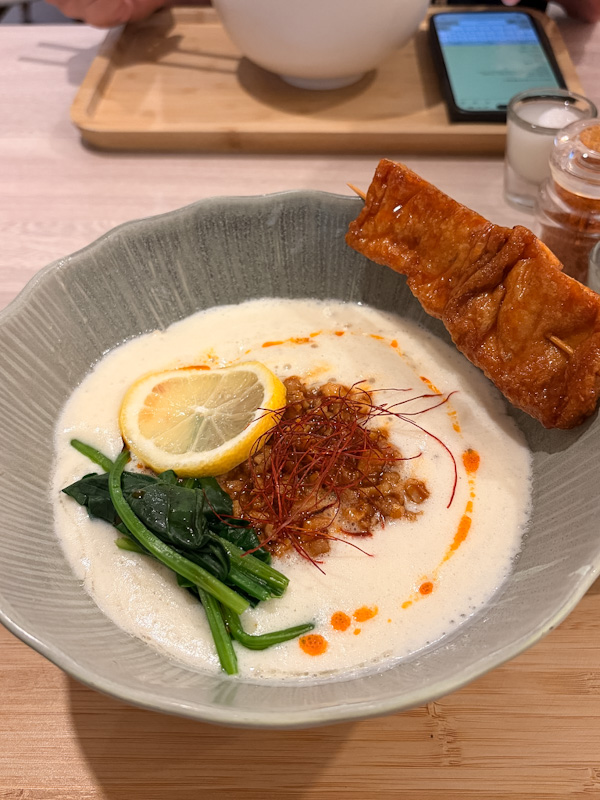
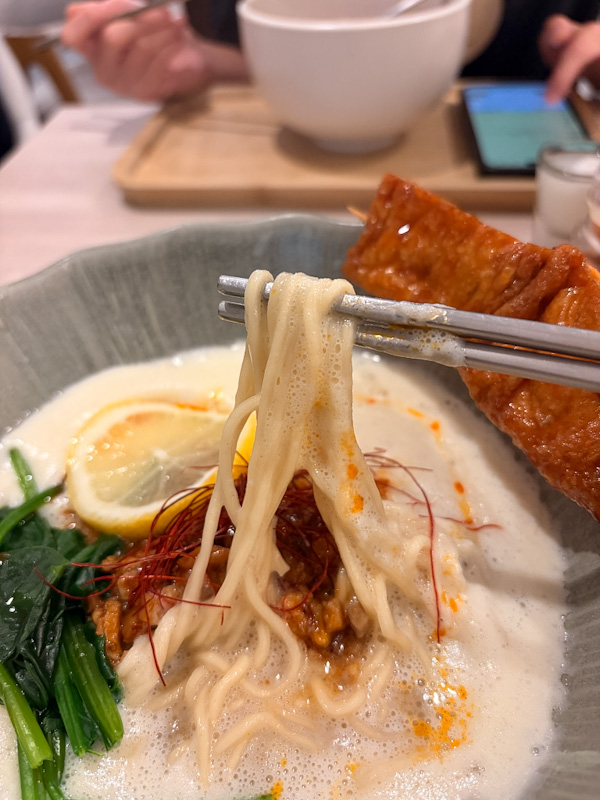
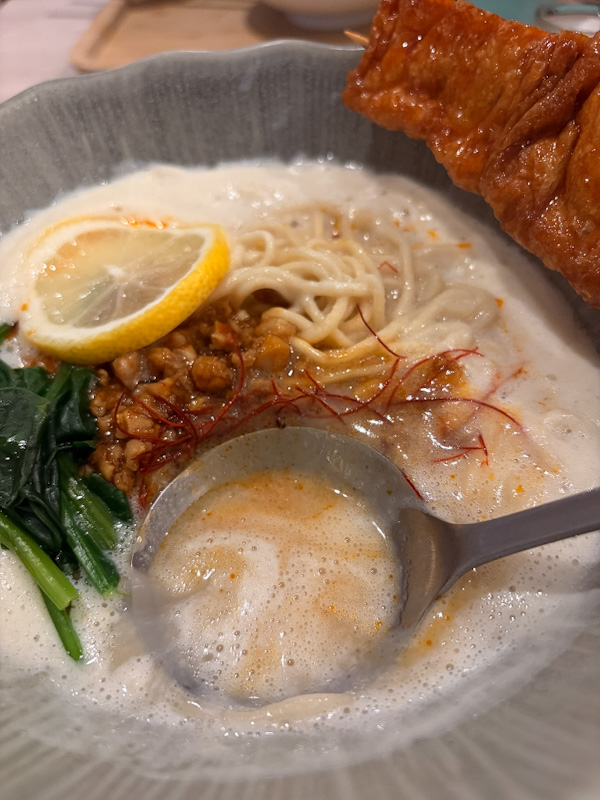
Singapore’s Tori San (雞湯桑) has recently unveiled a limited-edition Soymilk Toripaitan Ramen, created in collaboration with Japanese chef Sano Mai (佐野真伊) of Mitaba Ramen in Japan. Known locally for its creamy chicken-based toripaitan, Tori San takes a more nuanced turn with this special bowl by incorporating soy milk into the broth — a style that has been gaining quiet traction in Japan for its silkier mouthfeel and rounded sweetness. The collaboration has been promoted as a chef-driven, time-limited release at their Telok Ayer outlet, available through April 2026 .

On paper, it reads like a meeting of philosophies: Tokyo-style chicken ramen craftsmanship layered with soy milk’s subtle creaminess. Whether this translates into depth and balance in the bowl is where things get interesting — and that’s what we’re here to examine.
Soymilk Toripaitan Chicken Ramen 豆乳拉麵: 90/100
Noodle: 35/35
Medium thick, straight noodles. I ordered soft for this bowl and this time, they calibrated it correctly. On my previous visit, soft still leaned underdone. This bowl, however, hit that precise point where pliancy meets structure.
Texture wise, the strands yielded easily at first bite, yet the exterior retained firmness and tensile integrity. It did not collapse into limpness. There is a difference between soft and lifeless. This was the former, not the latter.
The mouthfeel carried weight without heaviness. Each strand coated well with broth yet held its own shape. There was no premature sogginess even towards the second half of the meal, which is a good indicator of starch control and proper cooking time.
Taste was noticeably more pronounced this round. The wheat profile came through with clarity. A robust cereal note that lingered rather than disappearing into the broth. It could be natural variance, it could be subtle recipe refinement, but the noodles felt more expressive compared to my last visit.
Soup: 35/35
The opening sip presents a foamy soy-forward creaminess layered over an earthy base. The Sakura Yuzu broth has that milky toripaitan character, but the soy element lends a nutty, grounded depth rather than pure poultry fat richness. It feels rounded and composed.
As you move into the mid palate, savouriness anchors the profile. Then the lemon and yuzu begin to assert themselves. There is a distinct sourish lift that cuts through the creaminess. Not sharp or acrid, but piquant and deliberate. The citrus is not a garnish effect. It is integrated and evolving.
The finish carries a lingering dry heat from the spiced minced chicken. The burn is clean and persistent. It does not overwhelm, but it stays with you. Somewhere in that tail end, there is also a faint nuttiness that re-emerges, tying back to the clean soy creaminess at the start.
This broth is dynamic. It does not taste the same from first sip to final spoon. Initially, the earthy milky character dominates. As the lemon continues to leach into the soup, the profile shifts. By the second half of the bowl, the sourness and spiciness become more pronounced, almost reframing the entire experience. You effectively eat two versions of the same ramen in one sitting. The first half is rich and rounded. The latter half is brighter, sharper, and more assertive.
Meat: 15/20
The hero protein here is minced chicken rather than a slab of chashu. In terms of portion, it is modest but sufficient. The mince is tender and moist, with no dryness or graininess. Texture remains cohesive, not crumbly. It integrates well into the broth without dissolving into it.
Mouthfeel is supple with slight resistance from the spiced crust. The seasoning is savoury with a subtle sweetness underpinning it. Then comes the heat. A bright, lingering burn that creeps rather than punches. It is addictive, and importantly, it amplifies the broth rather than competing with it.
I would have liked slightly more quantity or a bit more structural contrast within the mince, perhaps larger clusters for textural variation. But in terms of flavour calibration, it is well judged.
Other Toppings: 5/10
- The vegetal greens introduce a refreshing bitterness that helps offset the creaminess of the broth. They act as palate resetters, especially as the soup grows more citrus-forward.
- Ito togarashi provides subtle warmth and visual contrast. It is not aggressive, but it adds gentle aromatic heat that lingers in the background.
- Then there is the skewer of fried bean curd, glazed heavily in a salty sweet sauce. Texturally, it is good when eaten hot. The exterior remains firm with a moist interior. However, the glaze leans overly salty. As it cools, the salt becomes more pronounced and starts to dominate rather than complement. It has potential, but the seasoning restraint could be improved.
Summary
Overall, the Sakura Yuzu broth bowl demonstrates confident control over flavour progression and texture management. The noodles are in excellent form, the broth evolves thoughtfully across the meal, and the protein supports rather than distracts. Minor imbalances in the toppings aside, this is a well composed bowl that rewards attentive eating.
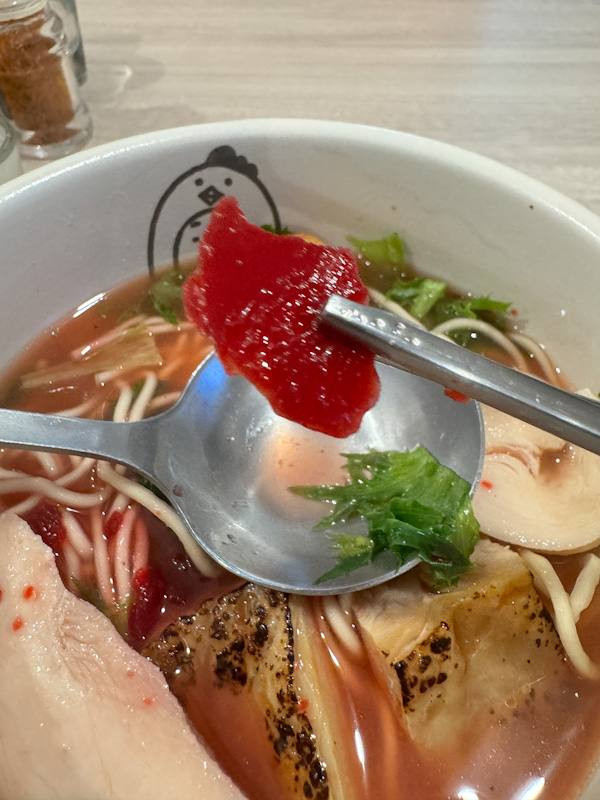
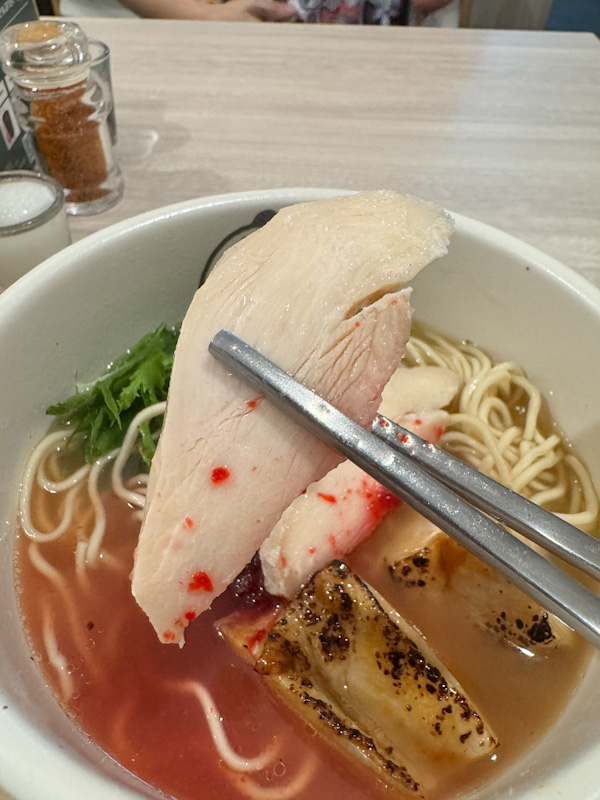
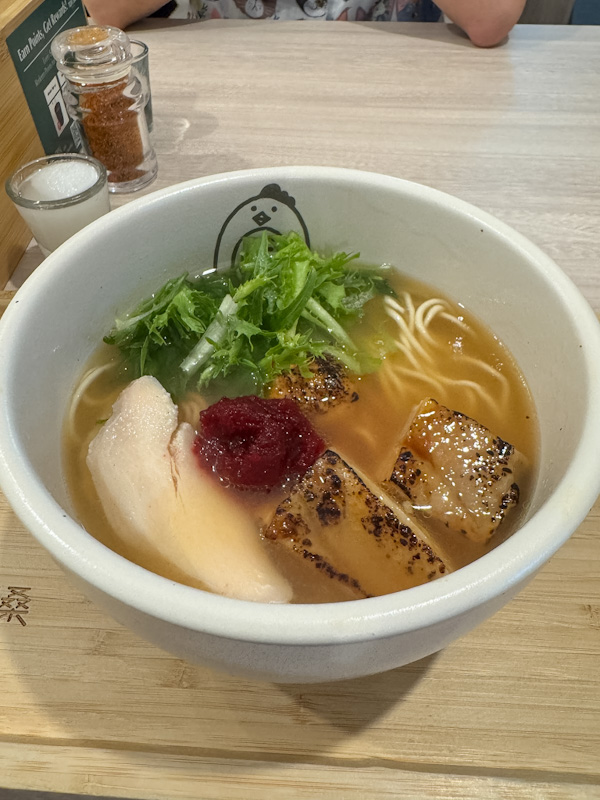
Sakura Yuzu Broth 櫻花柚子: 85/100
Noodle: 35/35
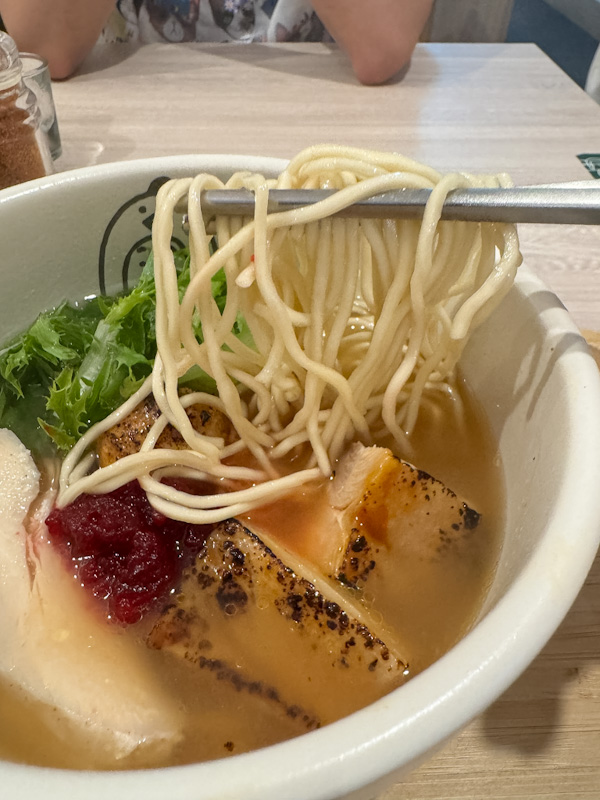
Medium thick, straight noodles cooked hard, exactly how I prefer it for a broth with citrus accents. Texture is firm with a defined bite. There is a clear al-dente core that gives resistance without feeling undercooked. This firmness is important here because the soup carries acidity from yuzu and ume. Softer noodles would have felt fatigued too quickly.
Mouthfeel is snappy and structured. Each strand maintains integrity from first slurp to last. It does not fray or bloat as it sits in the broth. Taste wise, the wheat profile is robust and distinct. You can taste the grain, not just the broth it carries. When slurping, the yuzu aroma lifts through the steam and rides along the noodles, but it never feels perfumed or gimmicky. The citrus sits in the background, enhancing rather than hijacking. This is how aromatic elements should behave in ramen.
Soup: 30/35
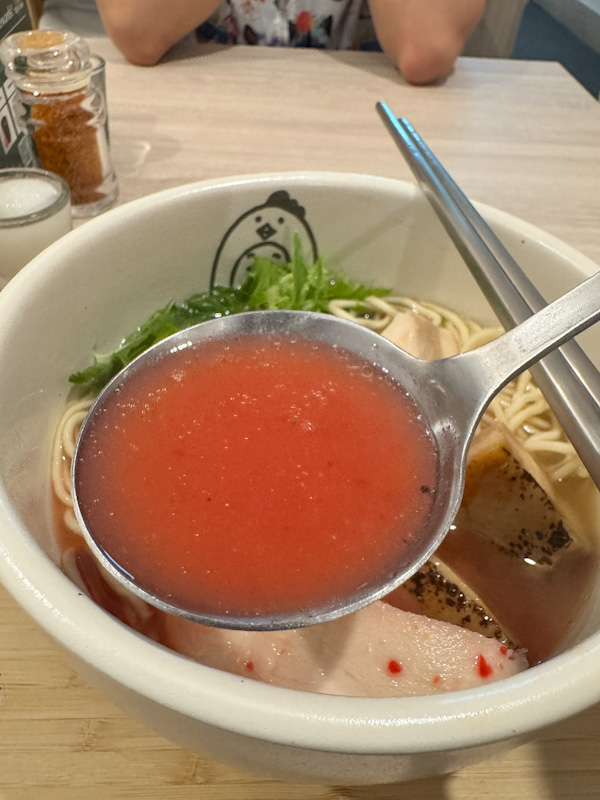
The broth starts as a clear chintan style base with a robust savoury backbone. Clean, structured, and confident. Once the ume-yuzu sauce is mixed in, the opening profile shifts noticeably. The first impression becomes sourish and appetising, led by a plum-yuzu driven acidity. It is not harsh or acrid. It is piquant, bright, and intentional.
The savoury body comes in quickly after the sour lift. In fact, the head and body are tightly interlinked. The sourness does not sit on top of the broth. It folds into it. This creates a sour savoury profile that feels integrated rather than layered in separate blocks.
The finish carries a lingering sweetness. It rounds off the sharper notes from the ume and yuzu. This sweetness is subtle but important. It prevents the bowl from feeling one dimensional or overly sharp.
The layering is cohesive. Instead of a linear progression, this bowl behaves more like a chord. Sour, savoury, and sweet arrive almost simultaneously and fade together. They complement one another in a balanced triangle. That said, while the mid palate is well constructed, the ending does not escalate. It tapers gently rather than building toward a final crescendo. There is complexity, but the second wind never quite arrives.
Meat: 20/20
Three types of chicken, and all executed better than my previous visit. Collectively, the protein anchors the bowl well. There is variety in cut, texture, and flavour expression. This is a strong showing.
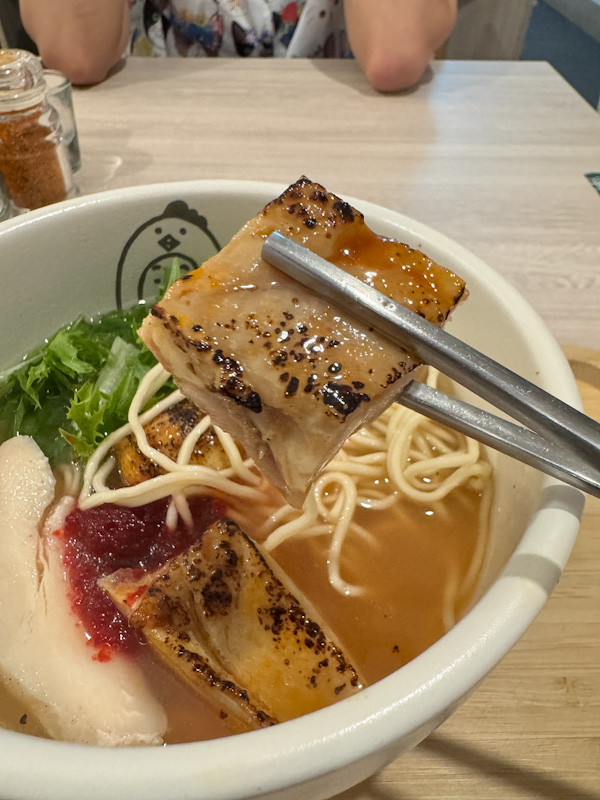
- Grilled Chicken Cubes – Large, thick cubes of lean meat with one side lightly aburi torched. The exterior carries gentle caramelisation while the interior remains tender and juicy. The fats melt smoothly on the palate. The seasoning leans savoury with a faint sweetness. The aburi touch is slightly restrained, but the quality of the meat carries it through.
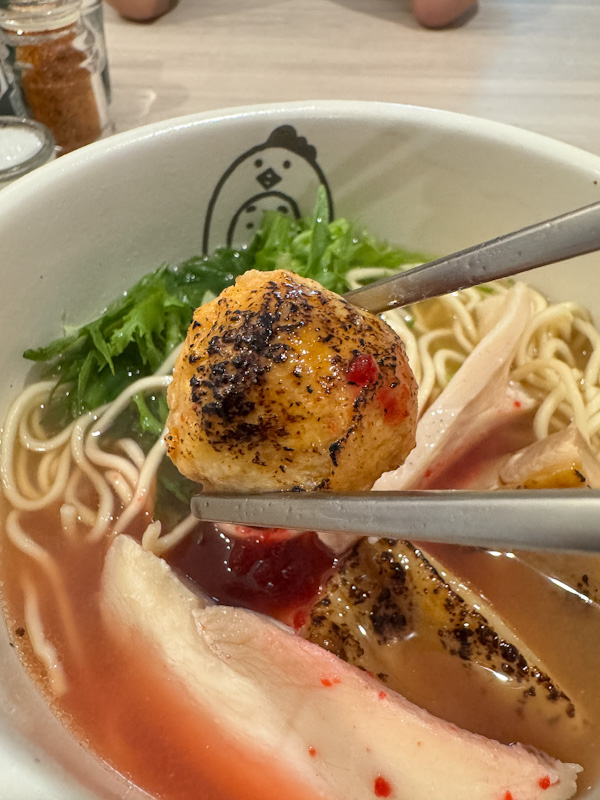
- Tsukune – One minced chicken ball that deserves attention. Texture is tender and moist with well managed juiciness. The aburi flavour is more pronounced here compared to the cubes, adding depth without overpowering. What impressed me most was the handling of the chicken ligaments. Minced fine enough to avoid toughness, yet present enough to provide a delicate crunch. This is textural discipline. The marination is mildly savoury with balanced sweetness, allowing the natural poultry richness to surface.
- Chicken Fillet – A large, medium thick slice of lean meat. Firm yet juicy. Mouthfeel is chewy in a satisfying way, not rubbery. The seasoning introduces subtle pepper notes layered over savoury umami. It finishes clean and confident.
Other Toppings: 0/10
This is where the bowl loses points. The greens add vegetal bitterness and help cut through the acidity and savouriness. Functionally, they do their job. But beyond that, there is little intention.
For a broth that already demonstrates thoughtful sour savoury sweet layering, the absence of a deliberate anchoring topping feels like a missed opportunity. There is no element that resets the palate mid way or pushes the bowl into a new phase.
Imagine a single spiced olive introducing briny depth. A slice of seaweed releasing marine umami as it softens. A mid meal ajihen of cracked black pepper to sharpen the finish. Any one of these could have given the bowl a second wind.
Instead, the flavour arc gently plateaus toward the end. The layering remains good, but without a topping that re energises the palate, the closing act feels slightly muted.
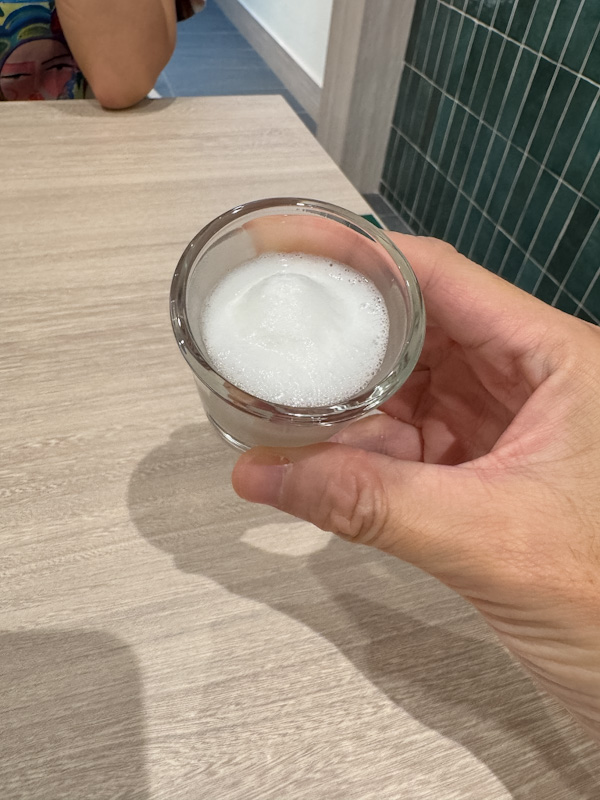
A side note. The pre meal lemon Calpis drink does not pair well here. Its citrus profile mirrors the broth too closely. Rather than contrast and elevate, it stacks acidity on acidity and mutes the nuances.
Summary
At 85 out of 100, this is a well executed bowl that demonstrates control and understanding of balance. With more purposeful toppings to provide contrast and momentum, it could easily climb higher. The soup shows cohesive layering of sour, savoury, and sweet, with good integration rather than disjointed transitions. However, the toppings lack imagination and strategic intent. The bowl already has a solid foundation. What it needs is a deliberate finishing touch to anchor the ending and re-ignite the palate in the final stretch.
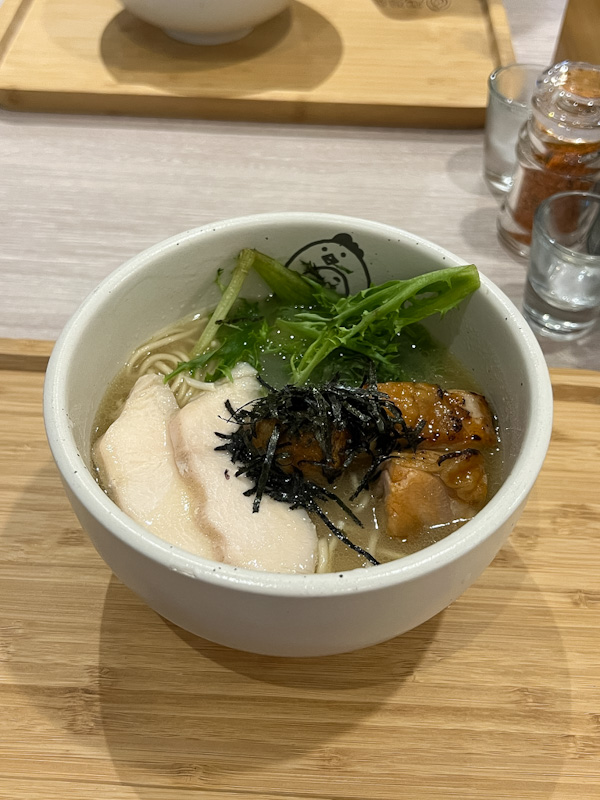
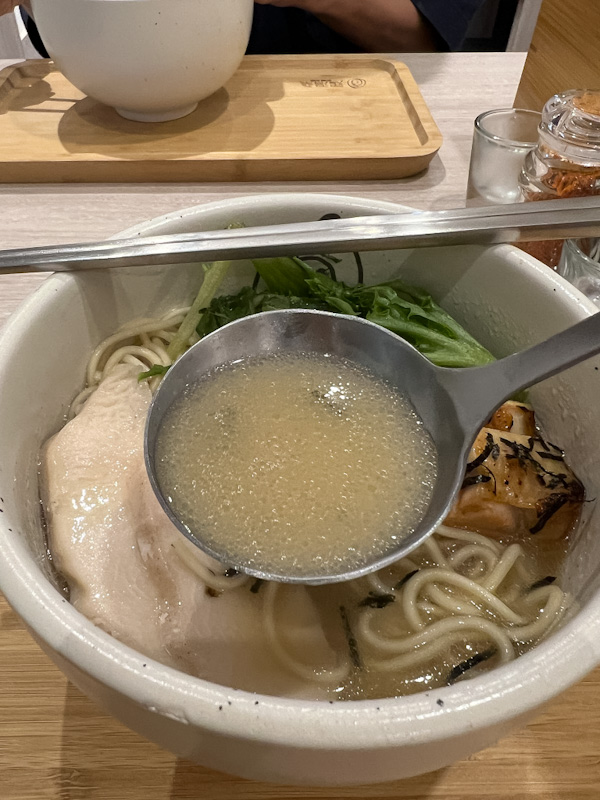
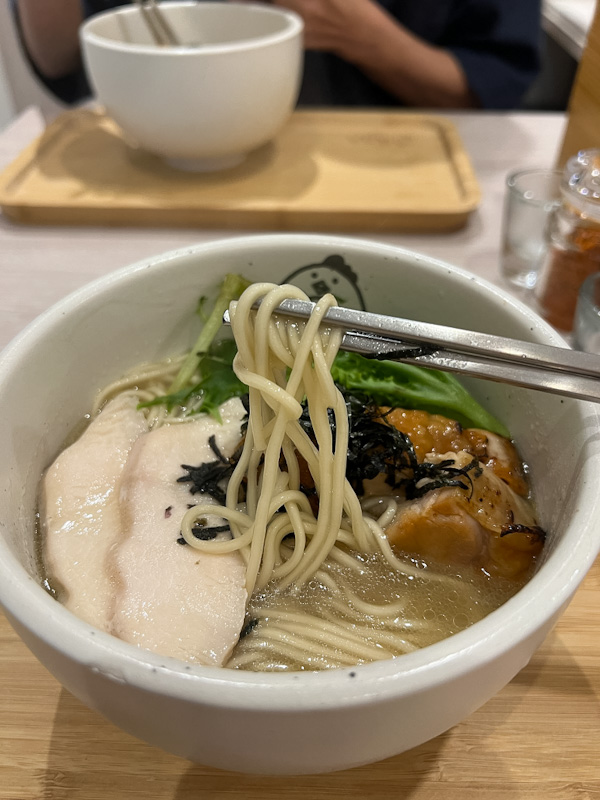
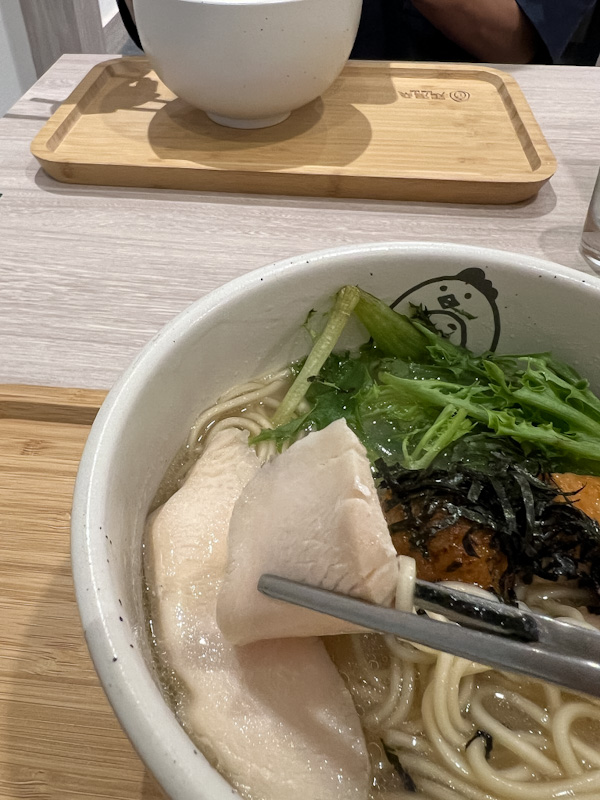
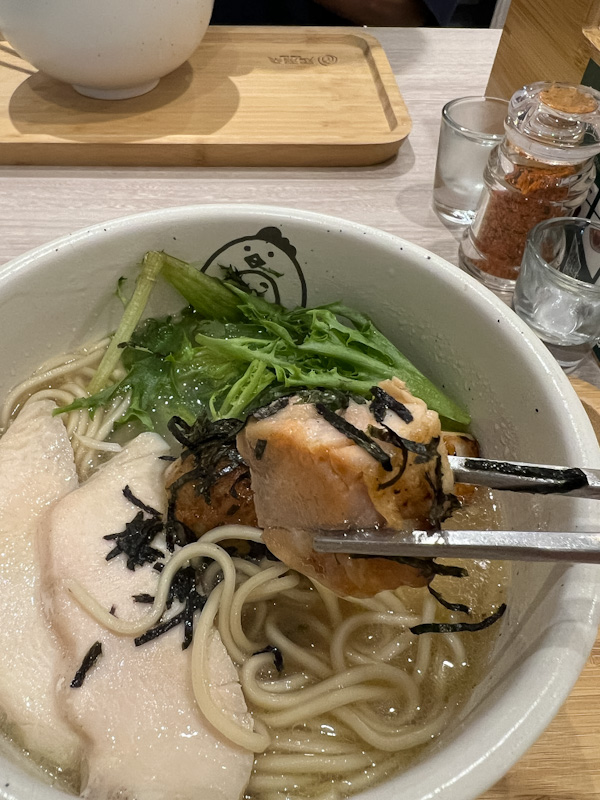
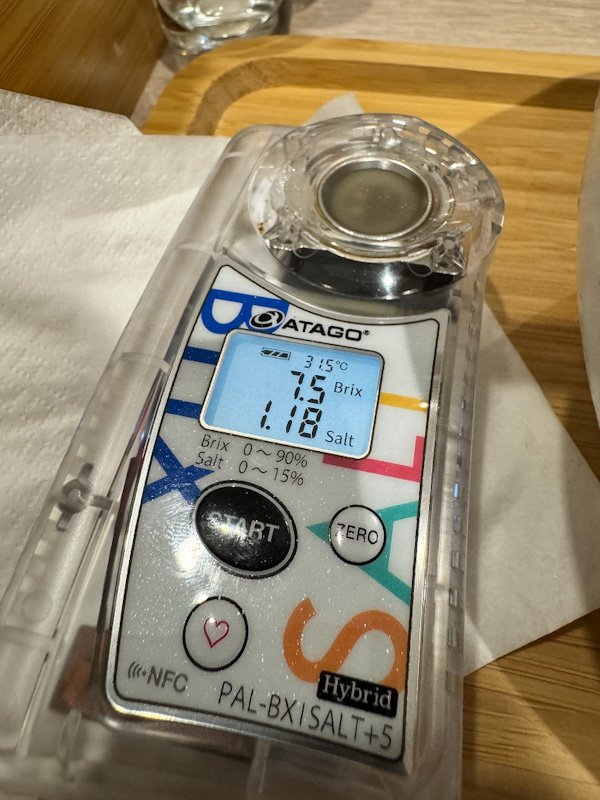
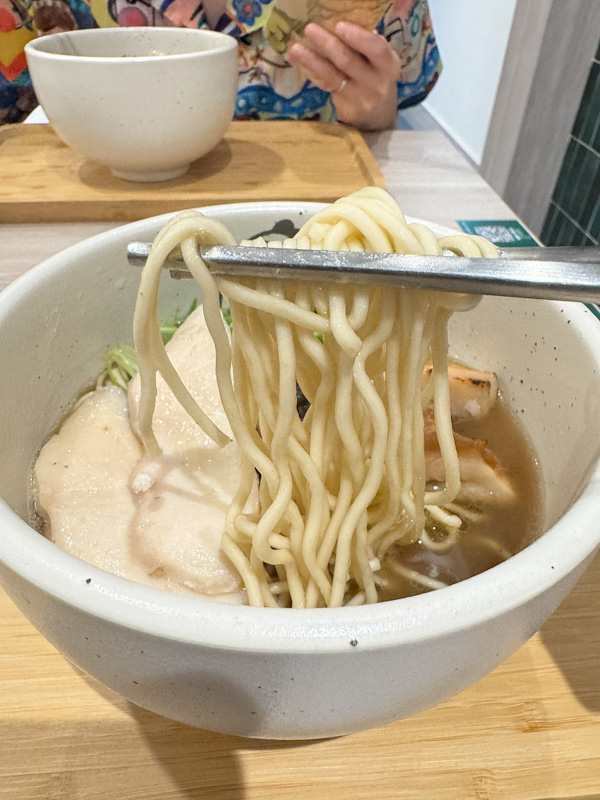
Signature Tori Paitan Ramen: 75/100
Noodle: 25/35
The noodles here lean towards a medium-thick, straight cut with a faint wave. Classic enough to hold up in a creamy chicken broth, yet distinct in their firmness. I ordered the soft option for this but it out firmer than I thought. It had a surprising snap, the kind that sits right between al dente pasta and Hakata’s wiry bite. It’s a high-protein and low-hydration noodle, so it resists just enough to create that satisfying chew without ever going mushy. The wheat character carries through nicely, earthy and grounded, though I wish the aroma had been a touch more pronounced to lift the overall flavour.
Soup: 25/35
The first impression is a warm, familiar chicken note, gentle but inviting. Its savoury body holds a mild umami that comforts more than it overwhelms, like a careful equilibrium rather than a show of power. The finish carries a pleasant chicken aroma that fades a little sooner than expected, leaving a smooth, lightly seasoned trail. This isn’t a broth that’s trying to rival pork-based heaviness. It feels designed for restraint—silky, warming, and soothing, almost like a clean winter stew. It won’t shout for attention, but it knows how to stay on your mind.
Meat: 20/20
This bowl comes with three expressions of chicken, each handled differently, each with purpose.
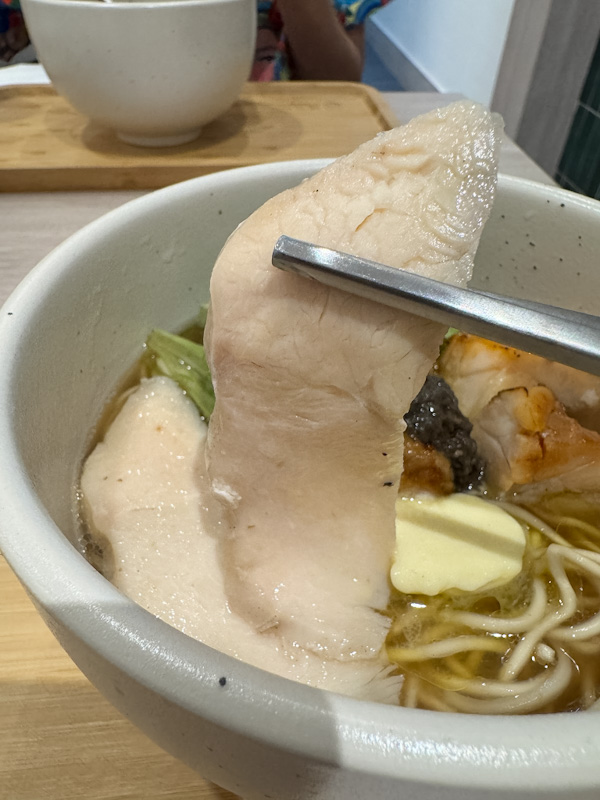
Lean chicken slice — Medium-thick and perfectly tender, with just the right spring. The seasoning leans savoury with a faint peppery lift, finishing on a mild, tangy note that brightens the palate.
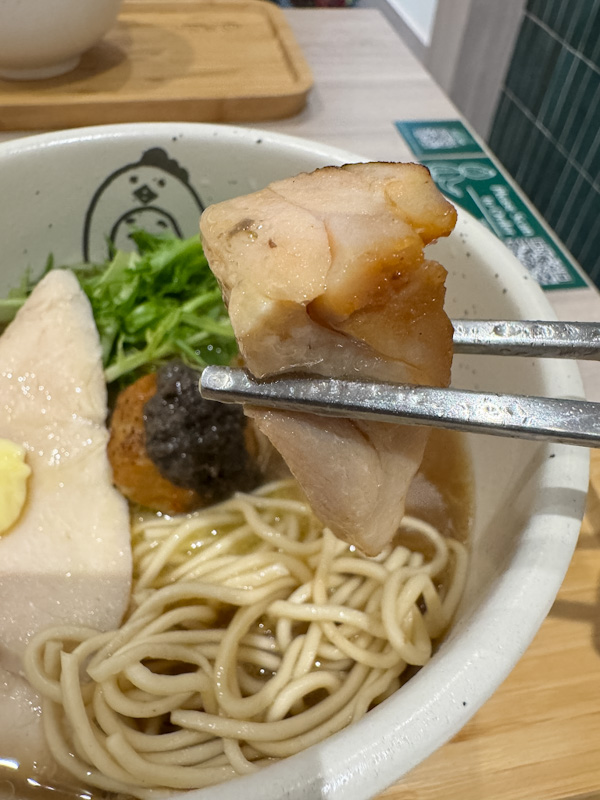
Marinated chicken chashu — Cut into thick cubes, this one’s springy, with soft skin and fats that yield easily. There’s an addictive saltiness that hits first, followed by a deep umami linger. Though aburi-style, the smokiness doesn’t come through distinctly—but it hardly matters; the flavour already satisfies.
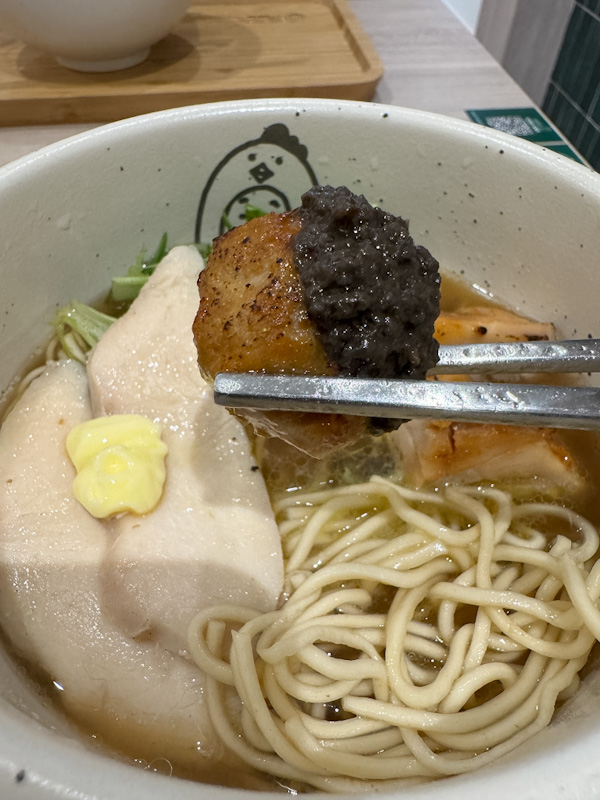
Chicken meatball — Soft, juicy and tender to the bite, savoury, subtly sweet with peppery undertones and the occasional crunch of ligament adding textural contrast. It ties the trio together beautifully. Each piece offering a different register of chicken.
Other Toppings: 5/10
In the ramen, the topping is really simple — A small pile of dried seaweed strands that adds flickers of umami throughout the bowl, deepening the soup with every stir.
But the real “topping” in my mind is the appetiser—an extra palette cleanser that arrived before your meal: a light lemon-Calpis slush. Sweet, gently tangy, and refreshing, it’s a clever intermission between sips of broth and bites of meat, almost like a reset button for the senses.
But whether it’s a launch-week gesture or a permanent feature remains to be seen, but it’s an unexpectedly thoughtful touch.
Summary
This is a classic silky, chicken-based broth style that’s still uncommon here. It’s the kind of ramen that trades intensity for balance, aiming for comfort over complexity. This bowl doesn’t try to shock the palate; instead, it works quietly, layer by layer, to show how far chicken ramen has come in refinement and restraint.
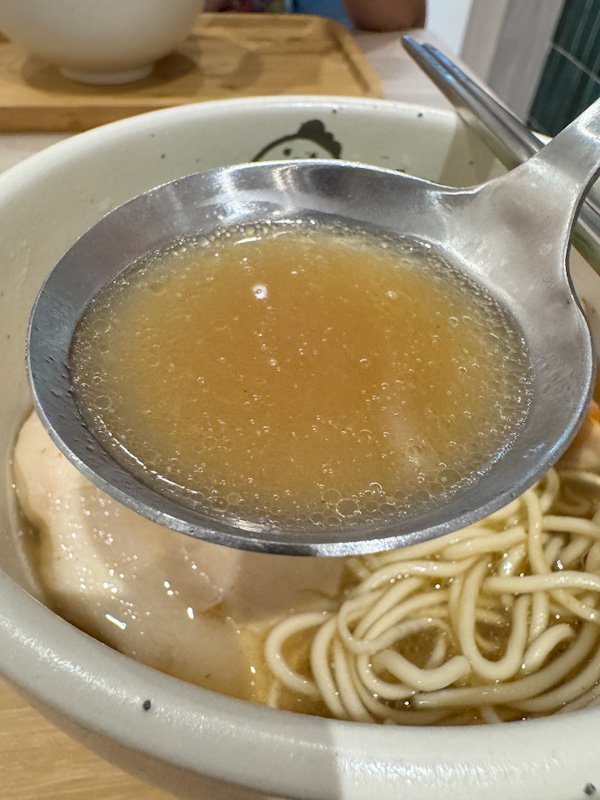
Truffle and Porcini Ramen: 80/100
Noodle: 30/35
Same noodles. Medium-thick, straight noodles with a faint wave—familiar in form but elevated by their bite. I went for the hard option, which turned out perfectly wiry and al dente, giving that distinct snappy chew you’d expect from a high-protein, low-hydration dough. The texture leans closer to handmade pasta than typical ramen, creating a taut, satisfying resistance that anchors the bowl well. The wheat flavour comes through with an earthy tone, though I wished for a slightly stronger grain aroma to lift the finish.
Soup: 25/35
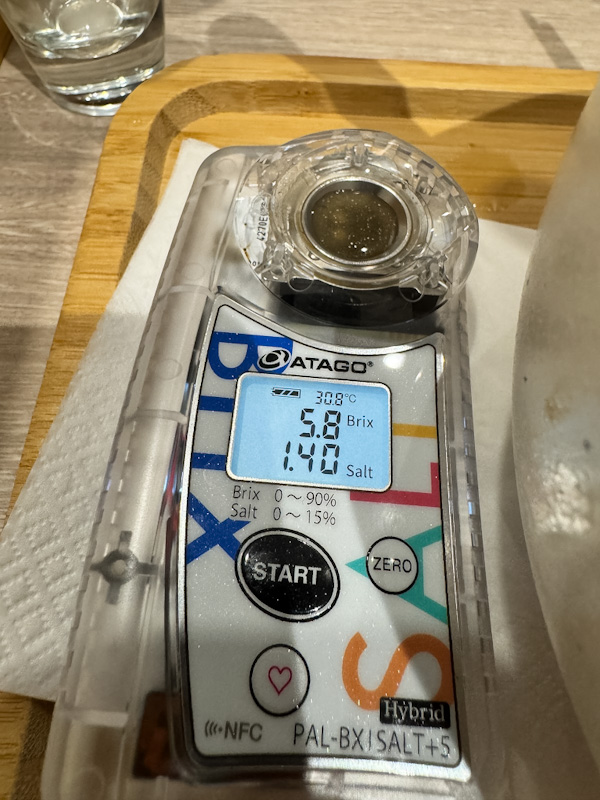
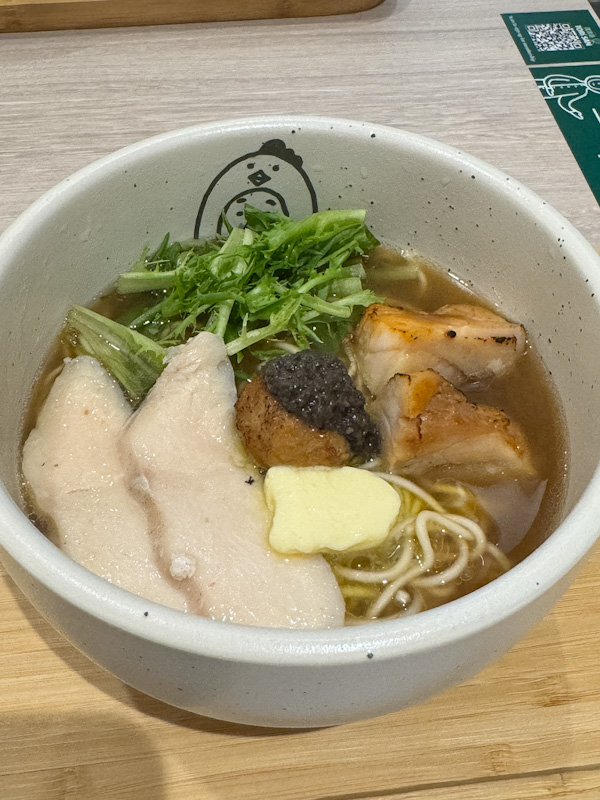
The broth opens with a savoury-sweet chicken base, quickly met by the unmistakable perfume of truffle. As it settles, the body unfolds into a mild, woodsy aroma of porcini layered with a faint buttery smoothness that coats the tongue without feeling heavy. It closes with a firm, salty kick—one that neatly rounds off the experience. The truffle and porcini interplay feels measured rather than indulgent; each supports the other to build warmth and depth without ever tipping into excess. It’s comfort food at its most composed—earthy, balanced, and quietly luxurious.
Meat: 20/20
Three takes on chicken, each crafted with care and precision.
Lean chicken slice — Medium-thick and juicy, tender yet springy to the bite. It starts savoury with a subtle pepperiness and ends on a faintly sour tang, which refreshes the palate between sips of broth.
Marinated chicken chashu — Thick cubes of aburi chicken that lean on texture rather than smoke. The skin and fats are soft and supple, the meat bouncy and juicy. It hits first with a pleasant saltiness before fading into rich umami depth. The aburi element is restrained—more hint than headline—but it works.
Chicken meatball — Soft, tender, and a touch sweet, with peppery undertones and a bit of crunch from ligaments. It’s the kind of detail that gives the bowl an artisanal rhythm—different textures, same harmony.
Other Toppings: 5/10
Toppings here are minimal but intentional.
- A few sprigs of rocket add a crisp vegetal lift, functioning almost like a built-in palate cleanser.
- A small pat of butter melts into the broth, adding a barely perceptible silkiness—noticeable only if you pay attention, yet it makes a difference. It’s a supporting role done right.
Before the ramen arrived, a small lemon-Calpis slush was served—sweet, zesty, and refreshing. Whether it’s a soft-launch gesture or part of their permanent service rhythm, it works remarkably well as a prelude, resetting the palate before the first sip of broth.
Summary
Tori San’s Truffle and Porcini Ramen takes the same chicken-forward foundation that defines its toripaitan and infuses it with earthy depth. It’s a smart twist on their signature broth—one that layers truffle and porcini into the creamy chicken base without turning it into a novelty act. The result feels confident and balanced: unmistakably indulgent in aroma, yet still grounded in the warmth and restraint that Tori San does best.
DISCLAIMER
One man’s meat is another man’s poison.
Find out more about our palettes and how we evaluate our ramen here. 😉