
WHAT WE ATE
- Jiro Ramen, 60/100 (Capitol outlet, 17 Jun 2023)
- IEKEI Ramen, 75/100 (Suntec outlet, 12 Apr 2023)
- Niboshi Ramen, 80/100 (Suntec outlet, 20 Nov 2022)
- Crab Stock Ramen, 95/100 (Suntec outlet, revisited 20 Nov 2022)
- Black Spicy Lobster, 70/100 (RWS outlet, 1 Jan 2022)
- Lobster Broth Ramen, 70/100 (RWS outlet, 1 Jan 2022 / Capitol outlet, 17 Jun 2023)
Jiro Ramen: 60/100
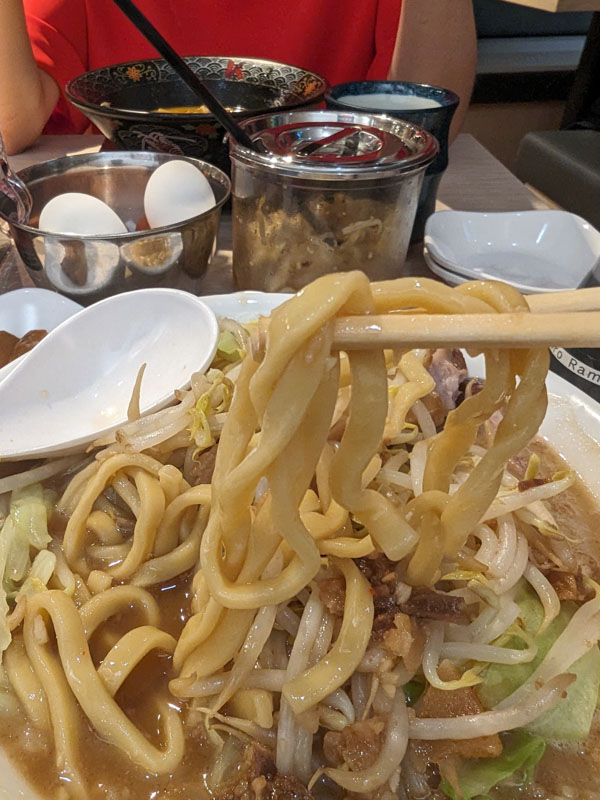
Noodle: 25/35
The noodles present a thick, dense geometry reminiscent of traditional tsukemen. Tensile bite is prominent, offering a heavy, muscular resistance that demands prolonged mastication. The mouthfeel is substantial and firm, though the physical effort required to chew through the bowl borders on monotonous. From a flavor standpoint, the baseline wheat character emerges with mild, earthy undertones, while the alkaline presence is cleanly managed with no off-putting kansui bitterness.
Soup: 25/35
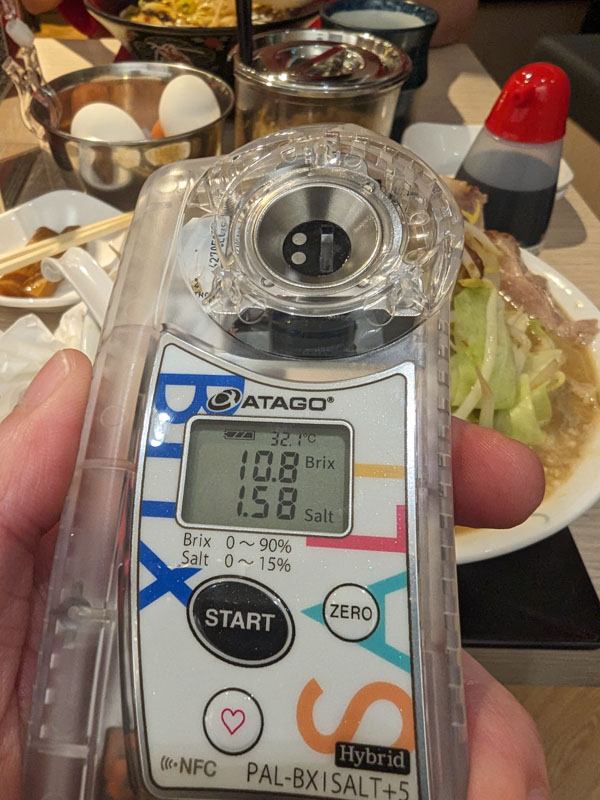
The soup opens with a sweet, almost miso-adjacent head and a prominent garlicky aroma that immediate hits the front palate. On the mid-palate, the body unfolds into a rich emulsion dominated by tonkotsu weight, registered at a high 10.8 Brix rating. The tail transitions into a sharp shoyu salinity that lingers alongside raw garlic heat. While the garlic presence provides a necessary piquant lift, a higher raw garlic dosage would better cut through the dense pork fat.
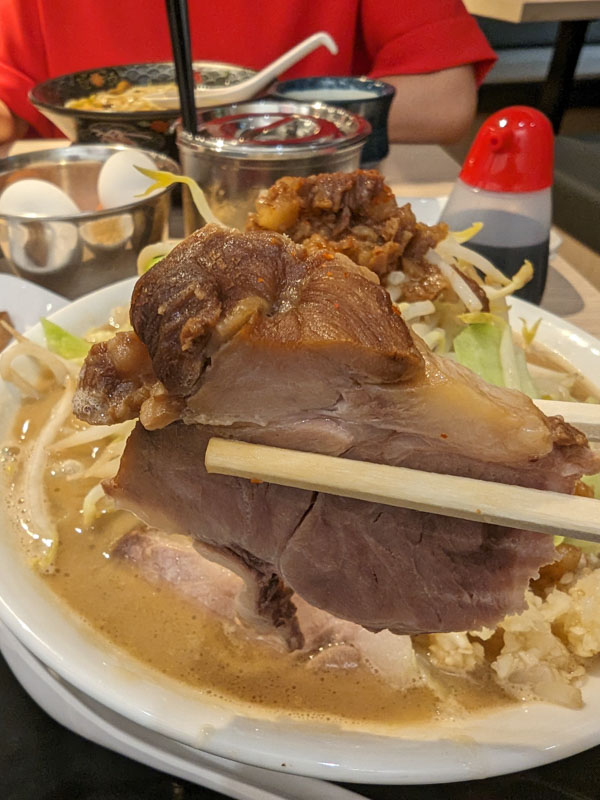
Meat: 5/20
The pork chashu arrives as a thick, substantial slab with a tender physical texture. However, the execution falls short on flavor development. Seasoning penetration is minimal, leaving the interior under-marinated and allowing an unrendered, overly aggressive porky gaminess to dominate the palate rather than a balanced, savory profile.
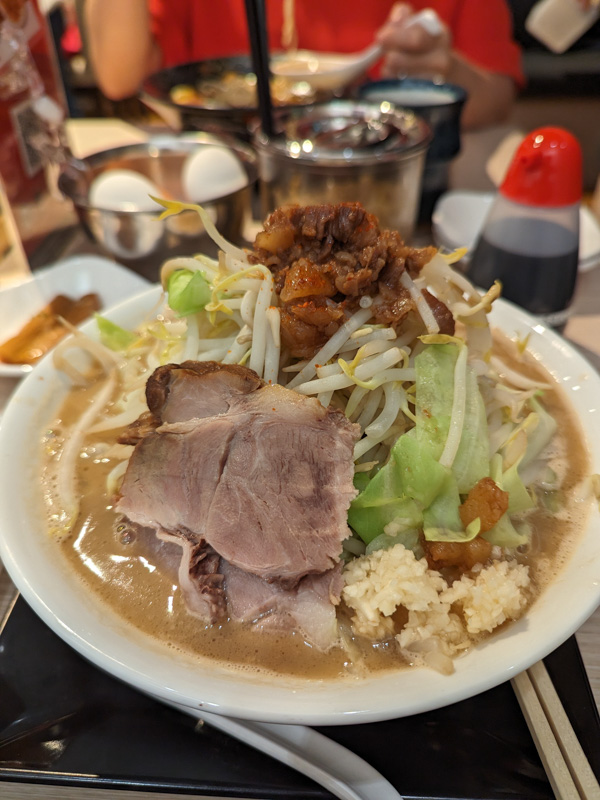
Other Toppings: 5/10
- The mountain of blanched bean sprouts and cabbage provides an essential, crunchy textural contrast, though their unseasoned nature pales in comparison to the complimentary marinated bean sprouts.
- The free-flow marinated bean sprouts carry a much sharper, savory-spicy profile that actively cuts through the heavy broth.
- A scoop of marinated, fatty minced pork adds a glossy, umami-rich dimension to the upper layer of the soup as it dissolves.
Summary
This Jiro-style bowl delivers the signature physical heft and intense salinity the style is known for, anchored by thick noodles and a high-brix broth, though it is ultimately dragged down by poorly seasoned chashu.
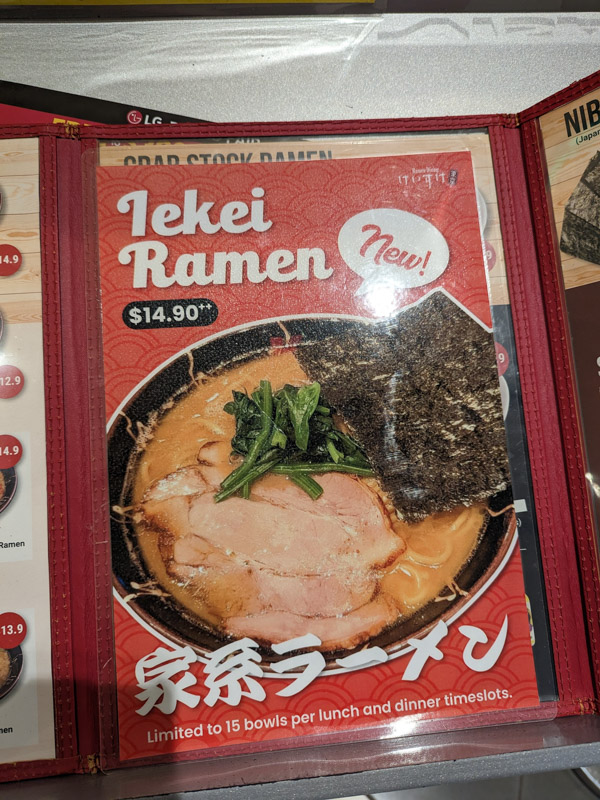
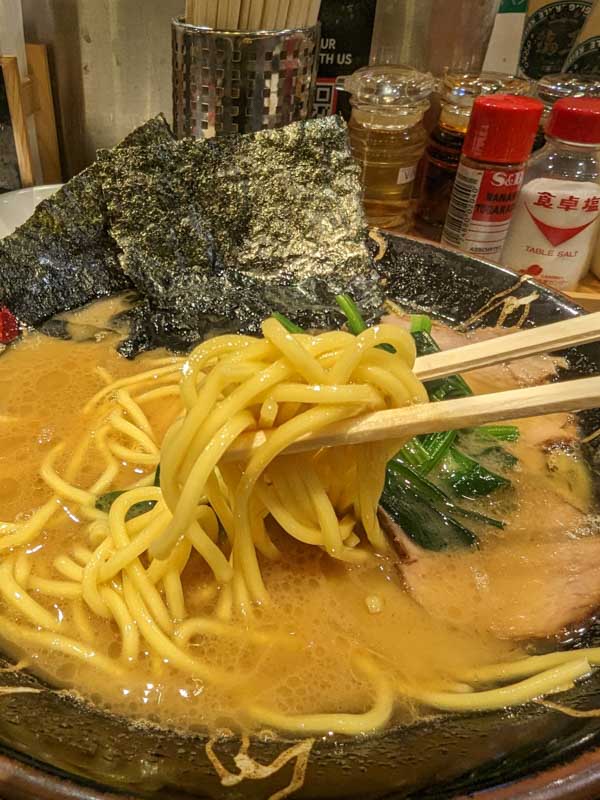
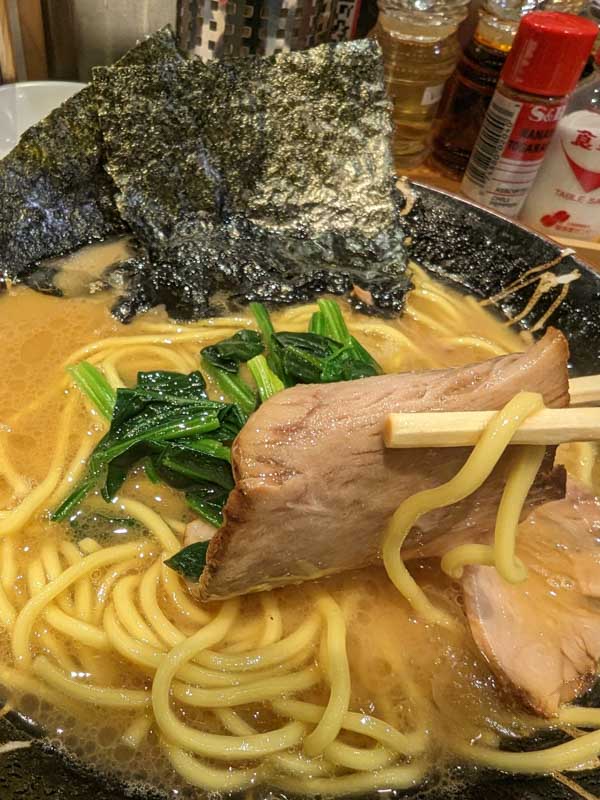
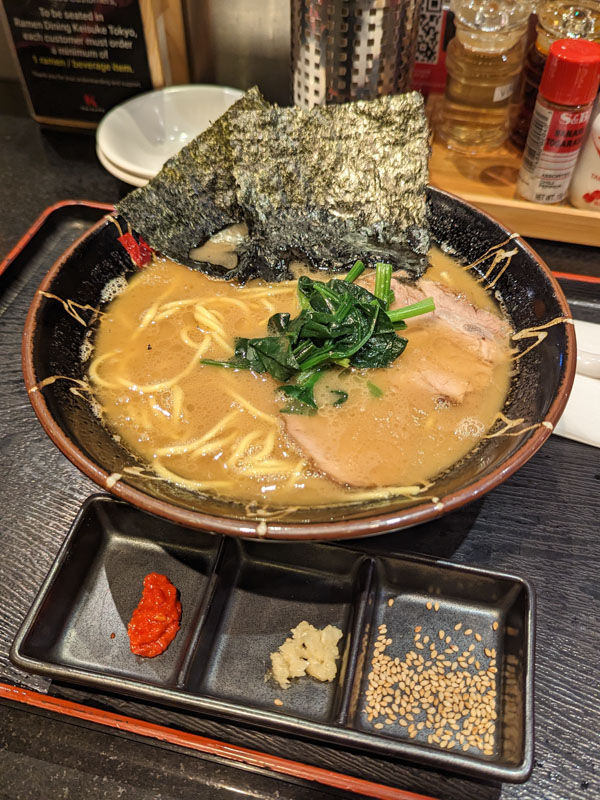
IEKEI Ramen: 75/100
Noodle: 20/35
The noodles present an unexpected visual profile, resembling a yellow egg noodle. This stems from the style’s roots as an adaptation of Chinese la mian. Instead of the clean, snapping bite of a Hakata tonkotsu strand or the elastic spring of a curly Sapporo miso noodle, the texture here is firm and springy without feeling strictly chewy. The mouthfeel leans noticeably doughy, holding a substantial fullness. Cut to a shorter, Katong laksa-style medium length, the strands slurp effortlessly alongside the dense soup. From a flavor standpoint, they avoid any harsh alkaline notes, delivering a clean, comforting grain base that carries the weight of the broth well.
Soup: 25/35
Originating from a truck-driver-turned-ramen-master, the broth marries shoyu and tonkotsu into a single emulsion. The head opens with an assertive shoyu presence, driven by the sharp, savory notes of aged soy sauce. On the mid-palate, the body fills out into a rich tonkotsu depth, displaying strong umami weight before transitioning into a subtle, sweet pork finish. The salinity and density are unapologetically heavy, making this a intense bowl that will easily overwhelm a lighter palate.
Meat: 20/20
The thinly sliced chashu is soft and tender throughout. Seasoning penetration is executed evenly from the core outward, creating a balanced, fully integrated savory profile without any unrendered gamey fat or dry patches.
Other Toppings: 10/10
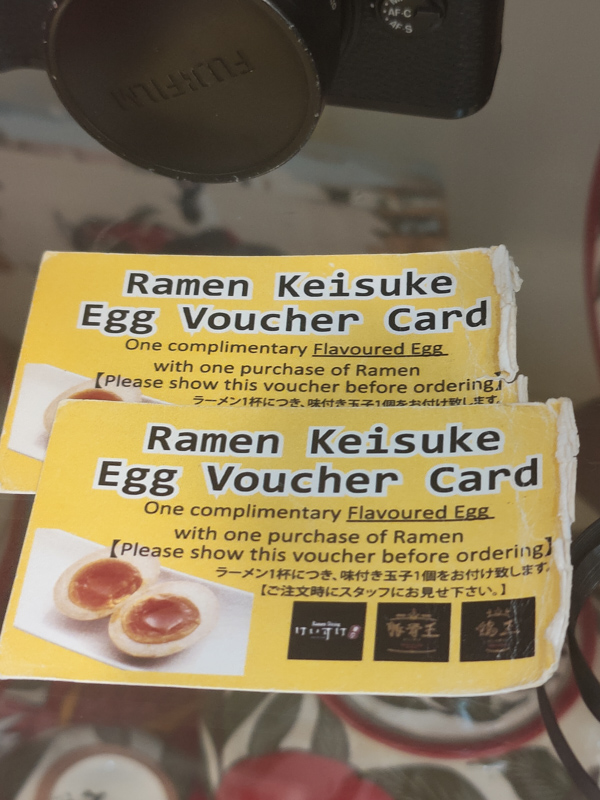
- The ajitama delivers its standard custard-like texture and steady savory-sweet profile.
- Blanched spinach acts as an essential vegetal counterweight, absorbing the soup while cutting through the heavy pork fat.
- A side tray of raw garlic introduces a piquant, aromatic punch to sharpen the broth mid-meal.
- Chilli paste delivers a slow, subtle throat burn with a distinct hint of Sichuan pepper-like warmth.
- Toasted sesame seeds add an earthy, nutty dimension to the upper layer of the soup.
- Complimentary marinated bean sprouts provide a crunchy, savory finish to mop up the remaining broth once the noodles are finished.
Summary
This IEKEI bowl captures the signature heft of the Yokohama style, balancing a punchy shoyu-tonkotsu broth and short, doughy noodles with an engaging, highly customizable ajihen topping sequence.
Niboshi Ramen: 80/100
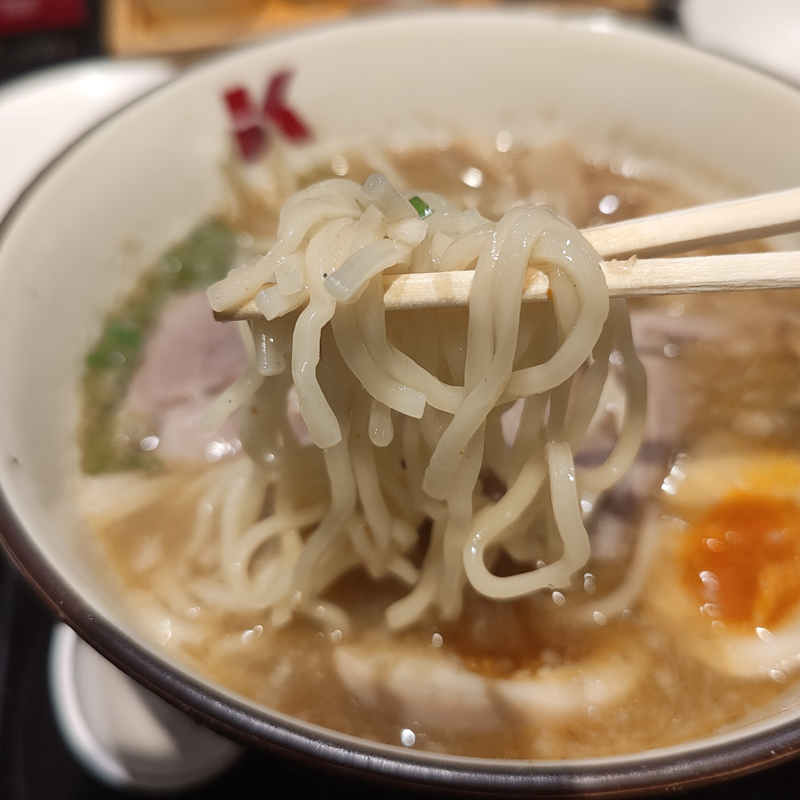
Noodle: 25/35
The noodles present a medium-thick, wavy geometry designed primarily for fluid slurping. Texture-wise, they offer a firm initial bite and a resilient, slightly chewy mouthfeel that stops just short of a true al dente snap. Throughout the meal, the structural integrity holds up remarkably well, resisting soggy degradation even as the strands sit submerged in the dense liquid toward the bottom of the bowl. From a flavor standpoint, the profile remains entirely neutral; while the wheat character is clean, it lacks a distinctive or memorable grain-forward presence.
Soup: 30/35
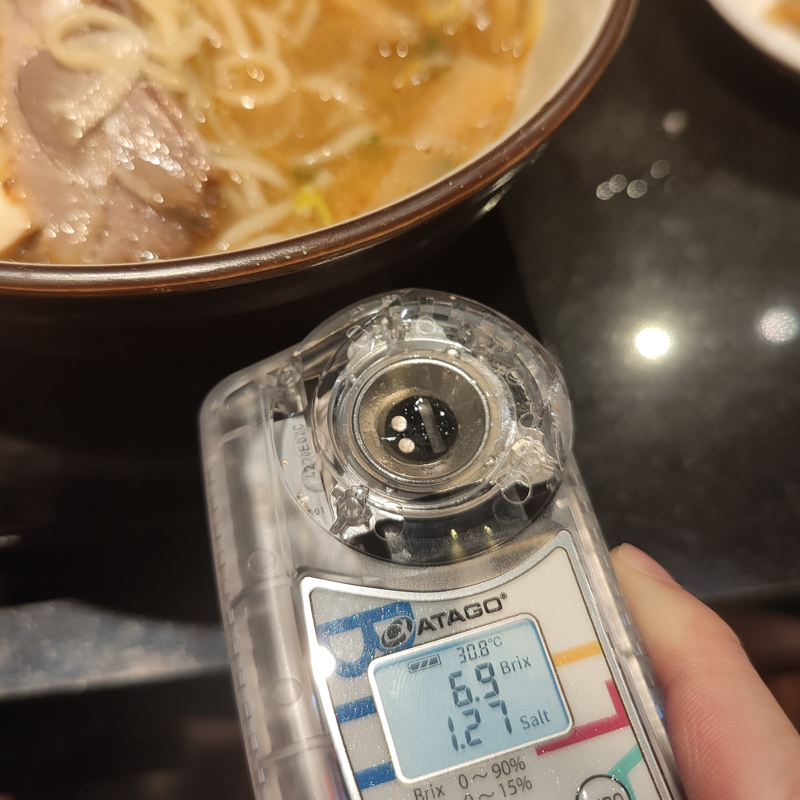
This niboshi broth delivers a cloudy, heavily emulsified body built on a foundation of simmered dried anchovies. The opening salvo hits the front palate with a sweet umami head before expanding into an assertive, deeply savory wave of concentrated dried fish essence. Far from the acrid or stale notes associated with poorly handled seafood, the fish profile here is punchy, intentional, and clean, punctuated by subtle spice undertones that supply a brief thermal kick at the very back of the throat. Clocking in at 6.9 Brix on the refractometer, the soup possesses a noticeably dense, weighty mouthfeel that sets it apart from traditional clear dashi or lighter fish-based broths.
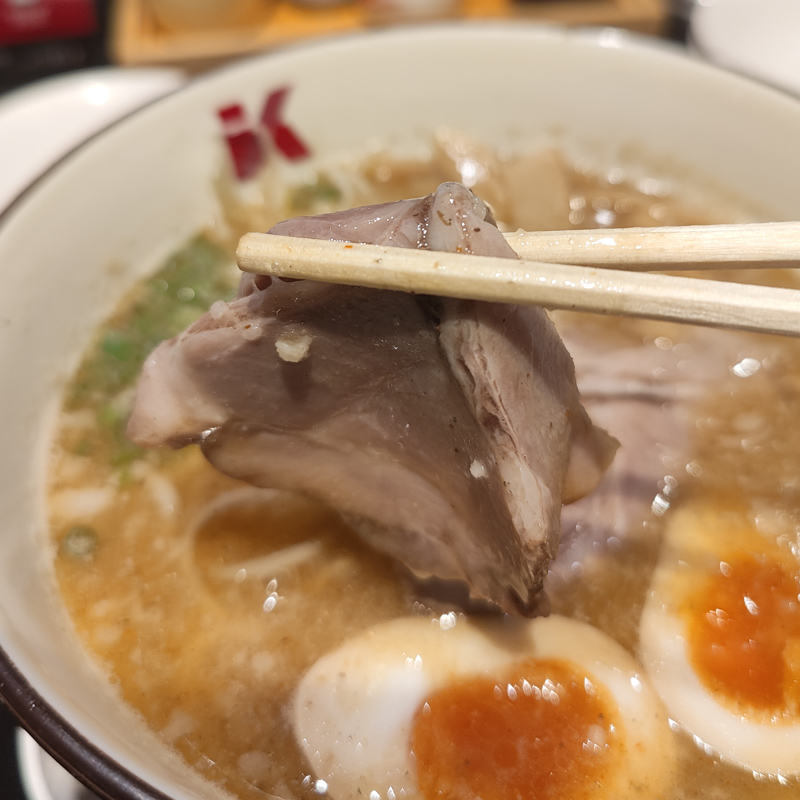
Meat: 15/20
The pork chashu features a noticeably thinner cut than previous renditions, but the technical trade-off pays off in physical tenderness. The slice breaks apart effortlessly on the palate, with the off-putting, gamey pork finish of past visits entirely eliminated. Seasoning penetration is well-balanced throughout the thin profile, allowing the savory soy marinade to fully permeate the meat rather than sitting purely on the exterior.
Other Toppings: 10/10
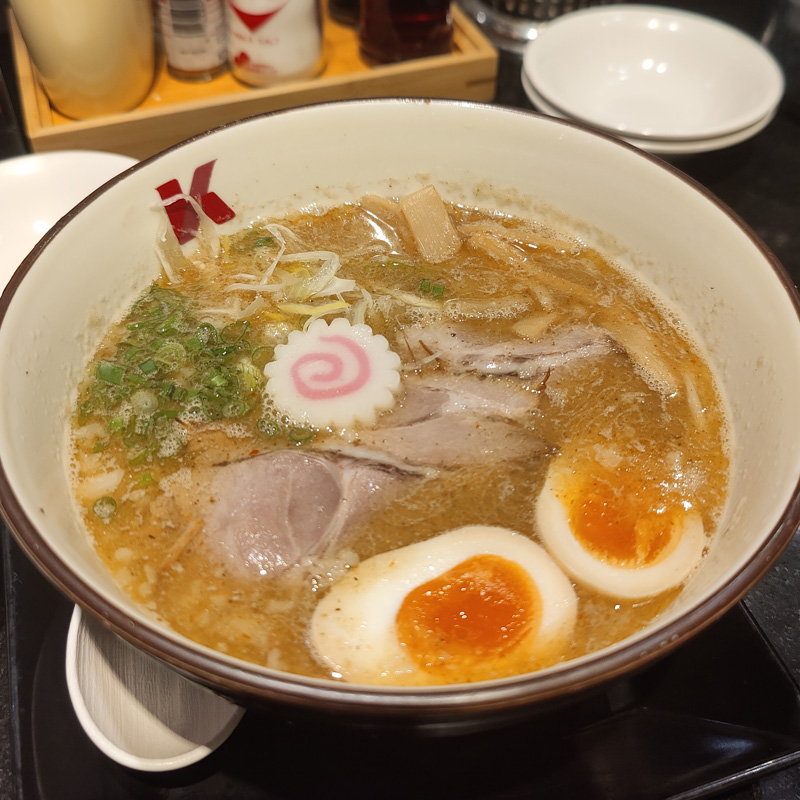
- The hanjuku egg is precisely executed, featuring a jammy core that delivers a rich, savory finish without tipping into excessive salinity.
- Standard secondary garnishes offer a light textural baseline without altering the structural direction of the bowl.
- Complimentary table-side marinated bean sprouts act as a vital functional lever; when incorporated halfway through the meal, their spiced, savory oils dissolve into the heavy niboshi base, executing a successful ajihen (flavor change) that refreshes the entire broth.
Summary
This Niboshi bowl balances a dense, 6.9-Brix fish broth and resilient wavy noodles with much-improved chashu, using table-side sprouts to execute a satisfying mid-meal flavor transformation.
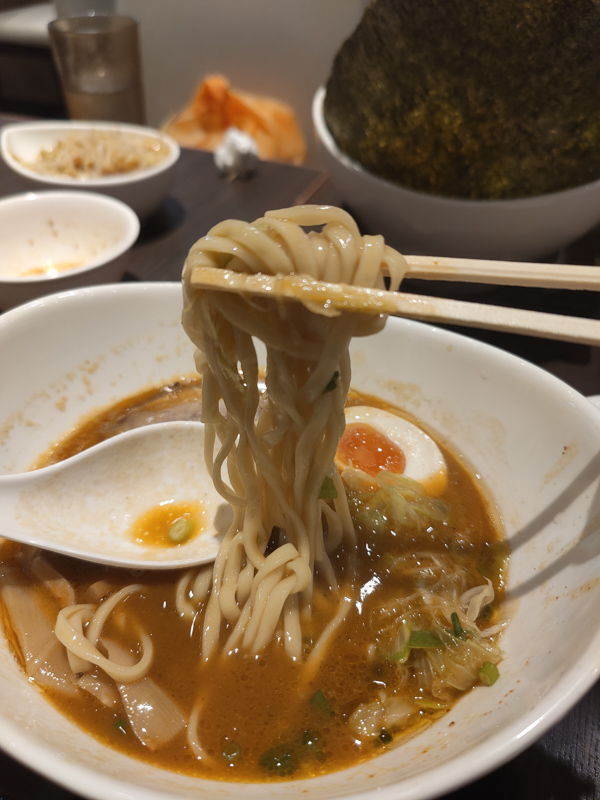
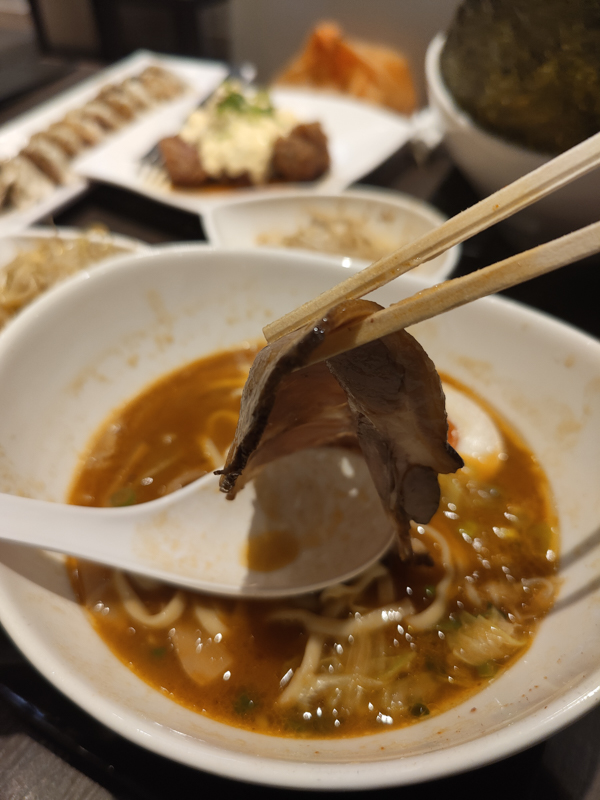
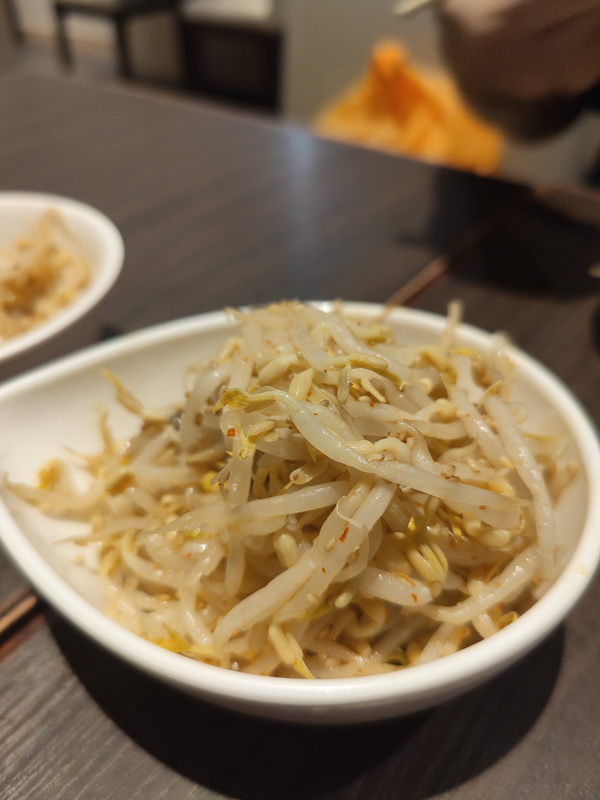
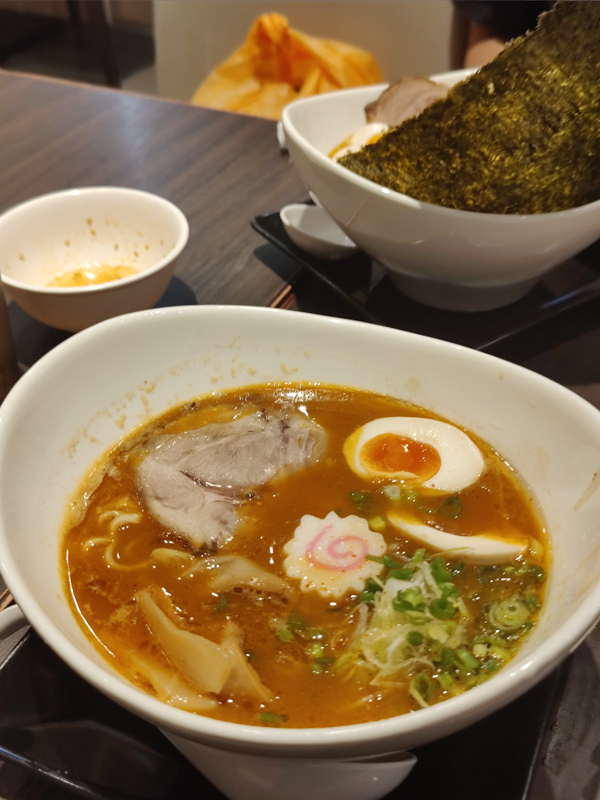
Crab Stock Ramen: 95/100
Noodle: 35/35
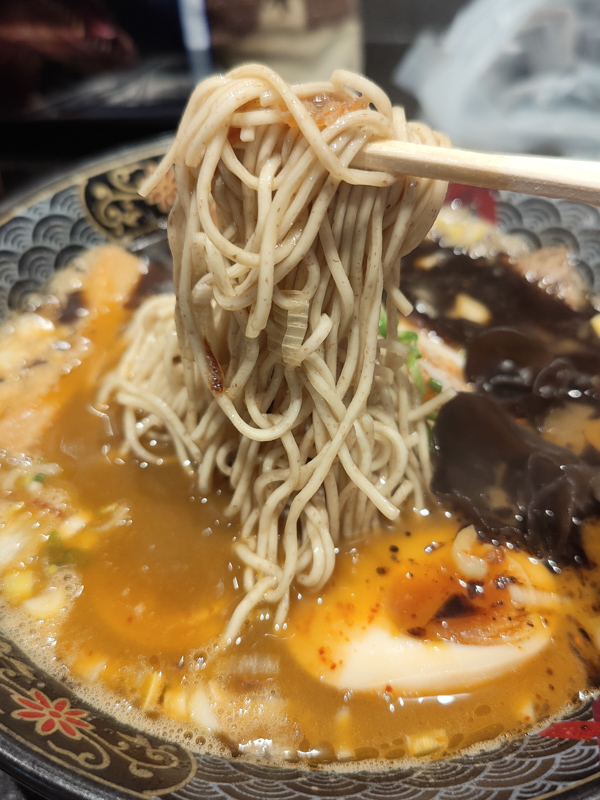
The noodles selected for this bowl depart significantly from conventional ramen profiles. Featuring a thick, flat-sided geometry that strongly resembles local Singaporean mee pok, the strands display exceptional structural integrity. Throughout the meal, they maintain a firm, confident bite without degrading into a soggy or limp texture. The tensile resistance remains taut from the first slurp to the final bite, providing a satisfying, elastic mouthfeel. Additionally, the availability of customizable noodle hardness allows for precise control over the final bite dynamics.
Soup: 35/35
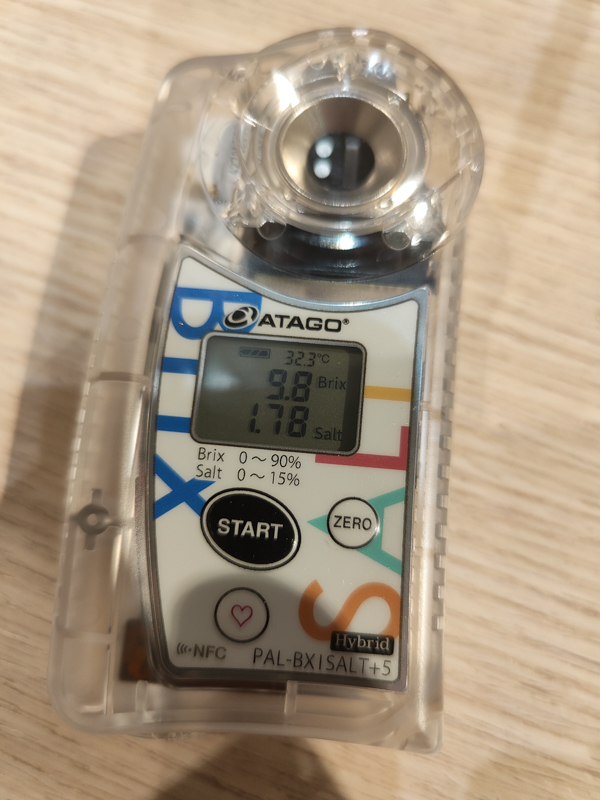
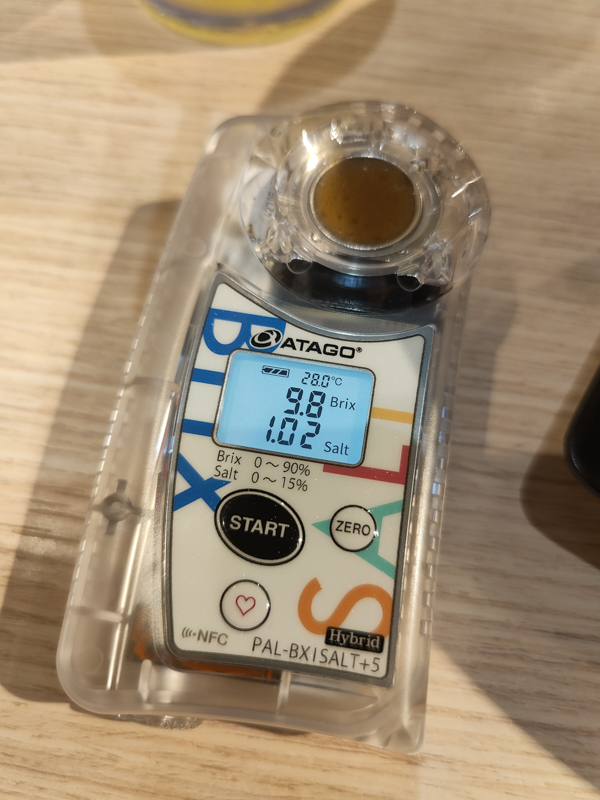
This crab broth is a total departure from standard seafood formulations. Moving well past thin dashi foundations, it exhibits an ultra-dense, almost bisque-like viscosity that coat the palate entirely. The head opens with an overwhelming, highly concentrated crab aroma and immediate salinity. On the mid-palate, the body expands into a deep, velvety umami weight, registering a high 9.8 Brix reading that rivals the physical density of a heavily reduced tonkotsu broth. The tail finishes with a long, rich seafood warmth. Selecting the “strong” taste profile on the order sheet primarily intensifies the overarching salinity of the emulsion, accentuating the underlying oceanic depth without compromising the soup’s creamy structural balance.
Meat: 15/20
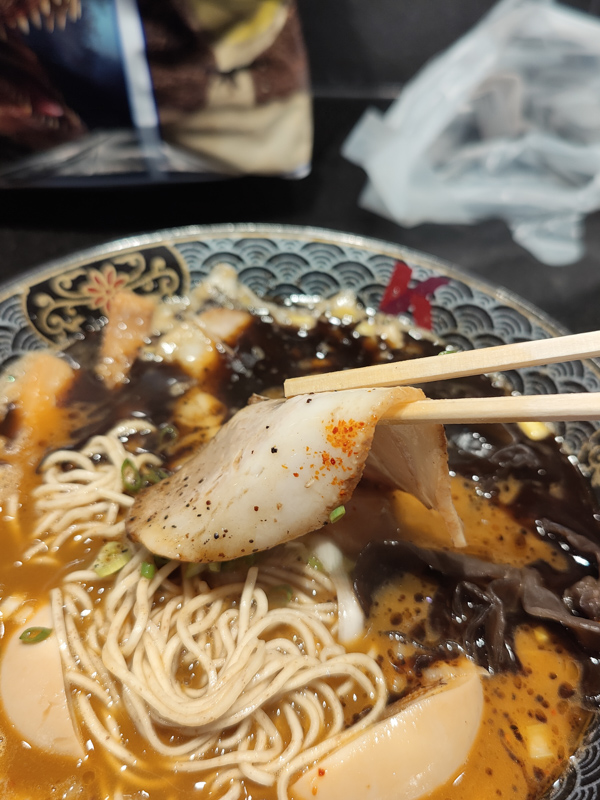
The pork chashu presents a marked technical improvement from earlier iterations. The cut is visibly tender, breaking down easily under minimal pressure and offering a much softer mouthfeel. Seasoning penetration is notably deeper and more pronounced throughout the slice, allowing the savory soy marinade to assert itself cleanly against the dominant, high-brix crab broth without tasting muted or lost.
Other Toppings: 10/10
- The ajitama is precisely executed, featuring a jammy, custardy yolk that delivers a savory, well-calibrated aftertaste without tipping into harsh salinity.
- The complimentary table-side marinated bean sprouts remain an absolute operational highlight; their spiced, savory crunch offers an essential textural contrast that cuts cleanly through the thick, viscous weight of the crab base.
Summary
This Crab Stock Ramen is an unapologetically rich, high-brix masterclass in seafood extraction, pairing unique flat-sided noodles with a dense, bisque-like broth that delivers pure, uninhibited umami.
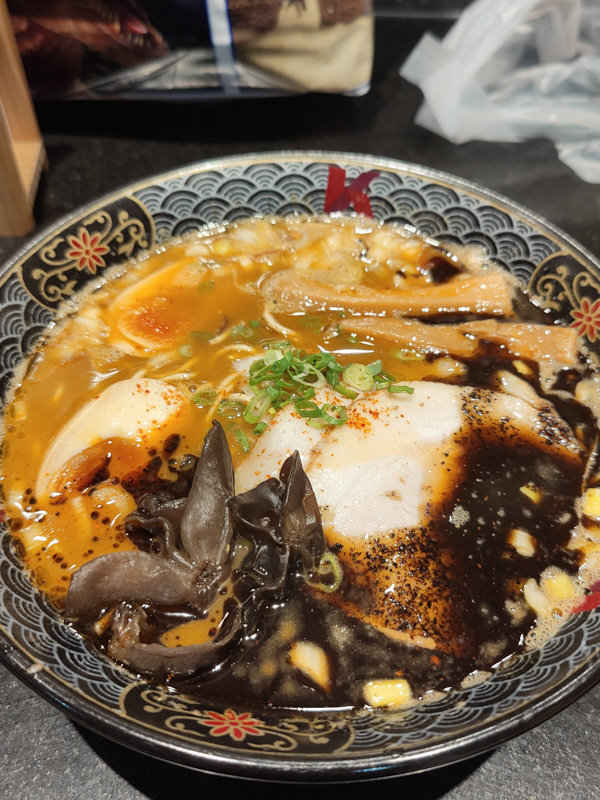
Black Spicy Lobster Broth Ramen: 70/100
Noodle: 25/35
The noodles present a thin, straight geometry with a very subtle wave that catches the heavy soup well. The mouthfeel is smooth and functions reliably to carry the liquid, though the structural bite falls slightly short of a firm al dente snap. While the strands hold up reasonably well without turning soggy, a tighter tensile resistance would give the chew more definition against the dense broth.
Soup: 25/35
This broth launches an aggressive, forward attack of heat right at the head, delivering a sharp, choking spicy kick that immediately hits the back of the throat. The underlying base retains the deep, oceanic lobster notes of the original broth, but the addition of black garlic oil fundamentally alters the profile, introducing an intense burnt-garlic bitterness alongside the thermal heat. While the overall spiciness feels somewhat uncalibrated and risks overwhelming the delicate seafood umami, the tail yields a remarkably pleasant, lingering aromatic trail once the initial burn subsides.
Meat: 10/20
The pork chashu is cut to an appropriate thickness that matches the physical density of the bowl. However, the execution remains fairly uninspired. The meat lacks the desired tenderness, offering a somewhat firm, resilient chew rather than a soft, yielding texture. Seasoning penetration is minimal, leaving a plain, unmemorable flavor profile that struggles to stand out against the assertive soup.
Other Toppings: 10/10
- The ajitama is precisely executed, featuring a rich, jammy center that leaves a savory, well-calibrated aftertaste without tipping into excess salinity.
- The complimentary table-side marinated bean sprouts continue to be an operational highlight, providing an essential, refreshing crunch that cuts through the intense heat and heavy oil of the broth.
Summary
This Black Spicy Lobster Broth Ramen delivers a punchy, highly dramatic bowl defined by sharp thermal heat and aromatic black garlic, though the aggressive spice level obscures the underlying seafood depth and overshadows a mediocre chashu.
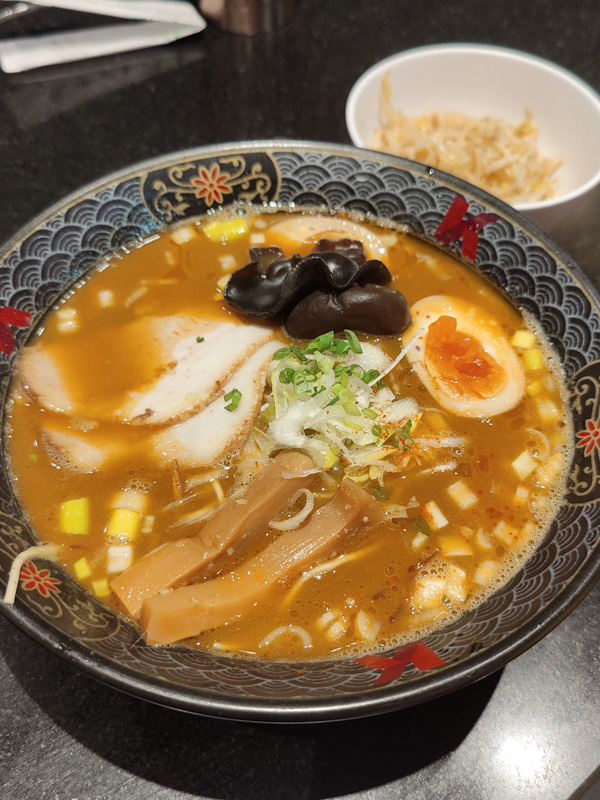
Lobster Broth Ramen: 70/100
Noodle: 25/35
The noodles present a thin, straight geometry with a subtle wave that catches the heavy soup well. The mouthfeel is smooth and functions reliably to carry the liquid, though the structural bite falls slightly short of a firm al dente snap. While the strands hold up reasonably well without turning soggy, a tighter tensile resistance would give the chew more definition against the dense broth.
Soup: 25/35
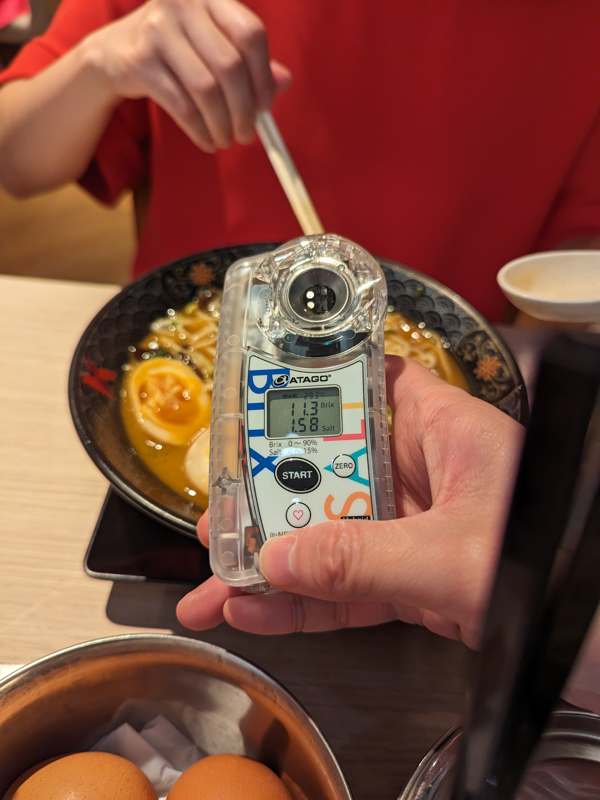
This broth opens with an immediate, sweet crustacean aroma on the front palate, avoiding the off-putting “prawn brain” acridity found in less refined seafood bisques. The body expands into a rich, umami-dense emulsion, registering a remarkably high 11.3 Brix reading on the refractometer. However, the tail section struggles with linearity; without an acidity or spice element to cut through the heavy oil, the flavor profile turns flat and monotonous toward the bottom of the bowl.
Meat: 10/20
The pork chashu is cut to an appropriate thickness that matches the physical density of the bowl. However, the execution remains fairly uninspired. The meat lacks the desired tenderness, offering a somewhat firm, resilient chew rather than a soft, yielding texture. Seasoning penetration is minimal, leaving a plain, unmemorable flavor profile that struggles to stand out against the assertive soup.
Other Toppings: 10/10
- The ajitama is precisely executed, featuring a rich, jammy center that leaves a savory, well-calibrated aftertaste without tipping into excess salinity.
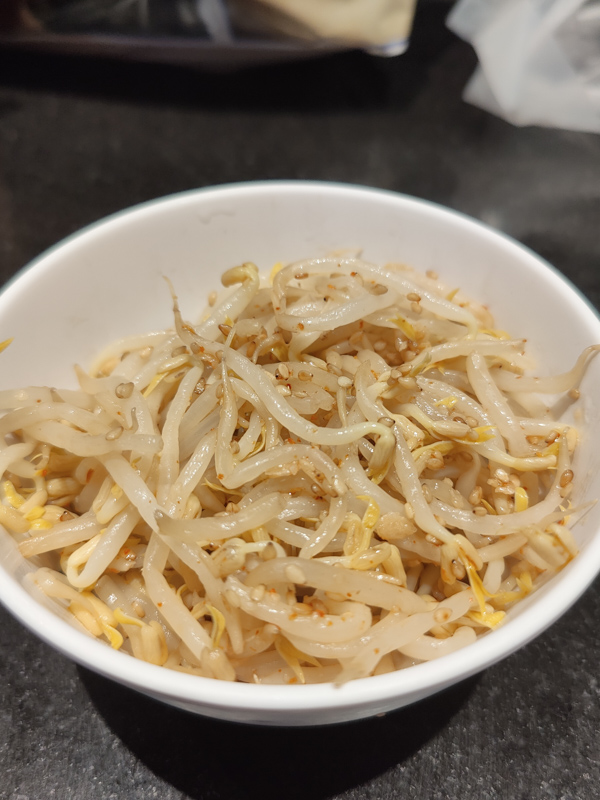
- The complimentary table-side marinated bean sprouts continue to be an operational highlight, providing an essential, refreshing crunch that cuts through the thick, viscous weight of the lobster broth.
Summary
This Lobster Broth Ramen delivers a dense, high-brix seafood extraction with exceptional early umami, though the unvaried flavor profile leads to palate fatigue before the bowl is finished.
DISCLAIMER
One man’s meat is another man’s poison.
Find out more about our palettes and how we evaluate our ramen here. 😉
Pingback: Top 17 Best Ramen in Singapore 2023: A Comprehensive Review of Over 100 Bowls