Ever wonder why a rich Hakata Tonkotsu uses ultra-thin, straight strands while a hearty Sapporo Miso favors thick, wavy noodles? Noodle geometry in Japanese ramen is a precise science. Thin, straight noodles pull up dense, high-collagen broths through capillary action, while thick, wavy Chire-men provide a springy chew and catch lighter, textured soups. When paired with various garnishes such as savory braised Chashu, jammy Ajitama eggs, and crisp Menma bamboo shoots, each bowl becomes a perfectly balanced textural ecosystem.
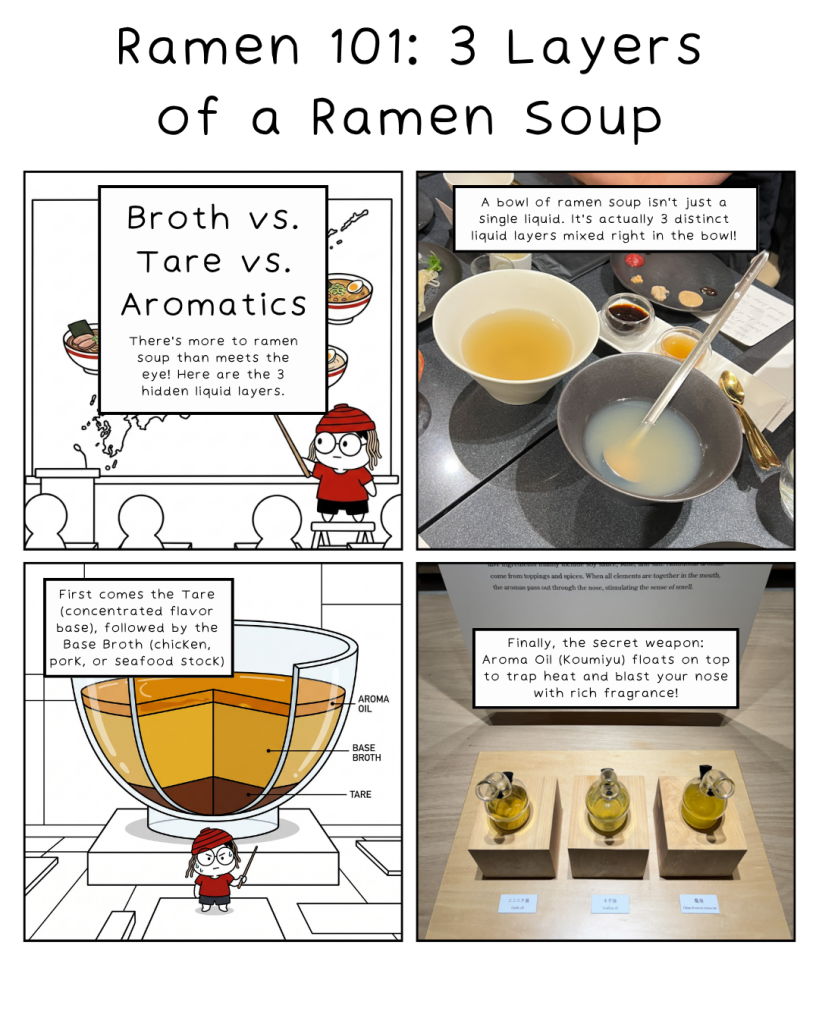
When you take your first sip of a masterfully crafted ramen, you aren’t just tasting a single broth. You’re experiencing three distinct liquid components working in tandem. Before noodles are added, the chef first pours a concentrated Tare (the flavor anchor) into the bowl, followed by the Base Broth (pork, chicken, or dashi stock). Finally, a floating layer of Aroma Oil (Koumiyu) is added to seal in the soup’s heat while releasing an irresistible fragrance the moment you lean over the bowl. Understanding these three hidden layers transforms every sip from a simple meal into an appreciation of culinary precision.
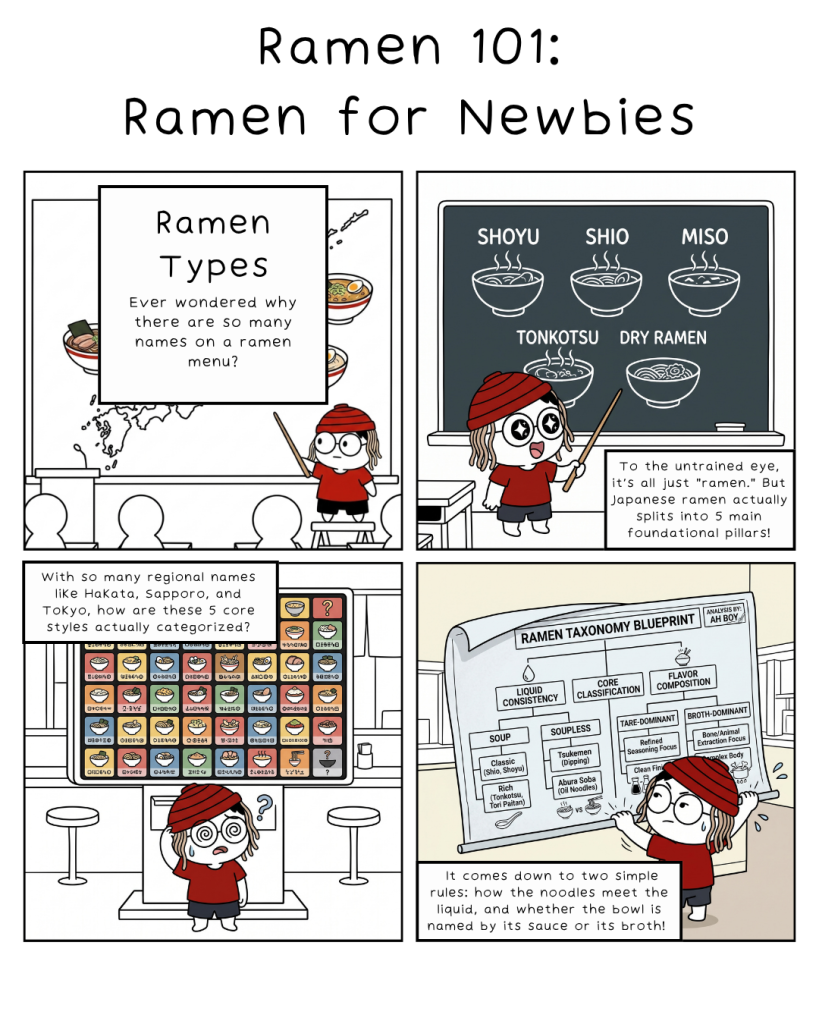
Ever wondered why some ramen is named after a sauce (Shoyu, Shio, Miso) while others are named after a broth (Tonkotsu)?Here is the ultimate beginner cheat sheet to decoding any bowl.
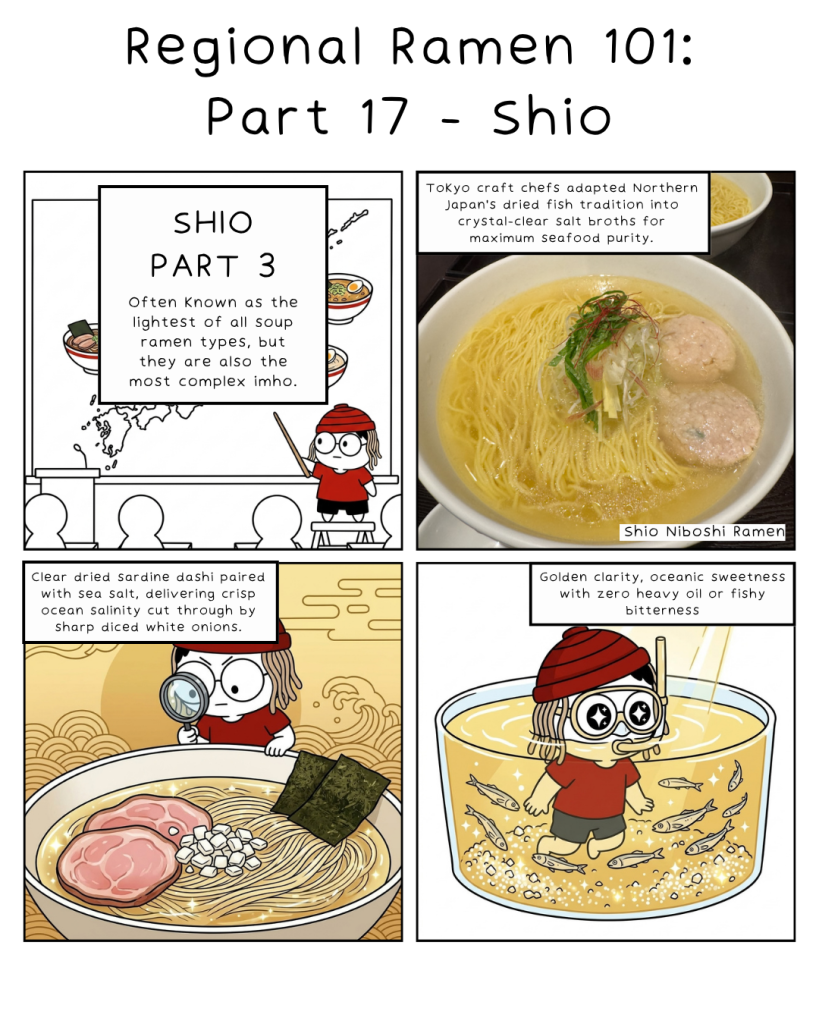
The final evolution of Shio (salt) ramen proves that a clear, soy-free base can accommodate some of the most daring flavor profiles in modern gastronomy. Moving beyond traditional chicken and pork stocks, Tokyo’s modern craft scene has pushed salt tare into uncharted territory. By pairing sea salt with unconventional extractions like roasted lamb bone dashi (Hitsuji Shio) or clear, slow-simmered ox-tail broth (Gyukotsu), artisans highlight the natural sweetness of game and beef without overwhelming the palate.
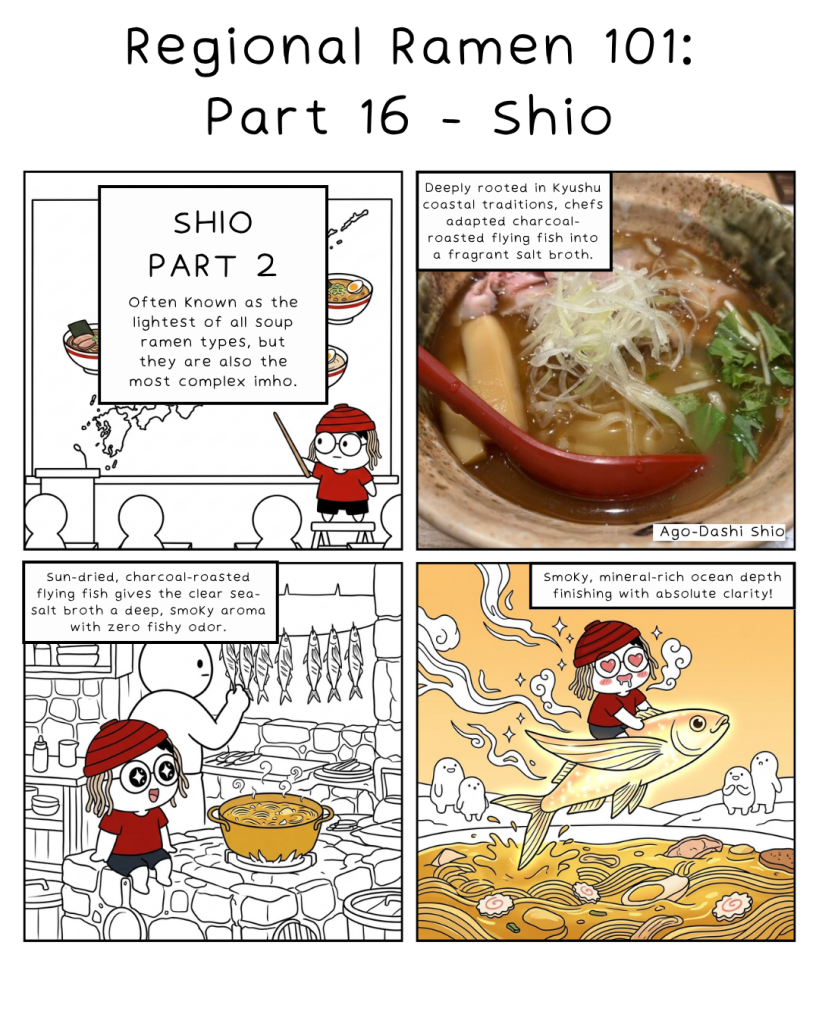
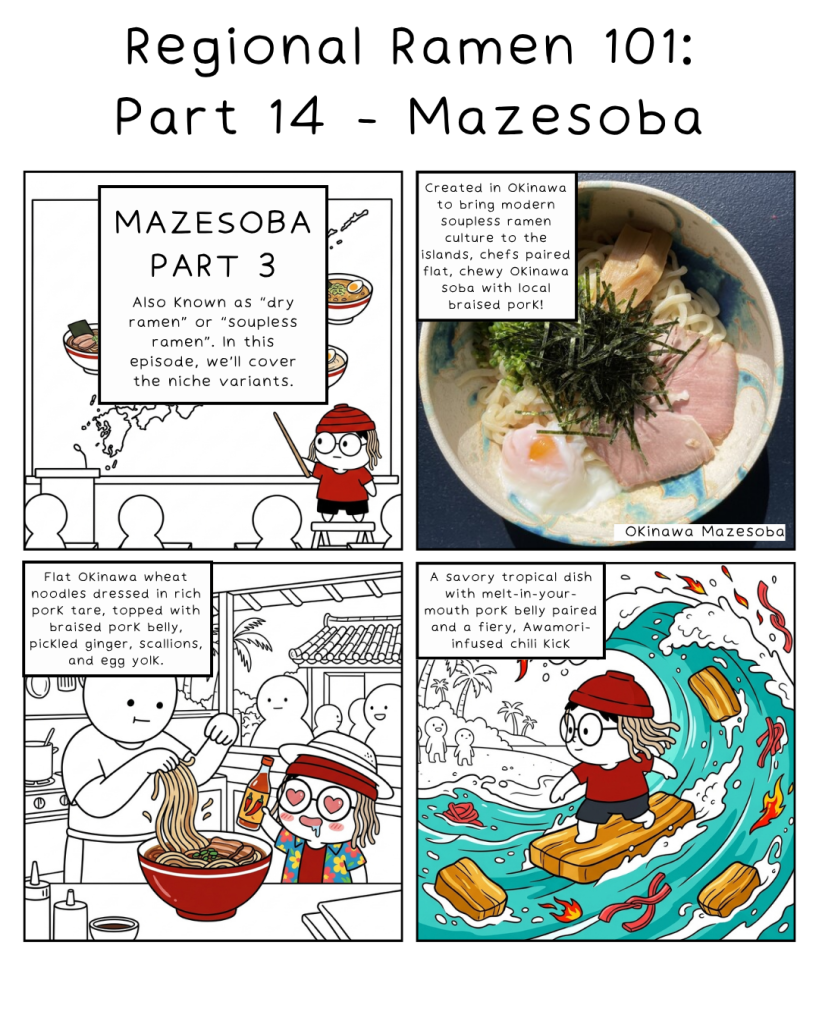
While many view Shio (salt) ramen strictly as a delicate, clear-soup style, its regional expressions tell a much broader story across Japan’s geography. Off the coasts of Nagasaki in Kyushu, traditional artisans utilize sun-dried, charcoal-roasted flying fish (yaki-ago) to create an intensely smoky, mineral-rich ocean broth that finishes with crystal clarity. Further south, the Ryukyu heritage of Okinawa yields Okinawa Soba. Pairing thick, chewy wheat strands with a pale kelp-pork broth, melt-in-your-mouth soki ribs, and a fiery splash of Awamori-infused chili spirit.
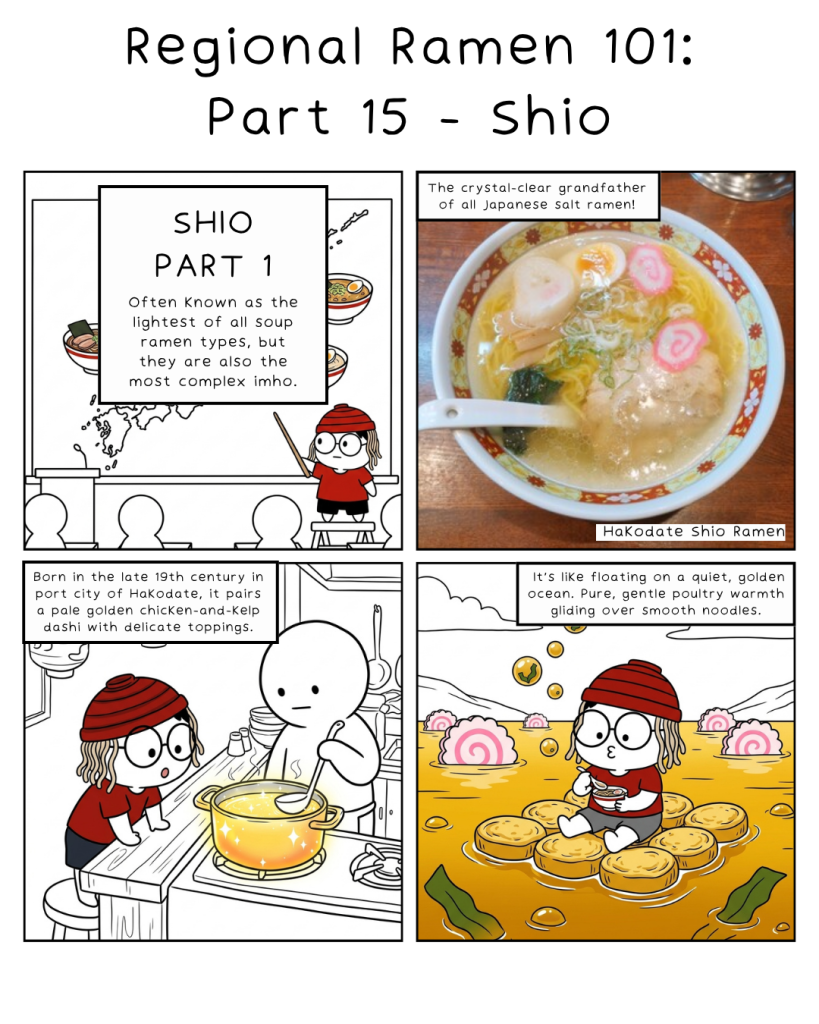
In the world of Japanese ramen, Shio (salt) is often considered the most unforgiving style a chef can master. Unlike heavy miso or rich soy-sauce reductions, a salt-based tare provides zero dark cover. Every subtle note, broth clarity, and ingredient quality is laid bare.
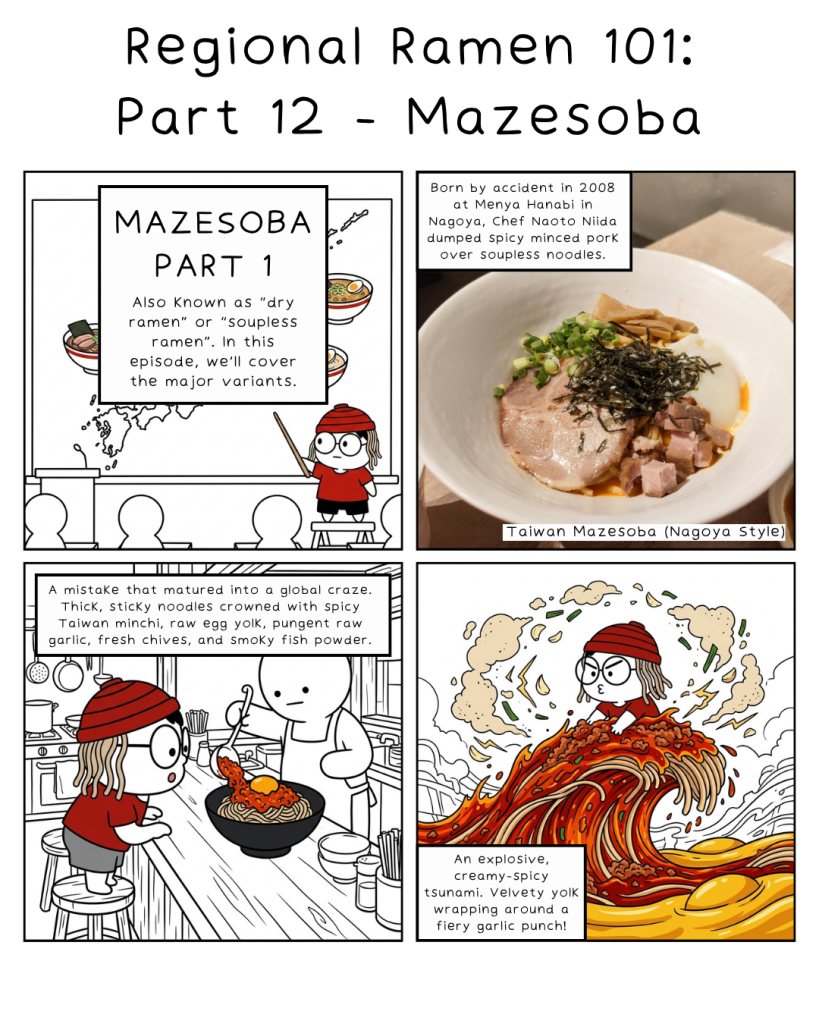
The true genius of soupless ramen lies in its sheer versatility across Japan’s micro-climates and regional flavor preferences. Up north in Hokkaido, chefs transformed Sapporo’s heavy winter miso broths into Miso Abura Soba, coating curly egg noodles in dense garlic-miso tare and golden butter.
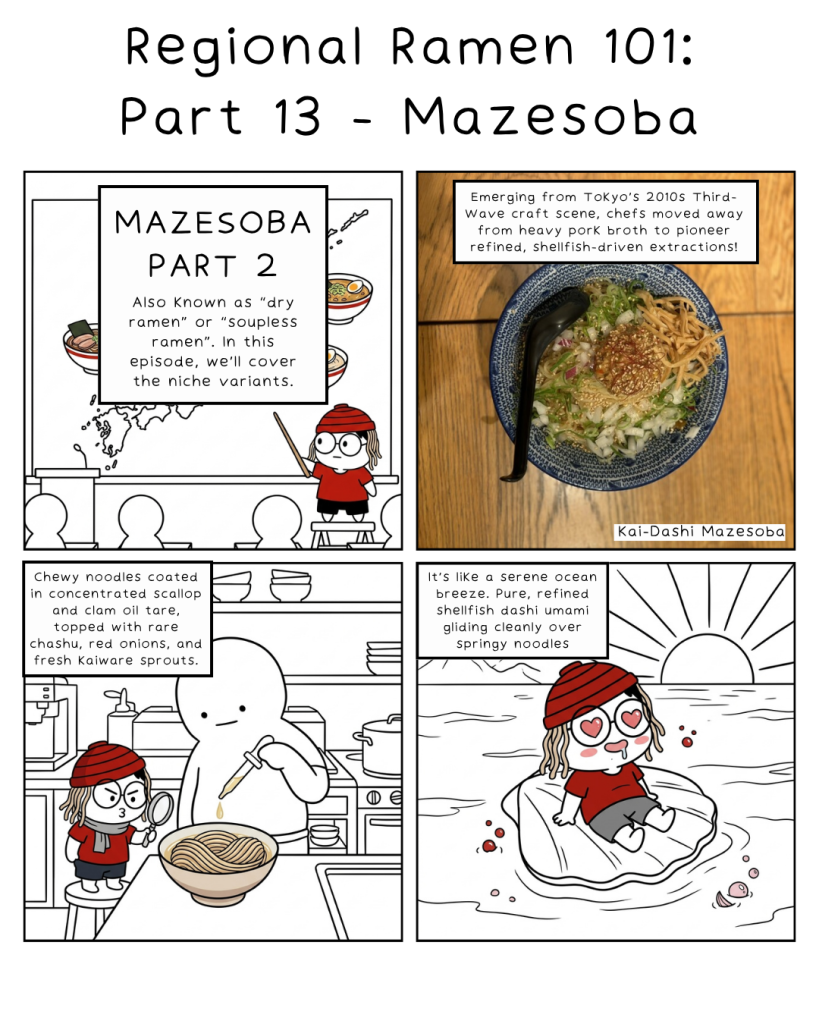
As Japan’s soupless noodle scene matured past classic soy-and-oil staples, a new generation of craft chefs began treating mazesoba as a blank canvas for high-level culinary fusion. Moving away from heavy pork broth reductions, Third-Wave artisans introduced refined Kai-Dashi extractions, utilizing concentrated clam and scallop oils to elevate wheat noodles. Simultaneously, Aomori’s bitter, sea-salty niboshi sardine legacy found a punchy new home in soupless form.
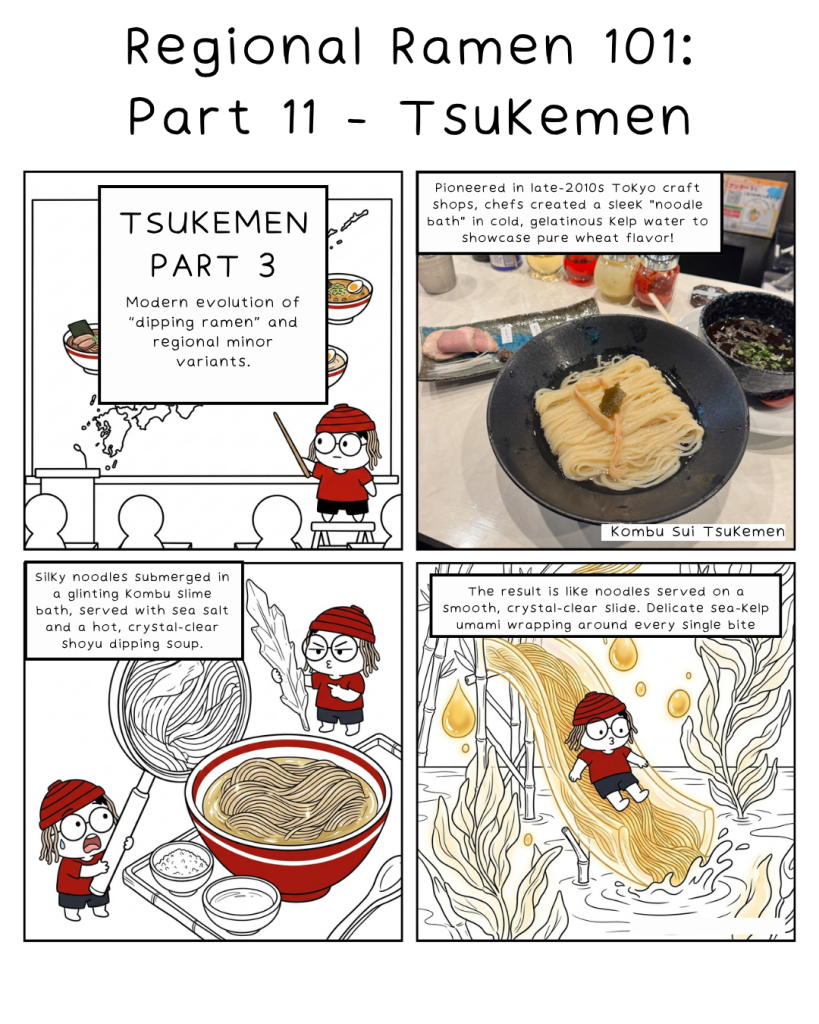
If early dipping noodles were defined by pork collagen and bonito powder, today’s craft era is governed by radical texture and regional crossover. In Tokyo, Kombuzui Tsukemen reimagined the noodle bowl entirely by bathing cold wheat strands in viscous kelp water, turning every dip into a slick, umami-coated slide. Down south in Fukuoka, chefs turned Hakata’s iconic Motsunabe into a smoky dipping feast, tossing flame-charred beef offal and cabbage straight into garlic-heavy broth.
If early dipping noodles were defined by pork collagen and bonito powder, today’s craft era is governed by radical texture and regional crossover. In Tokyo, Kombuzui Tsukemen reimagined the noodle bowl entirely by bathing cold wheat strands in viscous kelp water, turning every dip into a slick, umami-coated slide. Down south in Fukuoka, chefs turned Hakata’s iconic Motsunabe into a smoky dipping feast, tossing flame-charred beef offal and cabbage straight into garlic-heavy broth.

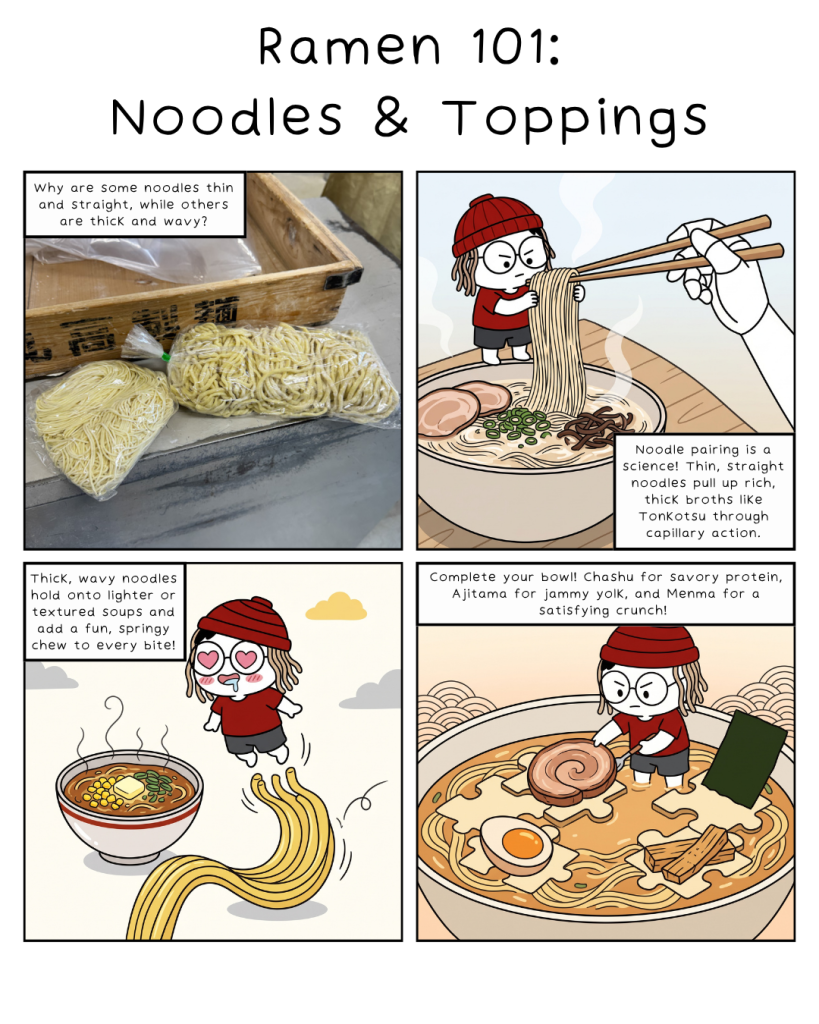 Ever wonder why a rich Hakata Tonkotsu uses ultra-thin, straight strands while a hearty Sapporo Miso favors thick, wavy noodles? Noodle geometry in Japanese ramen is a precise science. Thin, straight noodles pull up dense, high-collagen broths through capillary action, while thick, wavy Chire-men provide a springy chew and catch lighter, textured soups. When paired with various garnishes such as savory braised Chashu, jammy Ajitama eggs, and crisp Menma bamboo shoots, each bowl becomes a perfectly balanced textural ecosystem.
 When you take your first sip of a masterfully crafted ramen, you aren’t just tasting a single broth. You’re experiencing three distinct liquid components working in tandem. Before noodles are added, the chef first pours a concentrated Tare (the flavor anchor) into the bowl, followed by the Base Broth (pork, chicken, or dashi stock). Finally, a floating layer of Aroma Oil (Koumiyu) is added to seal in the soup’s heat while releasing an irresistible fragrance the moment you lean over the bowl. Understanding these three hidden layers transforms every sip from a simple meal into an appreciation of culinary precision.