WHAT WE ATE
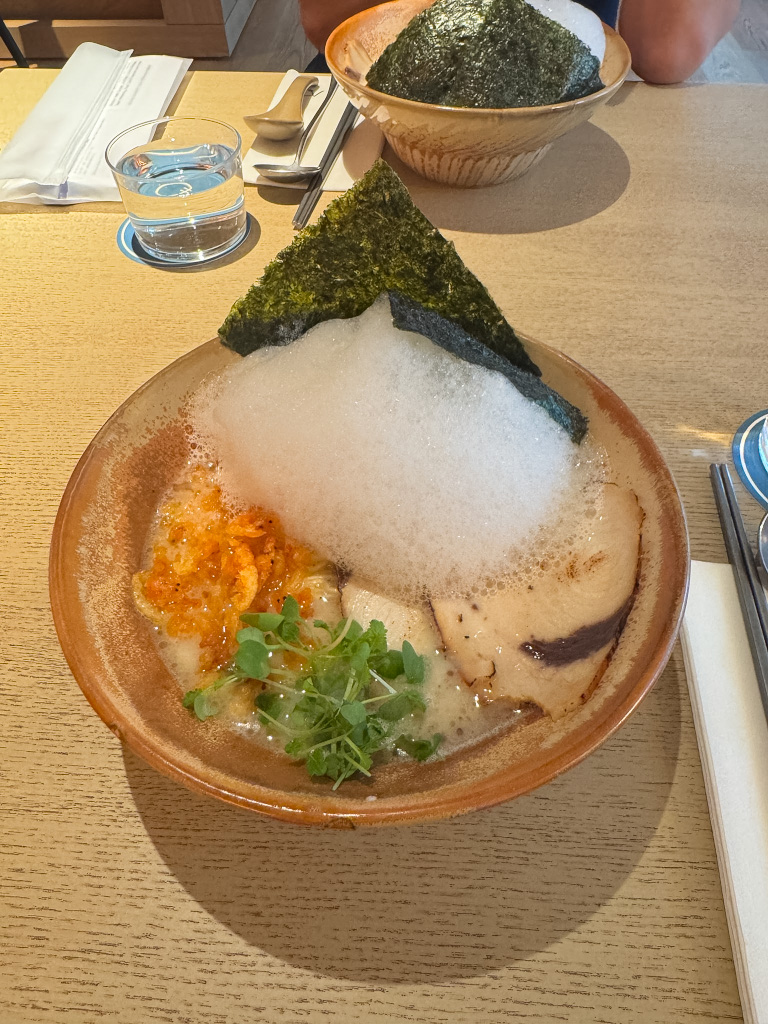
- Shoga Shoyu Tsukemen, 70/100 (21 Nov 2026, Paragon)
- Nikumori Spicy Rich Miso Ramen, 60/100 (21 Nov 2026, Paragon)
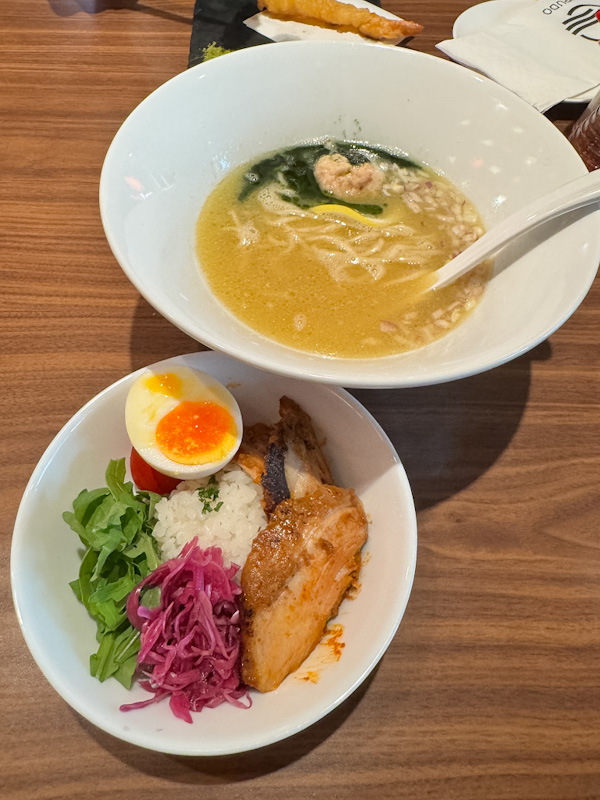
- Shoga Shoyu Ramen, 85/100 (14 June 2026, Paragon)
- Nikumori Rich Miso Ramen, 85/100 (14 June 2026, Paragon)
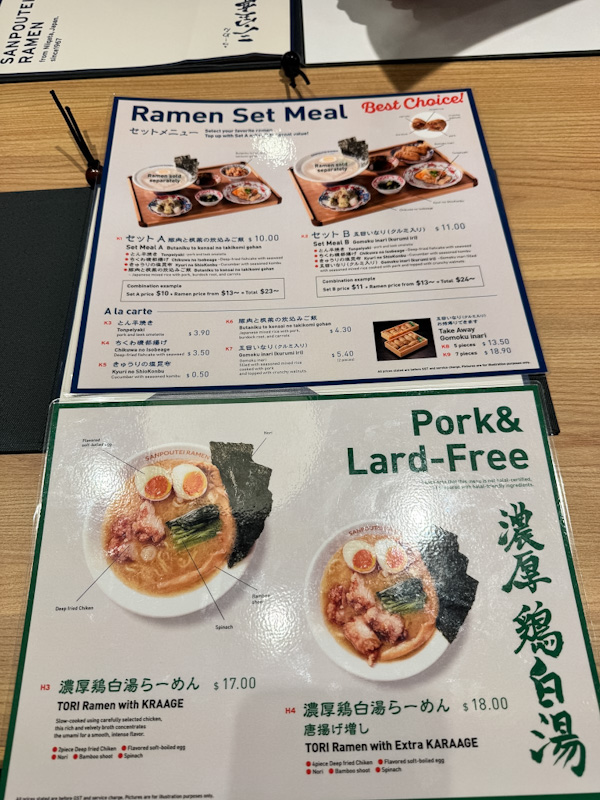
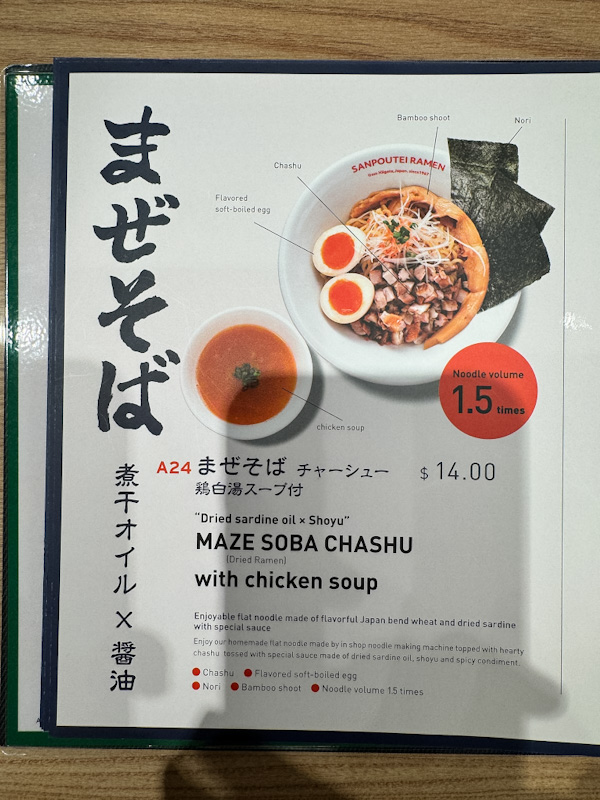
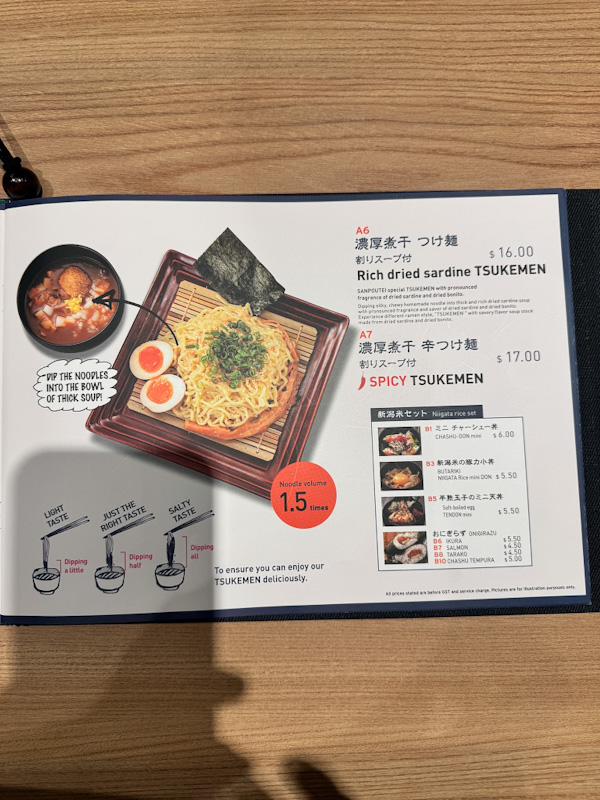
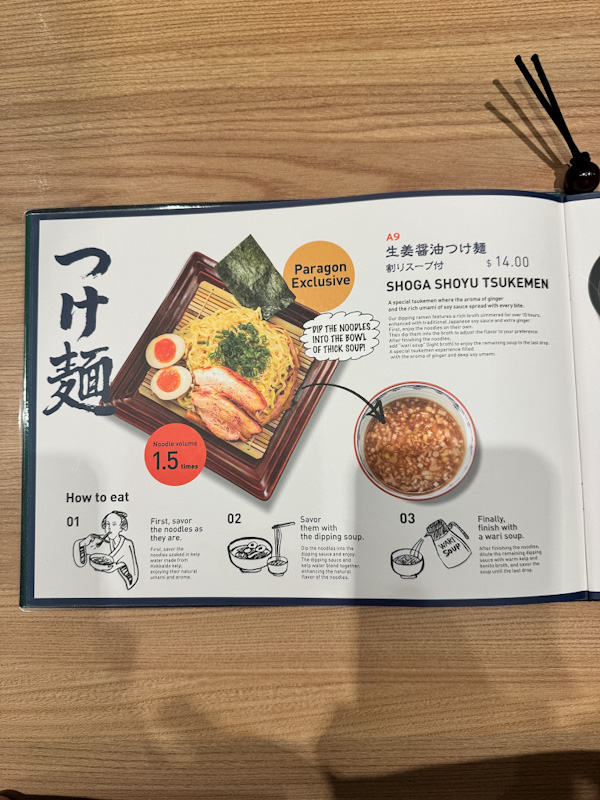
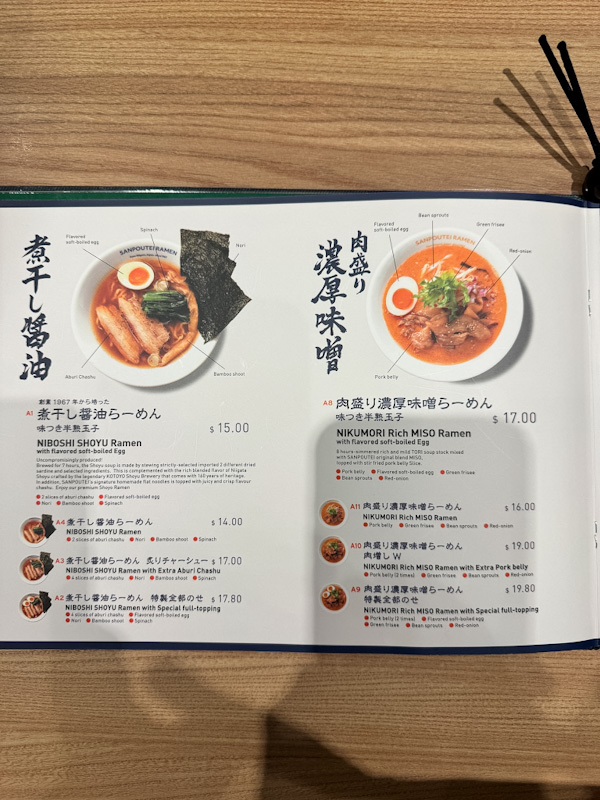
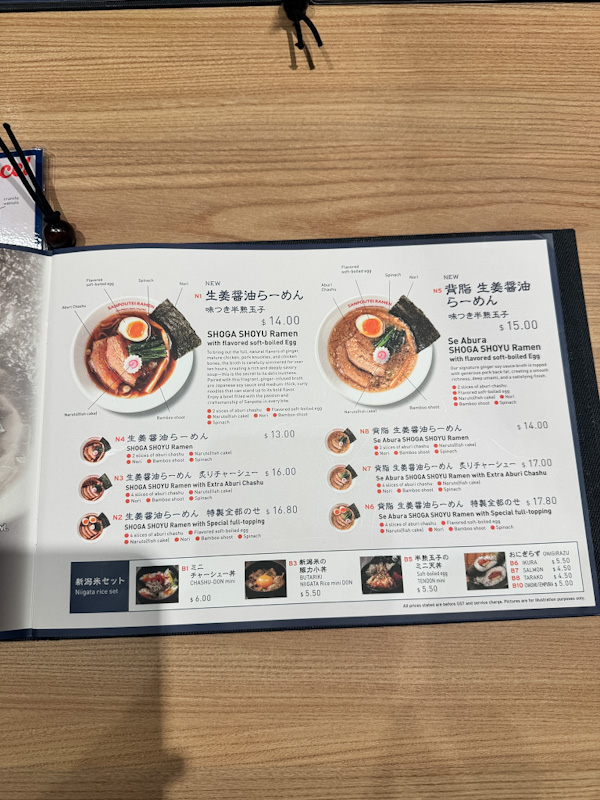
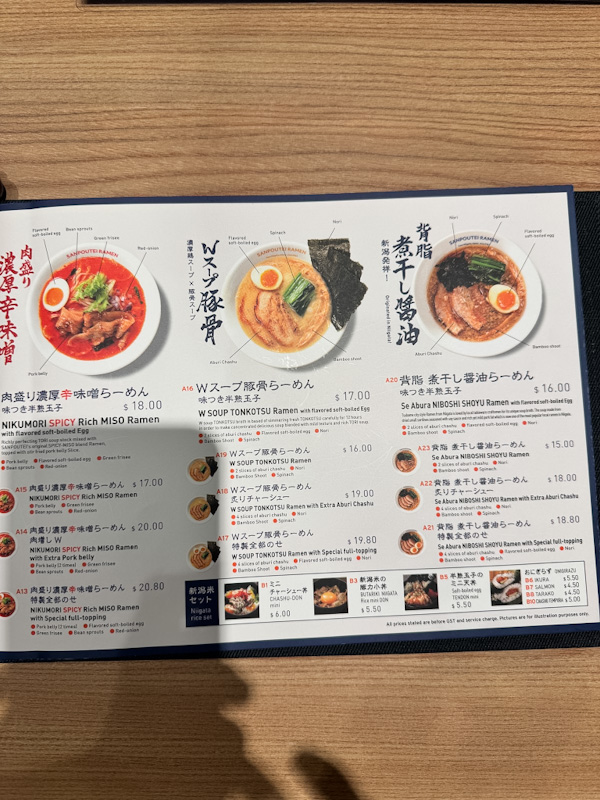
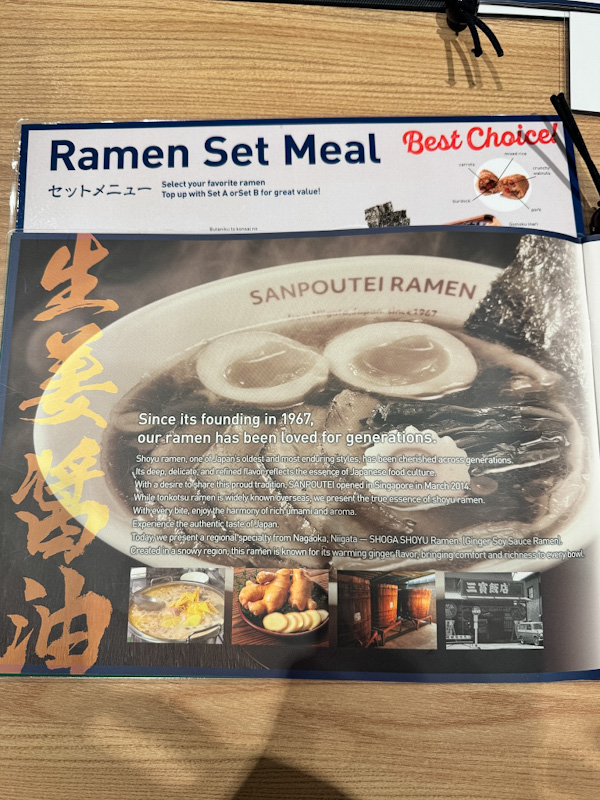
Sanpoutei Ramen has established a deliberate presence at the Paragon shopping centre in Orchard, offering a distinct departure from the menu found at their other Singapore outlets. This location serves as an independent chapter in the brand’s local narrative, distinguished primarily by its inclusion of the Nagaoka-style ginger shoyu ramen and an expanded selection of regional dishes.
Because this Paragon outlet features a menu that diverges significantly from the brand’s standard offerings, I have separated this review from my main Sanpoutei post. This dedicated entry provides a focused analysis of the specific culinary profile and operational nuances present at this location. It serves as a necessary distinction for diners seeking the specific ginger-infused foundations and unique technical variations that define the Paragon experience.
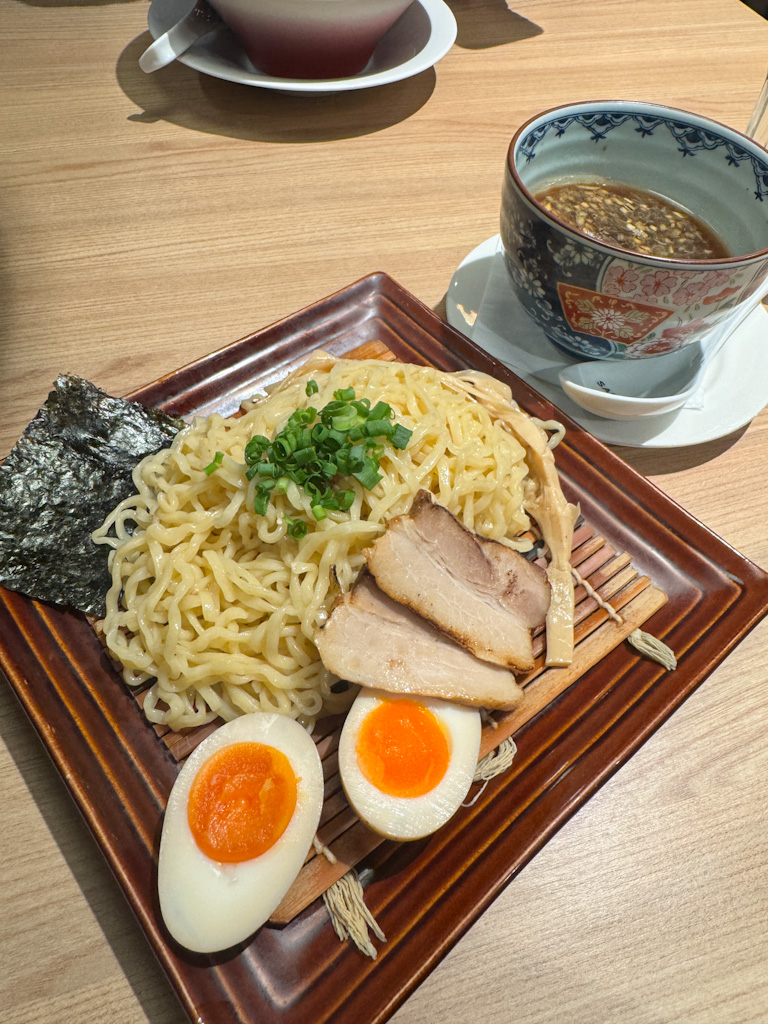
Shoga Shoyu Tsukemen: 70/100
Noodle: 25/35
Arriving as medium-thick, wavy ribbons, these noodles are served chilled to lock in a dense, chewy mouthfeel right up until they hit the dipping broth. The texture delivers a bouncy, springy resistance that holds its structure well across the meal. On the palate, there is a mild wheat profile with a pleasant, natural sweetness. While the baseline grain aroma could afford to be a bit more robust to anchor the bowl, the clean, elastic chew provides a reliable foundation for dipping.
Sauce: 25/35
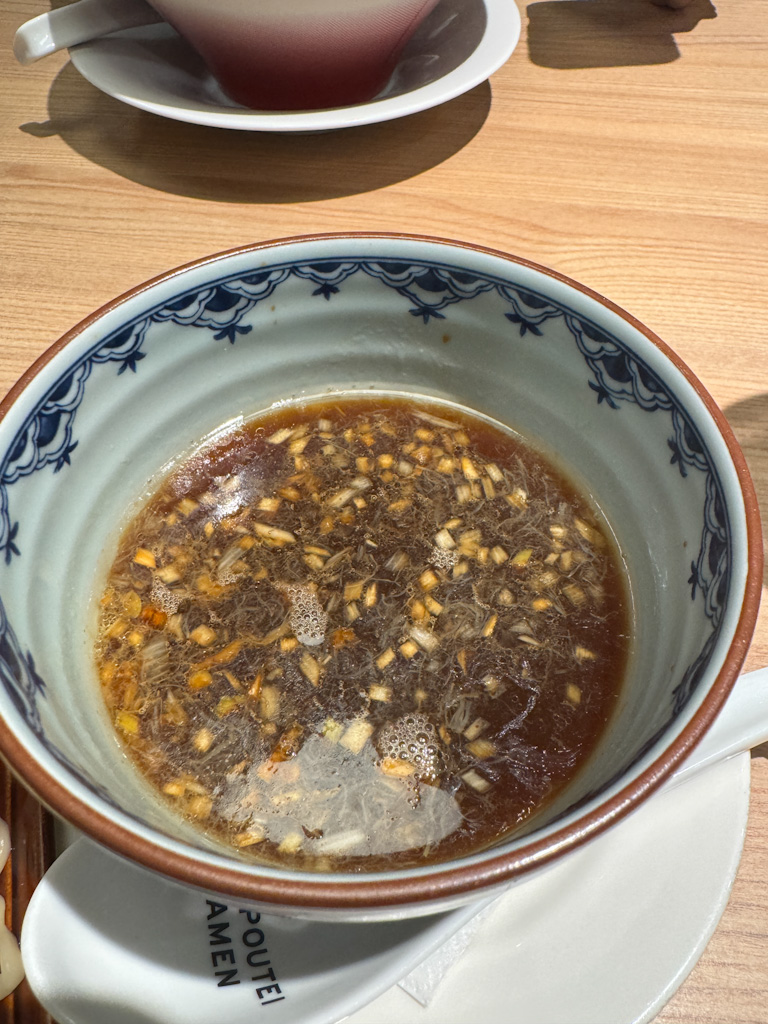
Departing from the heavy, high-viscosity emulsions typically associated with tsukemen, this dipping sauce takes a notably clean and lighter approach. The head opens with a distinct ginger aroma that immediately sharpens the front palate. As it settles into the body, a savoury salinity emerges, rounded out by the gentle, sweet undertone of shoyu. The finish leaves a lingering soy fragrance that exits cleanly without overwhelming the senses. The ginger infusion does the heavy lifting here, adding a necessary aromatic layer that keeps this restrained base from falling flat.
Meat: 15/20
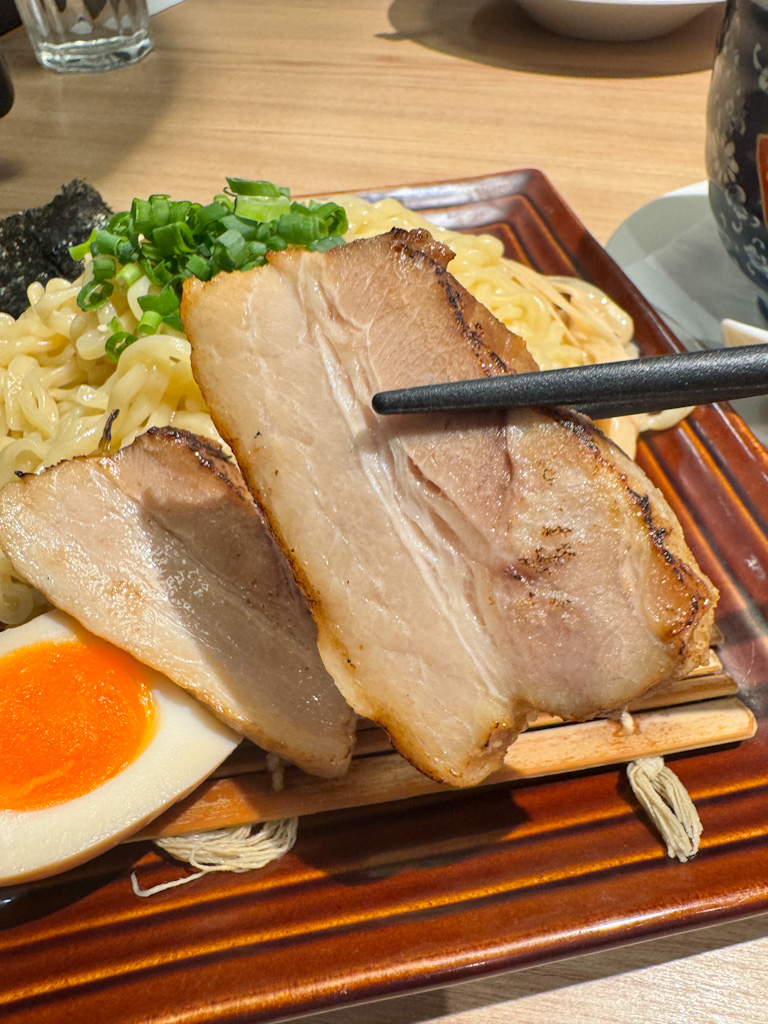
The bowl features a medium-thick slice of pork that leans modest in overall portion size, composed primarily of lean muscle framed by pockets of fat and charred along the edges. Texturally, the lean portion trends slightly dry, though it retains a concentrated, savoury depth and the natural sweetness of the pork. The rendered fat provides a necessary counterbalance, melting on the tongue to soften the firmer grain of the meat, while the light grill marks introduce a subtle smokiness.
Other Toppings: 5/10
- Bamboo shoots arrive juicy and springy with a satisfying chew, offering a lightly savoury profile free of harsh fermentation pungency.
- Seaweed acts as a concentrated umami lever, performing even better once submerged to absorb the ginger-laced shoyu base.
- Minced ginger delivers a warm, sharp bite that reinforces the dipping sauce’s aromatic lift.
- The hanjuku egg is very lightly marinated, a deliberate calibration that prevents its salinity from overpowering the delicate nature of the broth.
Summary
Shoga Shoyu Tsukemen trades the usual weight and density of the style for clarity, relying on sharp ginger aromatics and a clean shoyu base to carry the bowl. While a more assertive wheat character in the noodles and greater moisture in the lean pork would elevate the execution, its restrained, light-footed balance makes for an approachable and refreshing interpretation.
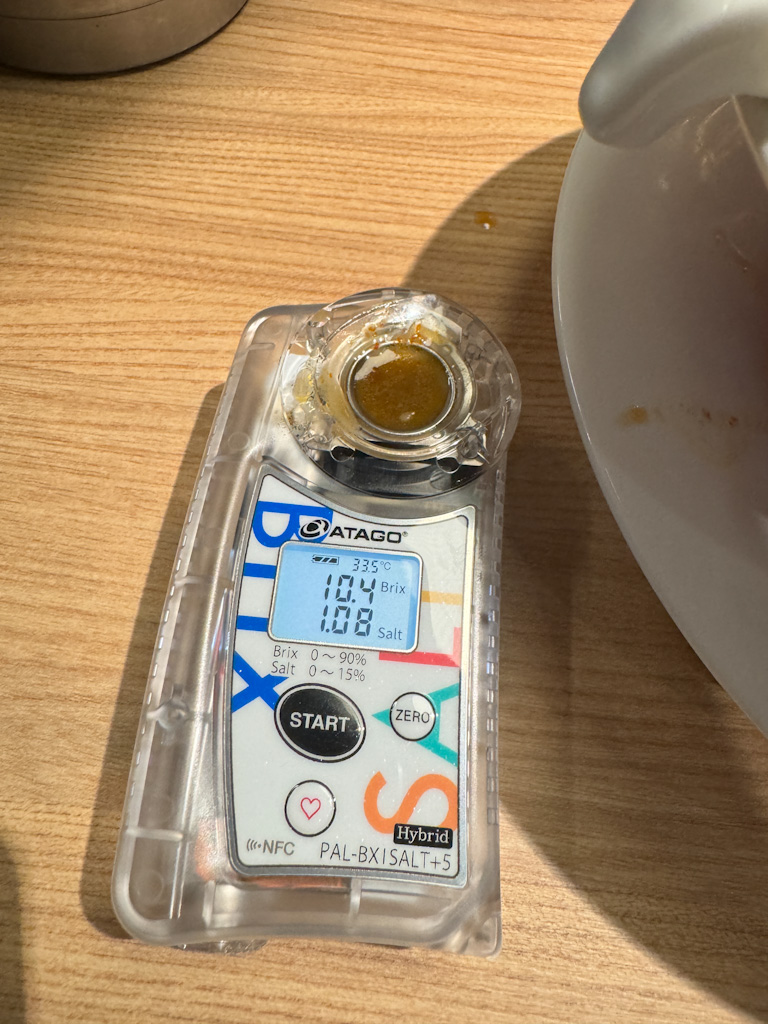
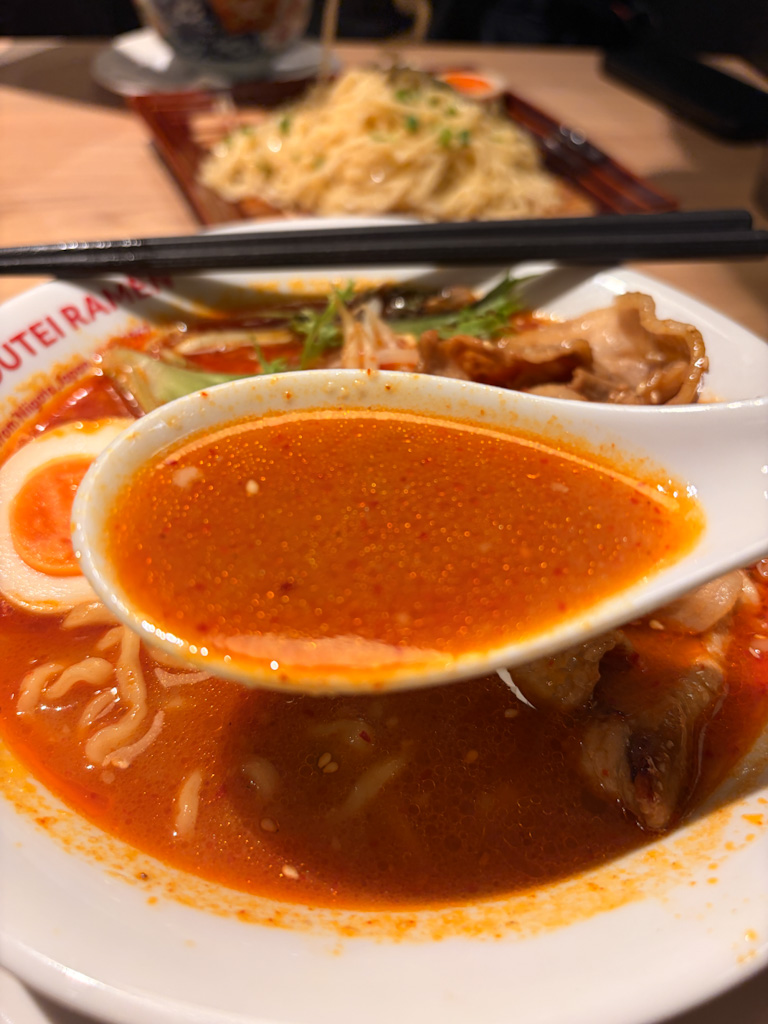
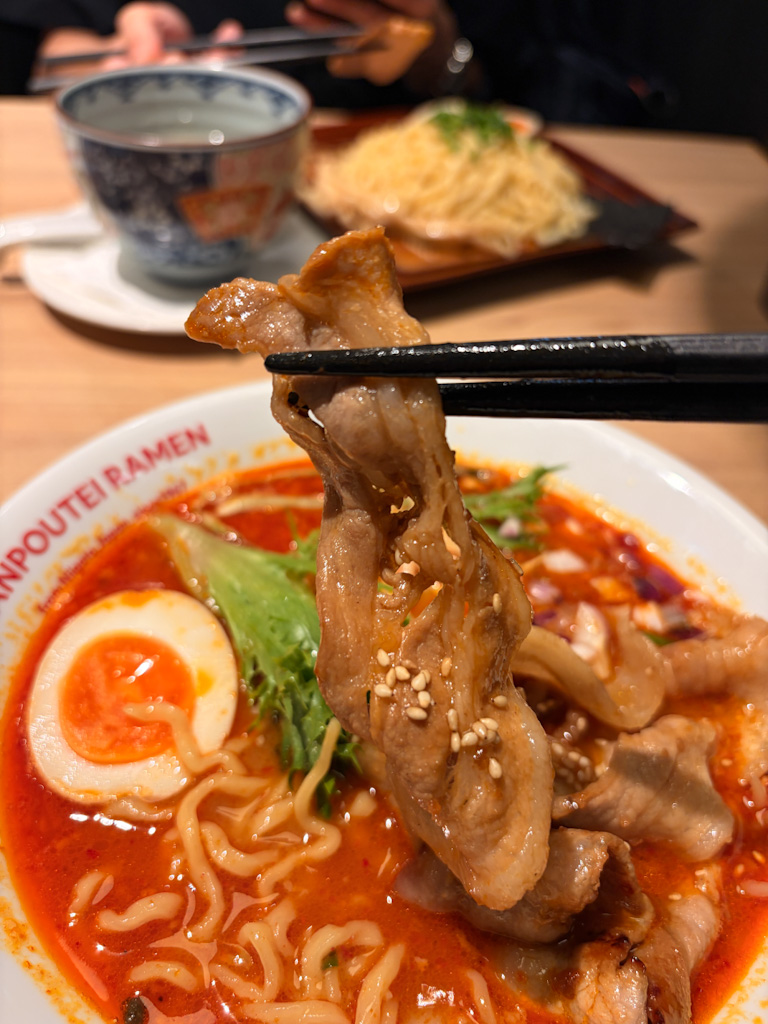
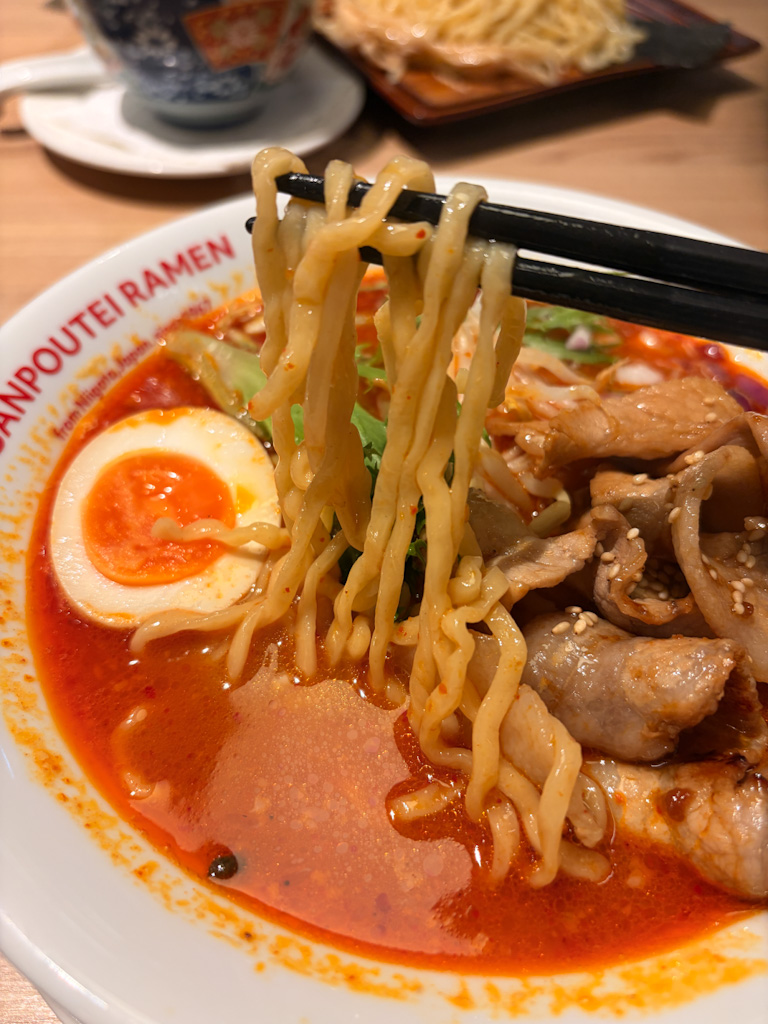
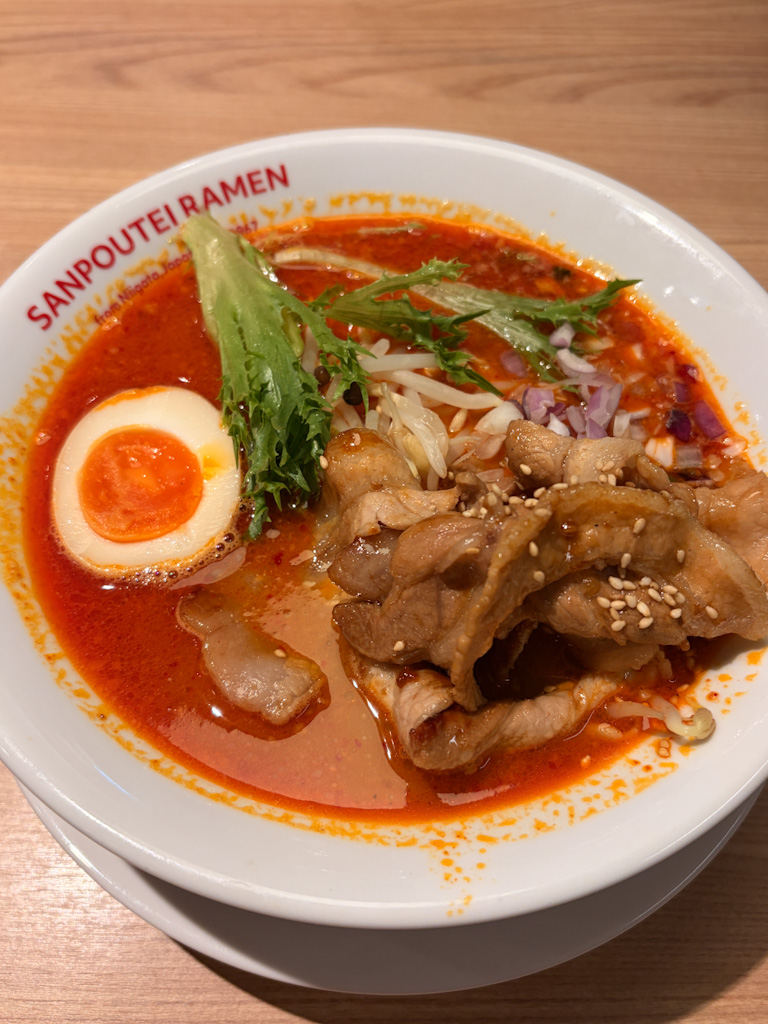
Nikumori Spicy Rich Miso Ramen: 60/100
Noodle: 25/35
The noodles are medium-thick with a flattened profile. While they share a lineage with the variants used in the soup shoyu ramen’s preparations, this iteration feels slightly refined in diameter. The texture provides a reliable level of spring and chew, maintaining structural integrity against the dense broth. The flavor profile carries a subtle, nutty wheat character, though isolating this becomes difficult as the pronounced heat inherent in the spicy miso base dominates the palate.
Soup: 20/35
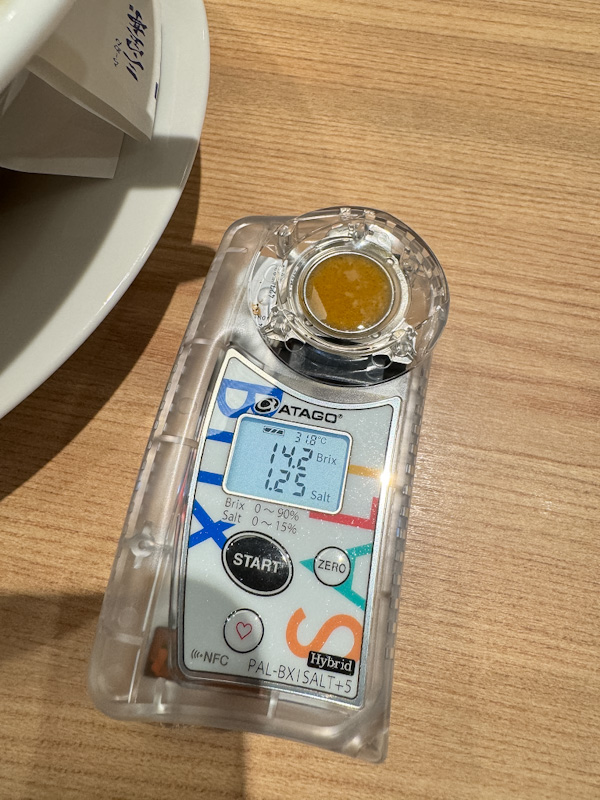
The head opens with a sweet, nutty aroma that promises depth. Moving into the body, a pleasant sweet and savoury core surfaces, but its presence is fleeting. The burning spiciness quickly overrides the mid-palate, collapsing the complexity before the miso base can establish itself. By the tail, the lingering heat stacks and flattens the palate. The soup is noticeably oily, obscuring its layers and making it difficult to gauge its true density on the refractometer.
Meat: 10/20
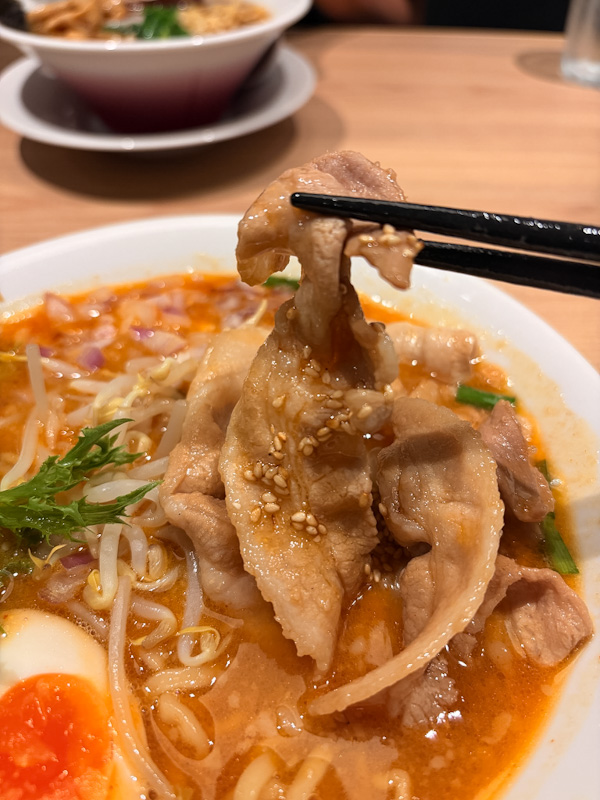
The pork belly arrives in thin slices that struggle with structural execution. While the marinade captures a solid balance of savoury and sweet notes, punctuated by subtle ginger accents and the natural umami of the pork, the texture falls short. The meat leans toward the drier side of the spectrum, resulting in a firm, chewy mouthfeel that lacks the tender, yielding quality expected from braised pork belly.
Other Toppings: 5/10
The supporting toppings work to manage the bowl’s heavy oil and spice load, though with varying degrees of impact.
- Diced red onions provide a necessary structural counterpoint, introducing a sharp, piquant kick that cuts through the miso richness.
- Bean sprouts add a consistent, audible crunch, serving as a reliable textural filler.
- Green frisee offers a multifaceted contribution with a fluffy, crisp texture and a mild, peppery bitterness that brings a welcome contrast to the bowl.
- The marinated egg features a balanced salty-sweet profile and a properly runny yolk, though the overall execution remains functional rather than standout.
- Sesame seeds are scattered across the bowl, though their nutty contribution is too subtle to register against the dominant miso and chili oil.
Summary
NIkumori Spicy Rich Miso Ramen starts with promising sweet-nutty aromatics and solid noodle structure, but quickly loses its balance to unchecked heat and excess oil. With dry pork slices and fleeting mid-palate depth, the bowl relies too heavily on its fresh vegetable toppings to keep the experience grounded.
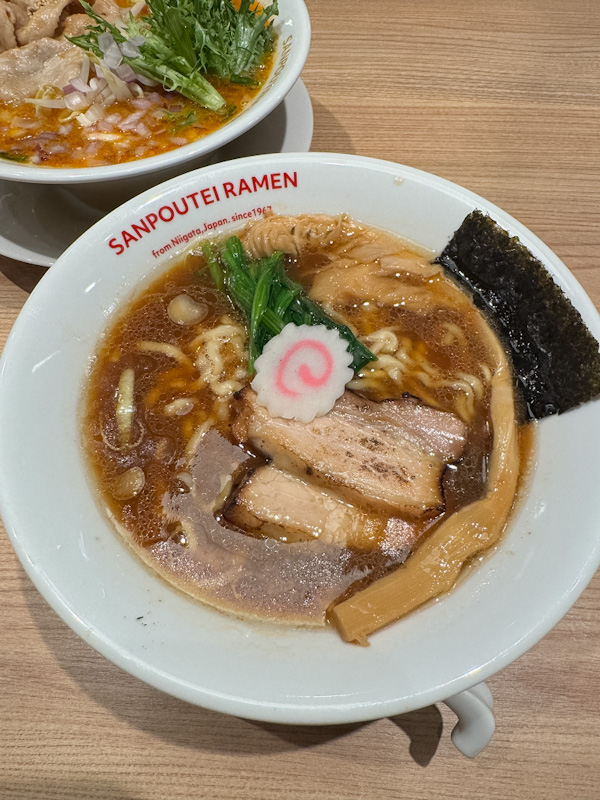
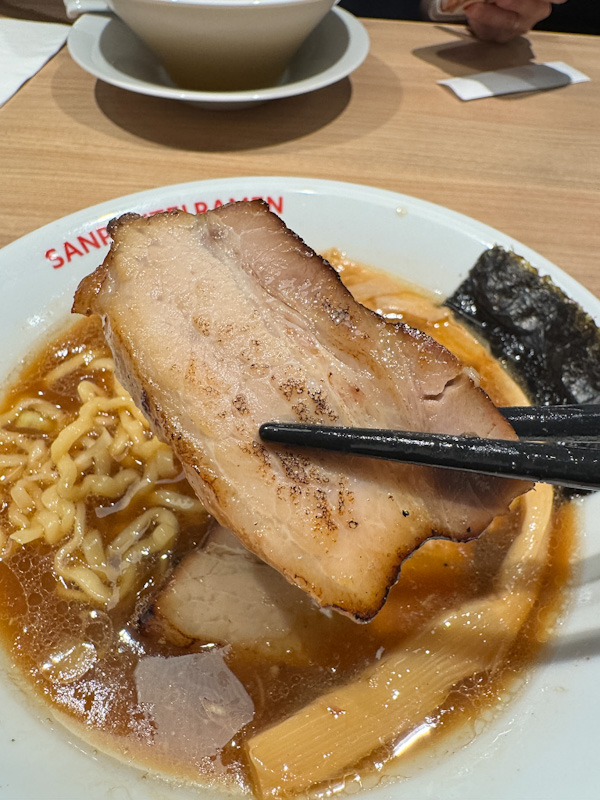

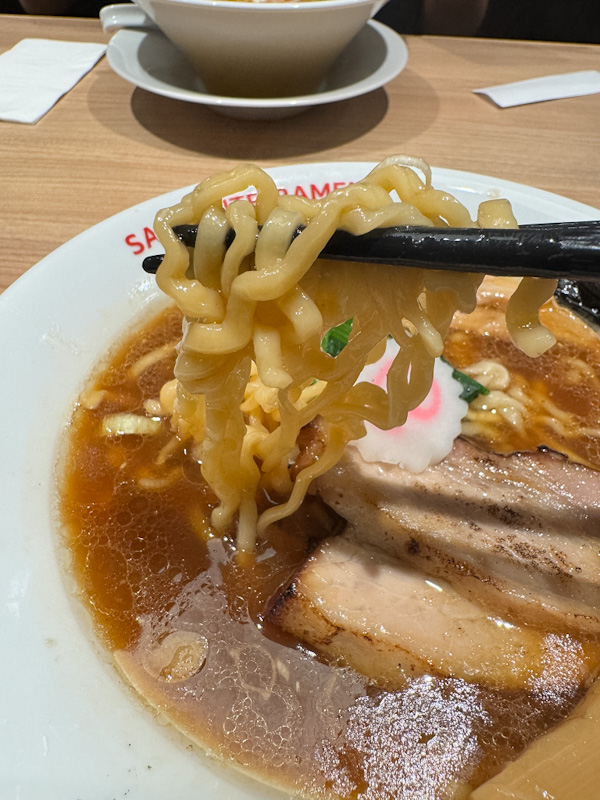
Shoga Shoyu Ramen: 85/100
Noodle: 30/35
The noodles present as thick, flat, and curly ribbons, offering a structural profile that invites confident slurping. They demonstrate a distinct mochi mochi mouthfeel, characterized by a springy, elastic exterior that yields to a firmer core. The flavour profile carries an earthy wheat backbone, which is subtly influenced by the infusion of shoyu bitterness derived from the broth during the meal. It is a technically sound noodle that provides the necessary tension to balance the soup’s density.
Soup: 30/35
The head introduces a warm, rich oiliness that immediately establishes a savoury foundation. As the mid-palate develops, the ginger aroma emerges, integrated into the umami depth of the shoyu. The tail is marked by a persistent ginger warmth, providing a thermal sensation that resides closer to comfort than aggressive spice. While this version draws comparisons to the Nagaoka-style traditional benchmarks like Aoshima Shokudo, it deliberately departs from that prototype. Whereas the classic Nagaoka style typically features a crystal-clear, shoyu-forward chintan broth, this Paragon iteration is more ginger-forward and opaque. The broth leans toward a paitan-like density and viscosity, with the shoyu presence maintaining a longer, more resonant finish.
Meat: 15/20
The pork belly is served in a medium-thick slice, featuring a deliberate charred surface on one side. The application of aburi provides an immediate smoky opening that prepares the palate. The texture is refined, achieving a tender softness where the fat readily renders and dissolves upon contact with the tongue. The seasoning profile is balanced, layering the smoky exterior against an assertive savoury kick, followed by a lingering richness derived from the marination and intrinsic meat umami.
Other Toppings: 10/10
- Spinach contributes a necessary vegetal bitterness, functioning as a structural break against the broth’s richness.
- Negi is provided in large cuts that remain fresh, juicy, and aromatic without introducing sharp pungency.
- Bamboo shoots are prepared to a tender consistency, balancing salty and juicy qualities with a refined, dried fruit sweetness.
- Naruto fishcake offers a soft, fluffy texture, providing a subtle, sweet, and faintly briny seafood undertone.
Summary
This bowl is a heavier, more modern interpretation of the ginger shoyu genre, shifting away from the traditional chintan clarity of its regional predecessors toward a more viscous, ginger-forward profile. It succeeds by maintaining depth and engagement throughout the meal, though its departure from traditional Nagaoka standards means it functions more as a distinct, robust variation than a strict adherence to the classic style.
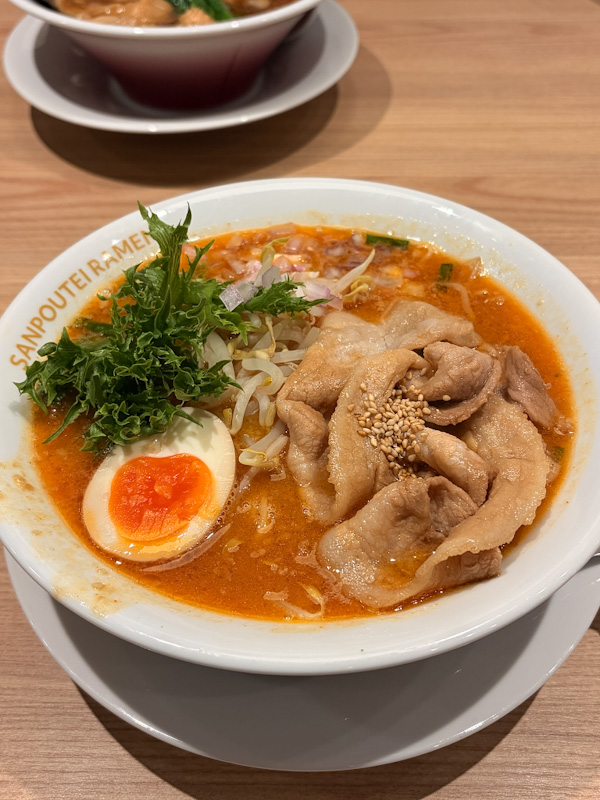
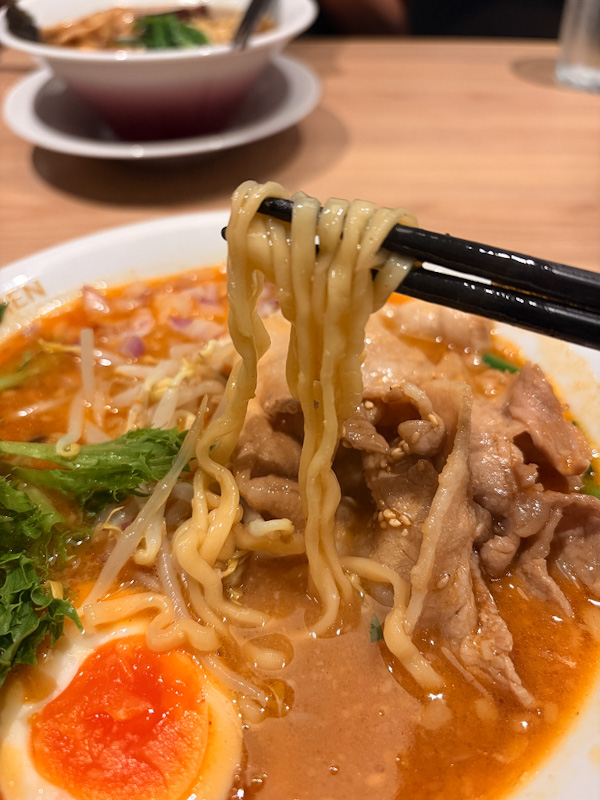
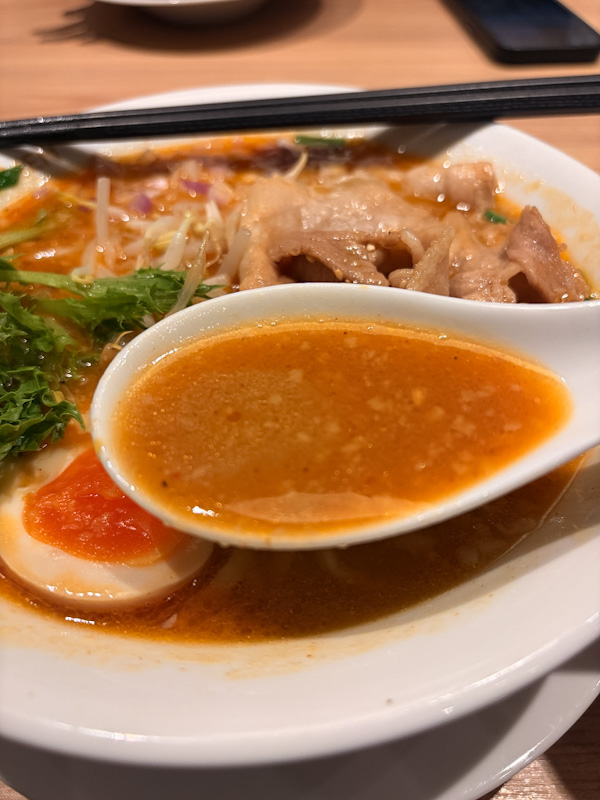
Nikumori Rich Miso Ramen: 70/100
Noodle: 25/35
The noodles are medium-thick and exhibit a flattened profile. While they share a lineage with the variants used in the shoyu preparations, this iteration feels slightly more refined in diameter. The texture provides a reliable level of spring and chew, maintaining structural integrity against the dense broth. The flavor profile is characterized by a subtle, nutty wheat character, though isolating this becomes difficult, as the pronounced nuttiness inherent in the red miso base tends to dominate the palate.
Soup: 30/35
The soup announces itself with an immediate, assertive salinity and a sharp savory jolt. As the experience progresses into the mid-palate, the body reveals a deep, earthy umami profile, defined by the concentrated, gritty texture of the red miso. The complexity here is commendable, as the broth avoids becoming a singular note of salt, instead layering the aroma of fermented soybean with precise, controlled depth. The finish is defined by a distinct, lingering thermal sensation, which builds into a late-burning heat at the back of the throat, providing a persistent engagement that balances the weight of the broth.
Meat: 10/20
The pork belly is presented in thin slices that unfortunately struggle with structural execution. While the flavor profile captures a successful balance of savory and sweet notes, punctuated by subtle ginger accents and the inherent umami of the pork, the texture is lackluster. The meat leans toward the drier side of the spectrum, resulting in a firm, chewy mouthfeel that lacks the desired melt-in-the-mouth quality expected from high-level pork belly preparation.
Other Toppings: 5/10
- Diced red onions provide a necessary structural counterpoint, introducing a sharp, piquant kick that cuts through the miso richness.
- Bean sprouts add a consistent, audible crunch, functioning as a functional textural filler.
- Green frisee offers a multifaceted contribution, with a fluffy, crunchy texture and a mild, peppery bitterness that adds sophistication to the bowl.
- The marinated egg is prepared with a balanced salty-sweet profile and a properly runny yolk, though the overall execution remains functional rather than exceptional.
Summary
The Nikumori Rich Miso Ramen is a structurally ambitious bowl that succeeds primarily through its intense, grit-rich miso base and well-calibrated heat. While the broth and aromatic layers demonstrate technical proficiency, the uneven execution of the pork belly prevents the dish from achieving a higher tier of consistency.
DISCLAIMER
One man’s meat is another man’s poison.
Find out more about our palettes and how we evaluate our ramen here. 😉