WHAT WE ATE
- Shoyu Ramen – 65/100, Kuala Lumpur, 25 July 2026
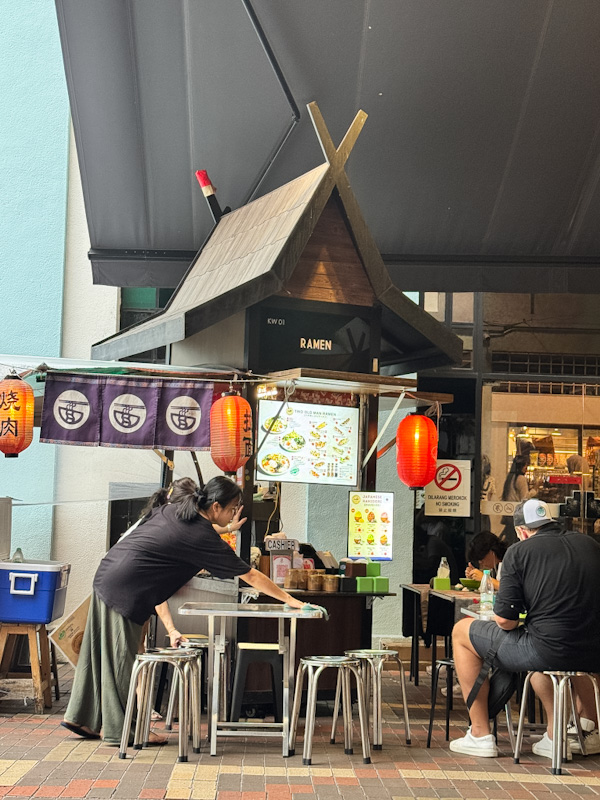
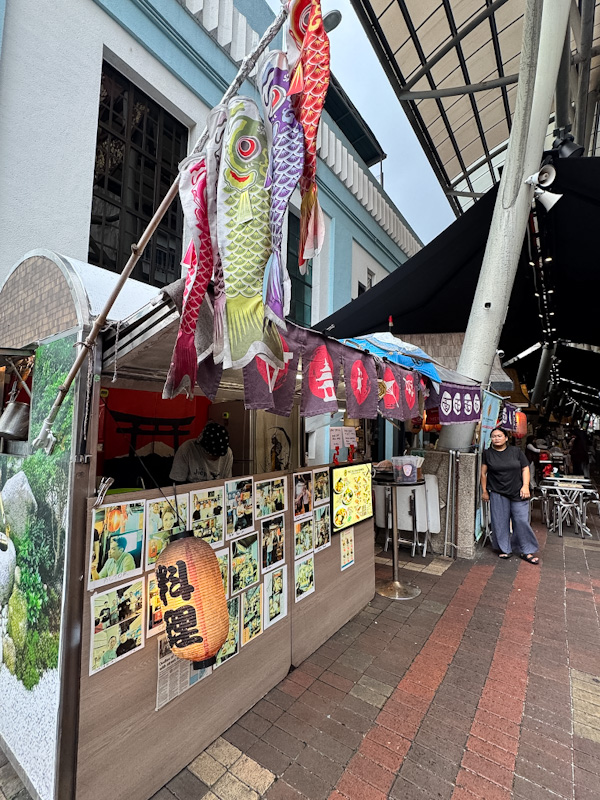
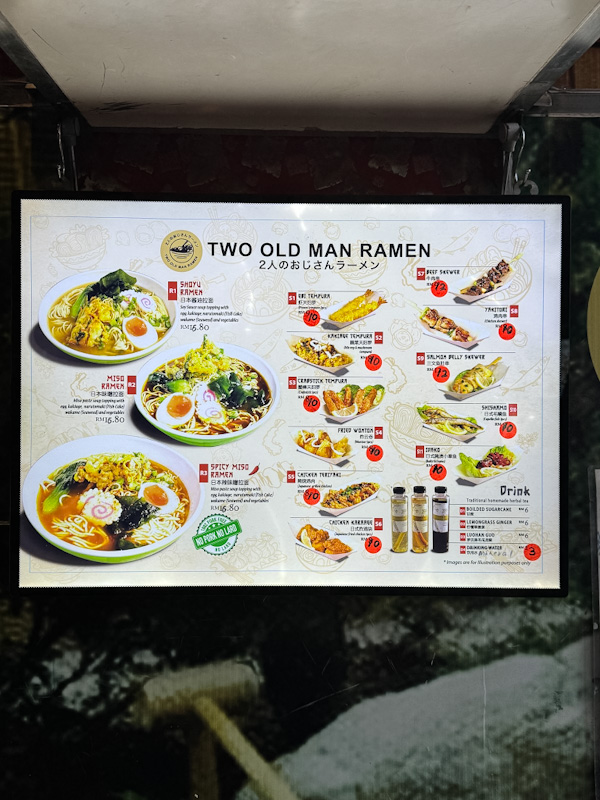
Tucked along Kasturi Walk right beside Central Market in Kuala Lumpur, Two Old Man Ramen brings the traditional Japanese yatai (street stall) concept directly into the heart of the city’s heritage district. Operating strictly in the evenings as the sun sets and LRT trains pass overhead, the open-air setup offers a compact counter-seating layout that mirrors the atmospheric roadside stalls of Fukuoka.
The establishment is the creation of brothers Alan and Desmond Chan, who combined retail experience with decades of culinary practice dating back to the early 1980s. Its distinctive name stems from an accidental spelling mistake that the founders ultimately decided to keep. Operating with an unpretentious approach, the kitchen maintains a tight, pork-free operational scope built around chicken carcass and dashi stock bases, prioritizing prep focus and execution speed.
The menu keeps its focus concise, anchored by core variations including Shoyu, Miso, and Spicy Miso, alongside grilled and tempura side items like salmon belly skewers and kakiage. By limiting service to dusk and late-night hours, Two Old Man Ramen offers a distinct outdoor alternative to the city’s shopping mall restaurant chains, serving as a notable convergence of local street side dining and classic Japanese noodle craft.
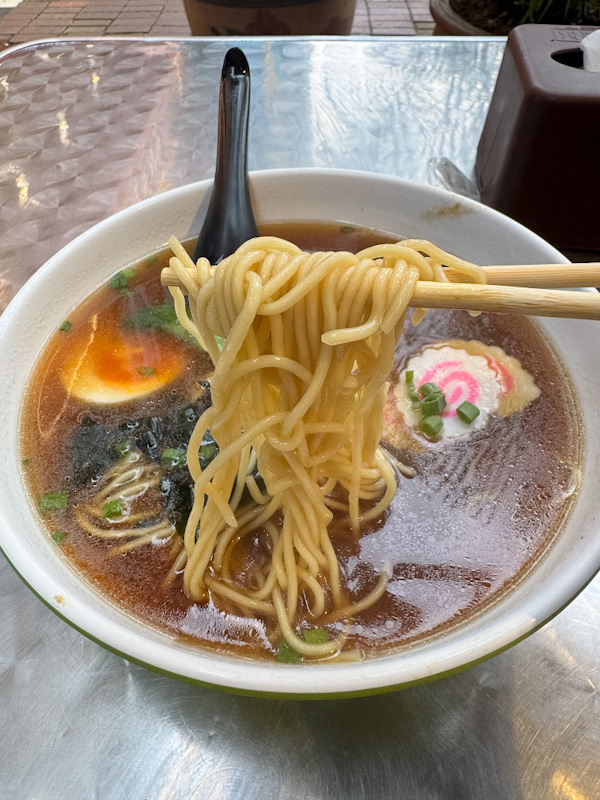
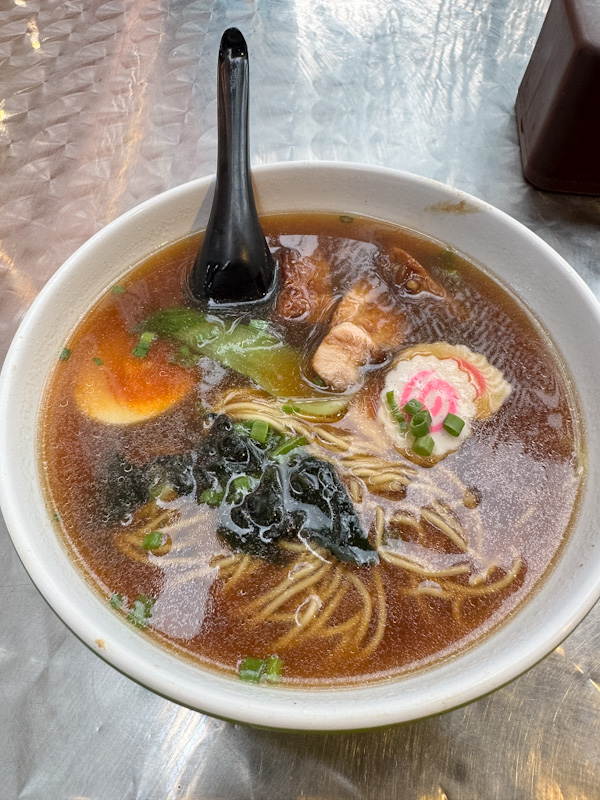
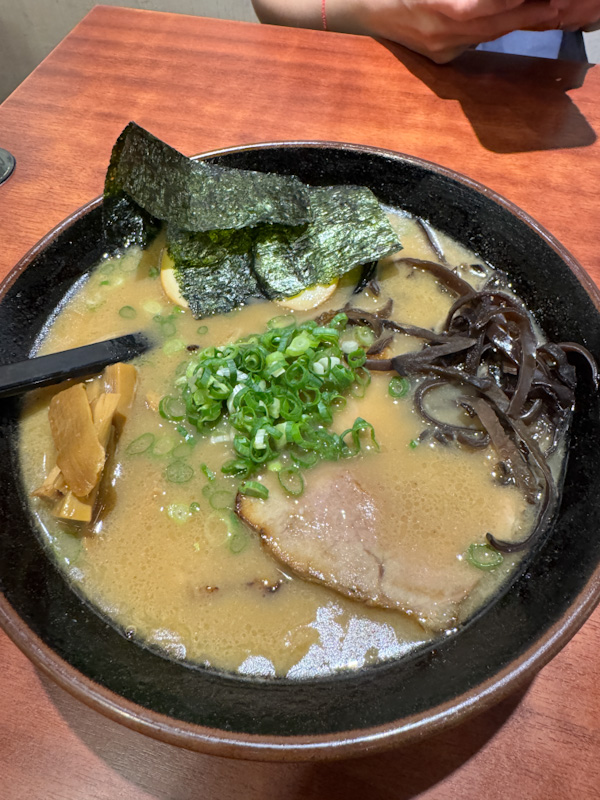
Shoyu Ramen: 65/100
Noodle: 25/35
The medium-thick, wavy strands arrive with a firm structure, though the resistance leans slightly doughy rather than offering a snappy, elastic recoil. On the palate, the al dente core holds well enough, while the exterior exhibits a noticeable and satisfying stickiness that clings slightly to the teeth. The baseline flavor yields a subtle wheat character. There is a faint shadow of alkaline presence detected under close scrutiny, though it remains negligible enough to avoid disrupting the overall taste profile.
Soup: 20/35
The head opens with a clear shoyu aroma, setting a traditional baseline before transitioning into the body with a lightly savoury character and a faint, sweet undertone of dashi. The composition reads clean, light, and refreshing, but it ultimately lacks a more lasting aroma or rich umami depth to end on a high. The tail fails to sustain a robust finish, leaving the subtle alkaline trace from the noodles to register on the final notes. While approachable, the broth lacks the structural weight and complexity needed to anchor the bowl.
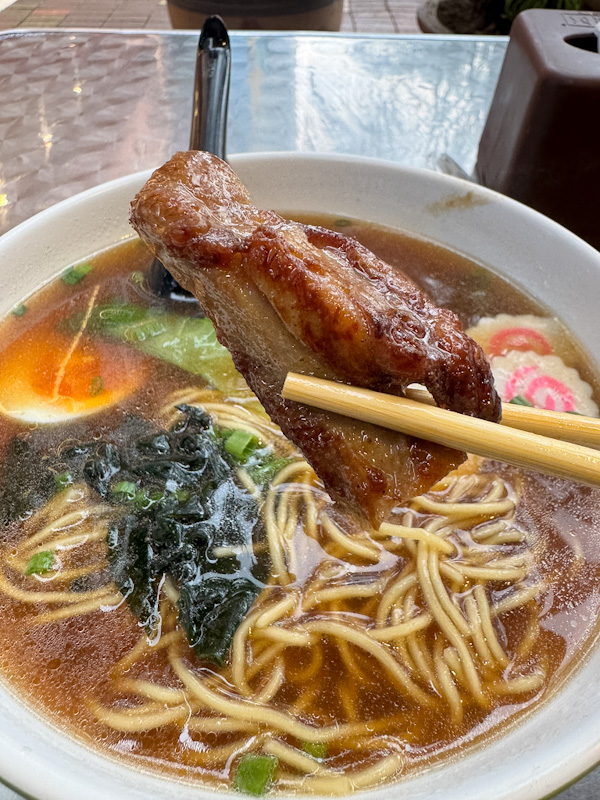
Meat: 15/20
A thick cut of skin-on chicken serves as the primary protein, offering a substantial physical presence in the bowl. Texturally, the meat is firm, avoiding outright dryness, though missing the succulent yield of a fully rendered, juicy execution. The skin remains tender and pleasantly gelatinous. Flavor-wise, the slice is heavily driven by a robust, teriyaki-like marinade, elevated by subtle traces of aburi char that contribute a welcome layer of smokiness to the palate.
Other Toppings: 5/10
- Naruto fish cake slices are soft and tender, delivering a gentle, functional sweetness, though the overall mouthfeel lacks distinction.
- Kelp strands provide a faint whisper of umami and a modest textural break, functioning strictly as a low-profile garnish.
- The half braised egg achieves a solid, custodial yolk texture, but the marination penetration is thin and lacks savory depth.
- Tender Bok Choy is executed cleanly without being overcooked, providing a fresh, vegetal layer that contrasts the broth.
- Negi falls flat, appearing dry, limp, and devoid of the sharp, piquant crunch needed to lift the soup.
- Fresh lettuce introduces an unexpected but pleasant structural crunch to the bowl.
Summary
Unlike the usual restaurants, this is much more original. However, the Shoyu Ramen is serviceable, presenting no egregious technical flaws while simultaneously lacking some standout components needed to make it a truly lasting impression. It offers a quick, accessible noodle fix if you happen to be in the immediate area.
DISCLAIMER
One man’s meat is another man’s poison.
Find out more about our palettes and how we evaluate our ramen here. 😉