WHAT WE ATE
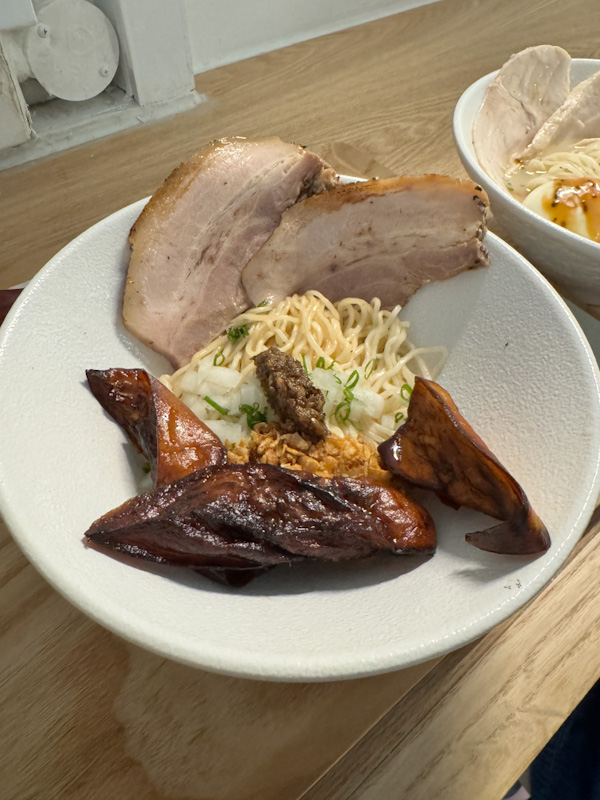
- Fish Tonkotsu 魚介豚骨 – 70/100, Taichung, 6 October 2026
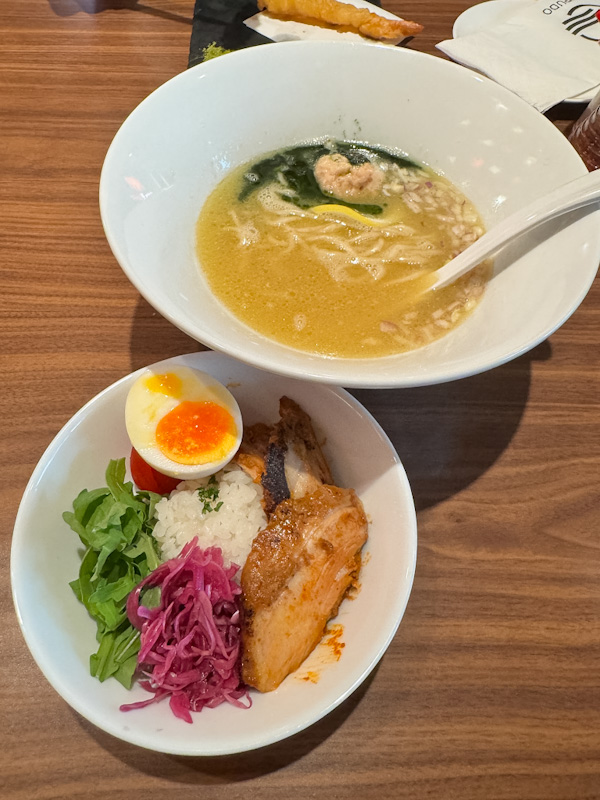
- Shrimp Tonkotsu 蝦濃湯豚骨 – 70/100, Taichung, 6 October 2026
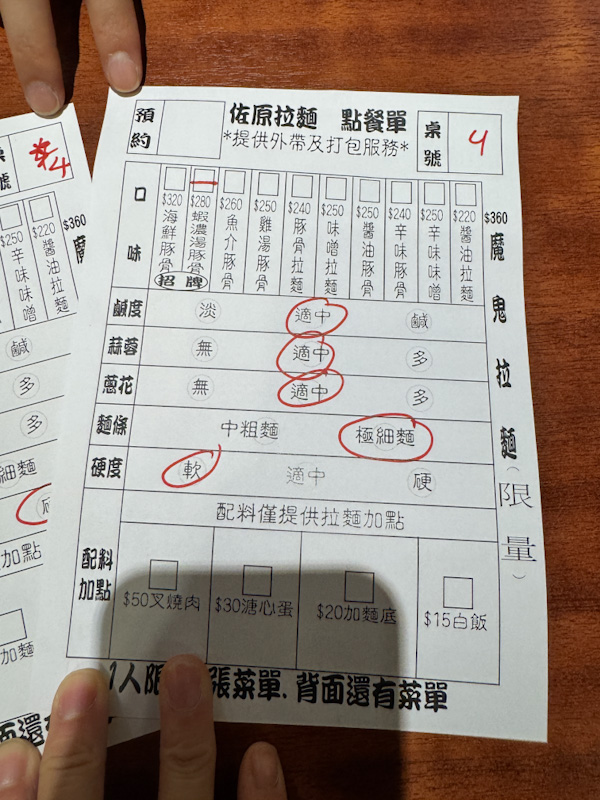
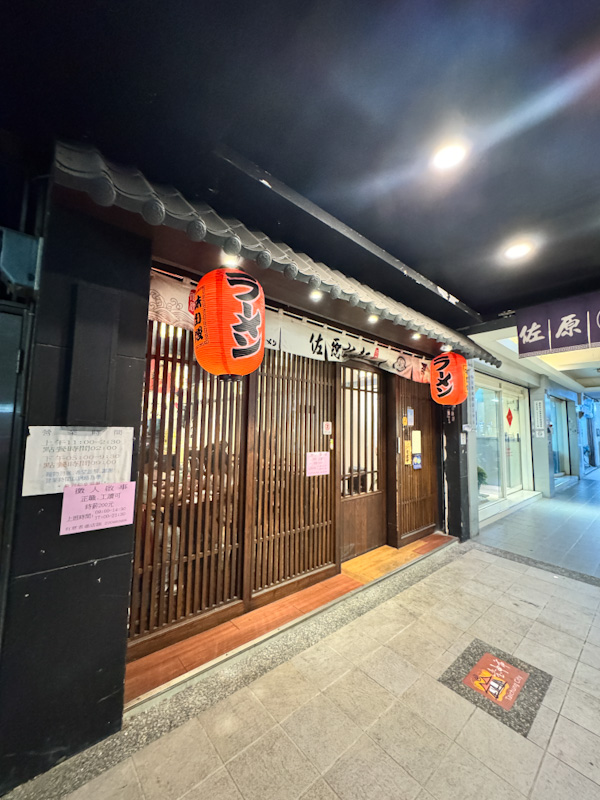
Situated in Taichung’s North District, Zuo Yuan La Mian (佐原拉麵) has built a dedicated local following around its customized, approachable approach to traditional Japanese ramen. The shop operates on a personalized ordering system, allowing diners to tailor their bowls by adjusting soup concentration, oil levels, and noodle firmness to exact personal preferences.
The kitchen focuses on a foundation of long-simmered tonkotsu broth, utilizing high-pressure extraction to yield a rich, collagen-heavy base. Alongside their signature pork bone soup, the menu expands into varied flavor profiles including black garlic oil, spicy miso, and light shoyu variations, paired with classic thin straight noodles engineered for high broth adherence.
With its clean, wood-toned interior and efficient counter service, Zuo Yuan La Mian balances authentic Hakata-style execution with modern customization, serving as a reliable destination for craft ramen enthusiasts in central Taiwan.
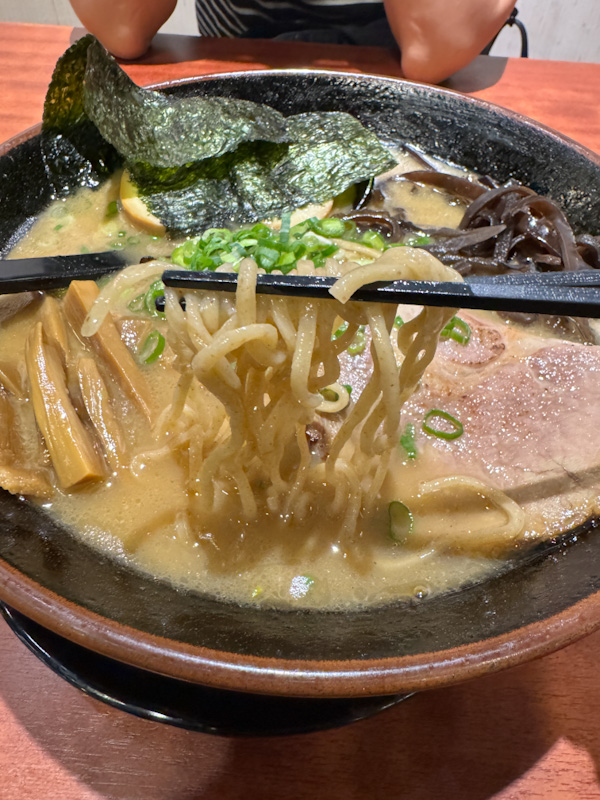
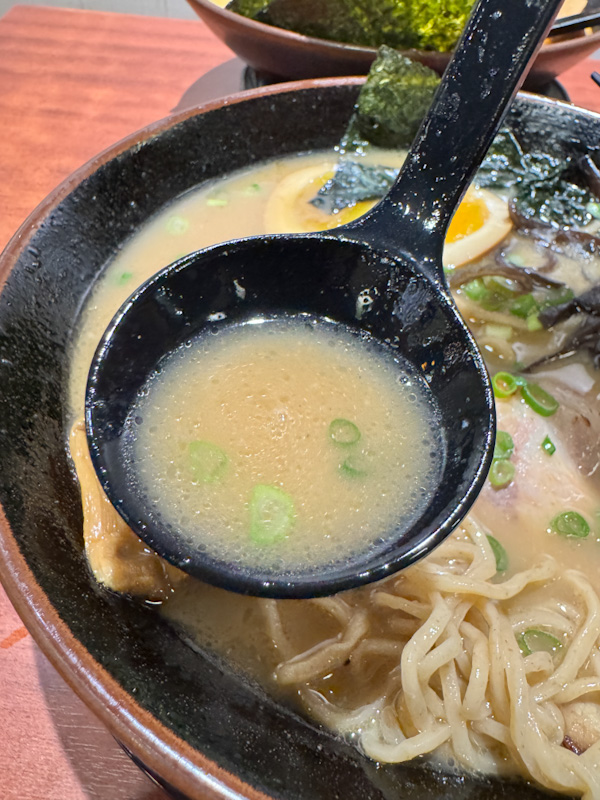
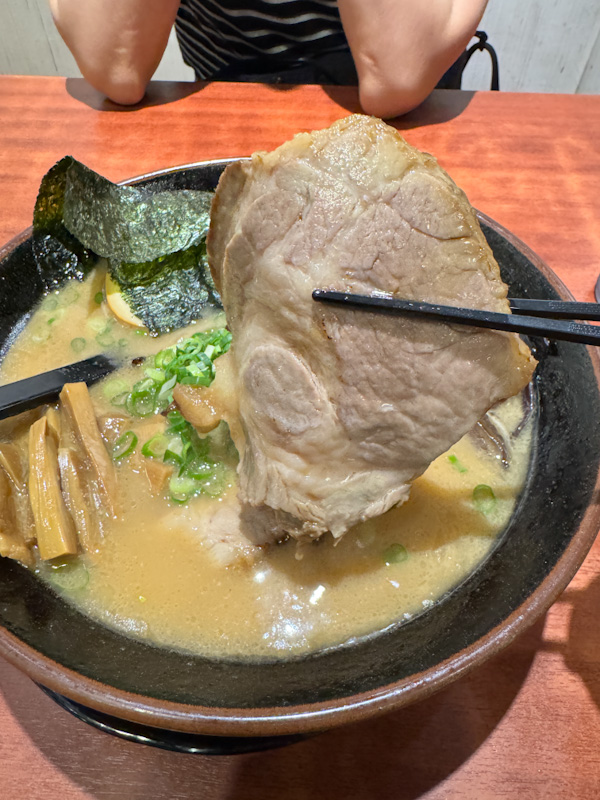
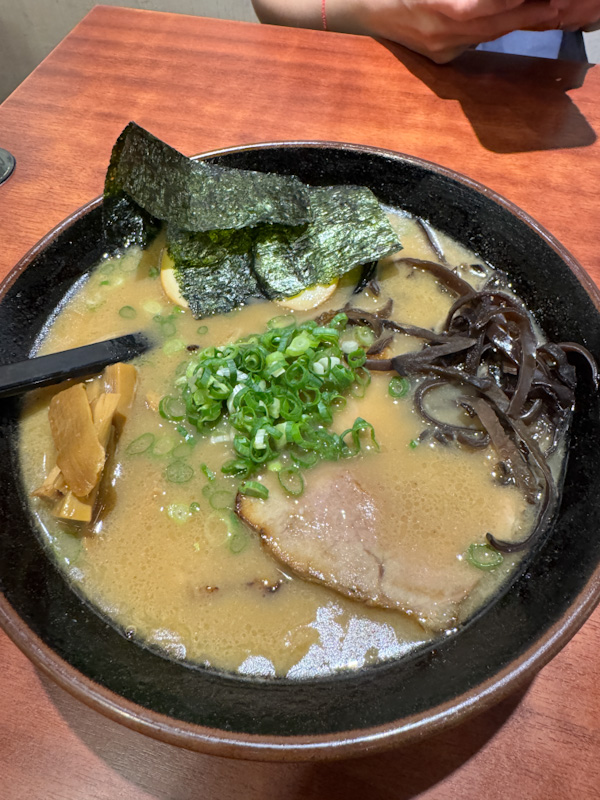
Fish Tonkotsu 魚介豚骨: 70/100
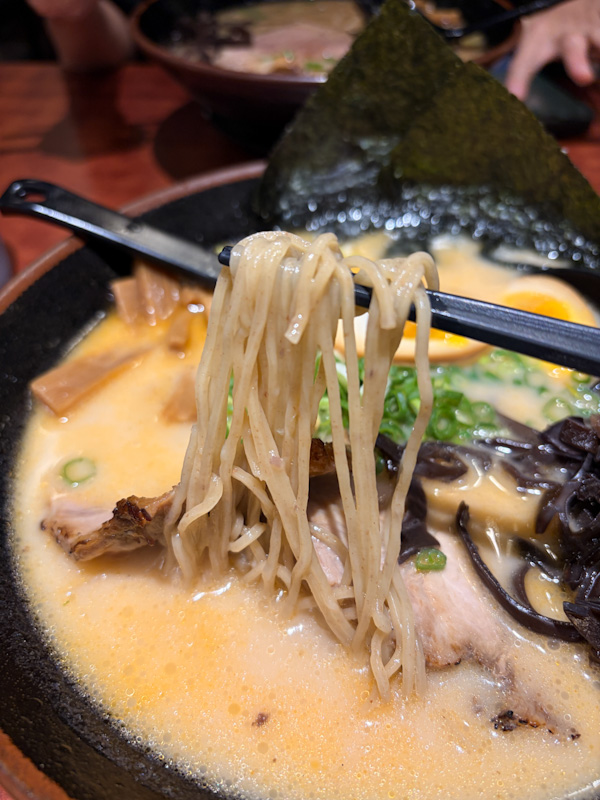
Noodle: 35/35
Ordered thick and hard, the noodles land on the table cooked to a precise al dente. They feature a pale yellow hue with a squarish, slightly ribboned, wavy geometry that immediately recalls the structural confidence of Iekei-style strands. The mouthfeel is exemplary, offering a firm, springy, and doughy resilience that holds its line through every bite. Beneath the bite, a robust wheat character takes center stage, delivering a deeply satisfying earthy and nutty profile that anchors the bowl with technical precision.
Soup: 20/35
The soup opens with a sticky lip-smacking film characteristic of a long-boiled pork broth, accompanied by a sharp salinity. However, the initial head gives way to a thin mid-palate body that notably lacks structural weight and depth. The tail concludes with a lingering shoyu finish, punctuated by erratic glimpses of bonito that feel untethered rather than integrated into the emulsion. The consistency leans watery, functioning as roughly a standard tonkotsu accented by a faint drizzle of bonito sauce rather than a true dual-pork-seafood base. As a straight tonkotsu it passes, but as a fish-pork hybrid, the soup profile misses its mark.
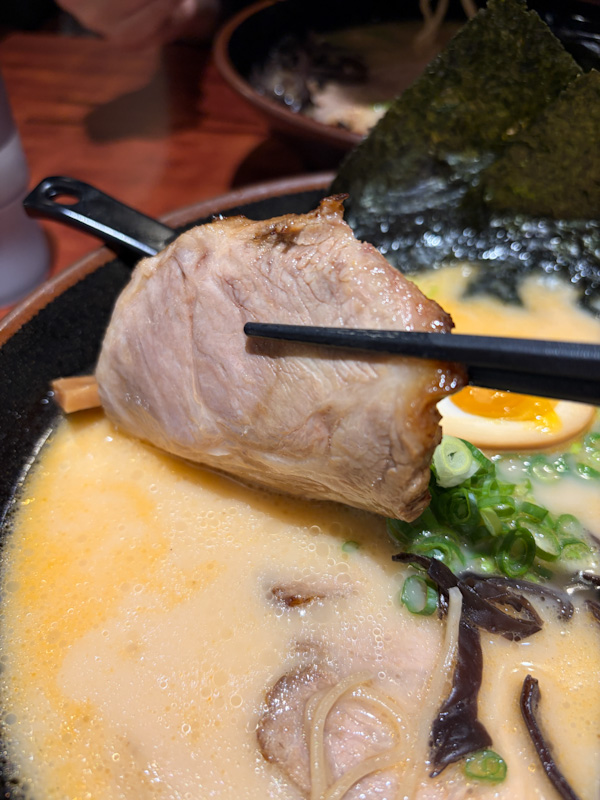
Meat: 10/20
The protein comes as a large, thick slice with visible marbling, providing a generous physical presence in the bowl. The texture leans firm, chewy, and somewhat tough, with the fat distribution reading as slightly stringy across the palate. Seasoning follows a traditional template, delivering an old-school, deeply marinated profile with pronounced porkiness, though clean and free of boar taint. While functional and substantial, it lacks the technical refinement or textural contrast required to elevate it beyond a standard chashu.
Other Toppings: 5/10
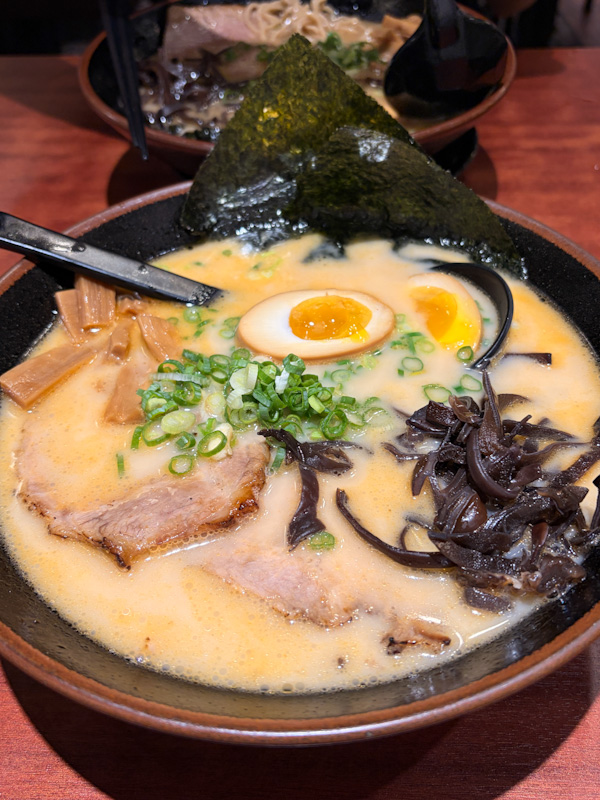
- Bamboo shoots are firm and juicy without fibrous resistance, heavily marinated to deliver a sharp, fruity sourness.
- Seaweed offers a clean, savoury baseline, though it fails to release a deeper umami punch upon soaking.
- Black fungus is fresh and exceptionally crunchy, providing a crisp textural interlude against the noodles.
- Marinated egg is cooked to a perfect, supple texture, deeply infused with a sweet-savoury shoyu profile.
- Fresh negi brings a crisp, juicy piquancy that cuts through the soup’s surface oil.
Summary
While the exceptional, doughy noodle execution sets a remarkable benchmark, the dish falls short as a true fish-pork hybrid due to a thin, tonkotsu-heavy broth that fails to deliver its promised seafood depth.
Shrimp Tonkotsu 蝦濃湯豚骨: 70/100
Noodle: 30/35
Ordered thin with a soft hardness setting, the medium-thin, pale yellow wavy strands arrive at the table yielding and tender. While the fundamental wheat character retains its familiar earthy and nutty foundation, the reduced surface area of the thinner gauge leaves the grain profile noticeably more subdued compared to heavier cuts.
Soup: 25/35
The soup opens with a milky appearance, though the initial head reads as physically thin on the tongue. On the mid-palate, the body brings a balanced sweet and savoury core interspersed with fleeting flickers of shrimp, before tapering into a subtle, lingering chili-like warmth on the tail. While it displays slightly more structural layering than its fish counterpart, the profile eventually flattens out, operating effectively as a 90% tonkotsu base finished with a light drizzle of ebi oil. As a straightforward pork broth it passes, but it falls short of delivering a full-bodied shrimp-pork integration.
Meat: 10/20
Served as a large, thick, and well-marbled slice, the chashu offers substantial physical presence and weight. The texture leans firm, chewy, and somewhat tough, with the fat strands coming across as slightly stringy under tooth. Flavour-wise, it follows a classic, old-school marination template; delivering a robust, pork-forward note that remains clean and completely free of boar taint, though lacking a distinct signature to set it apart.
Other Toppings: 5/10
- The topping selection provides standard structural support to the bowl, balancing the softer noodle texture with familiar contrasts, though without delivering any standout elements to raise the overall score.
Summary
Featuring a soft noodle presentation and a mildly layered broth with subtle ebi accents, the bowl offers a approachable, sweet-savoury profile, though the broth ultimately lacks the concentrated seafood intensity expected of a true ebi-tonkotsu hybrid.
DISCLAIMER
One man’s meat is another man’s poison.
Find out more about our palettes and how we evaluate our ramen here. 😉