WHAT WE ATE
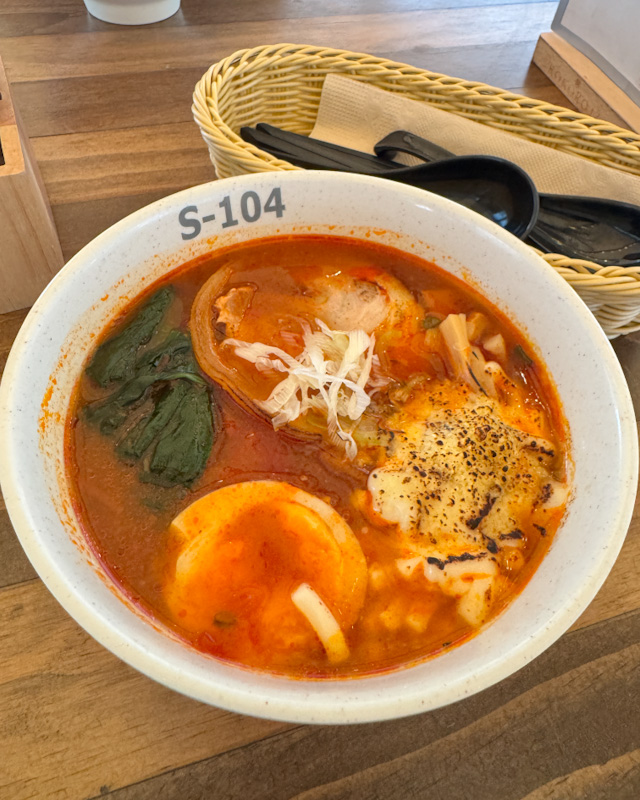
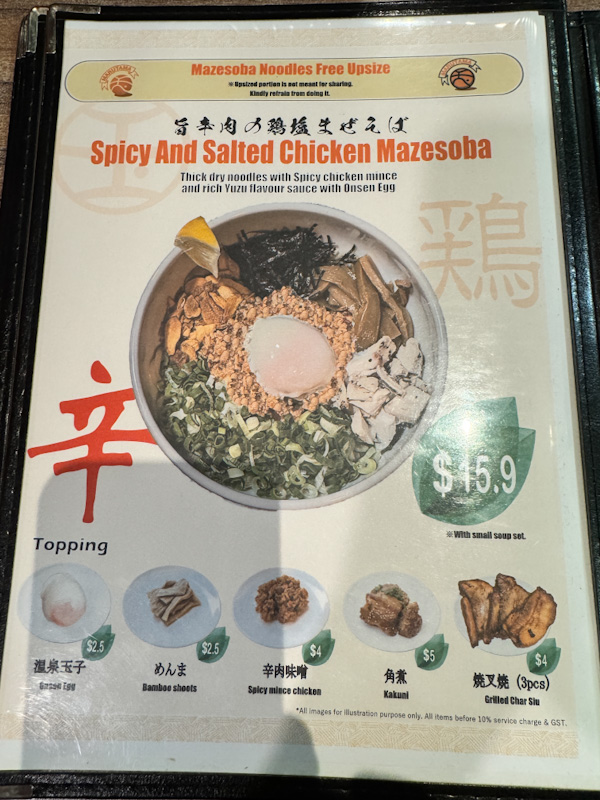
- Spicy and Salted Chicken Mazesoba, 95/100, (20 Jun 2026, The Central)
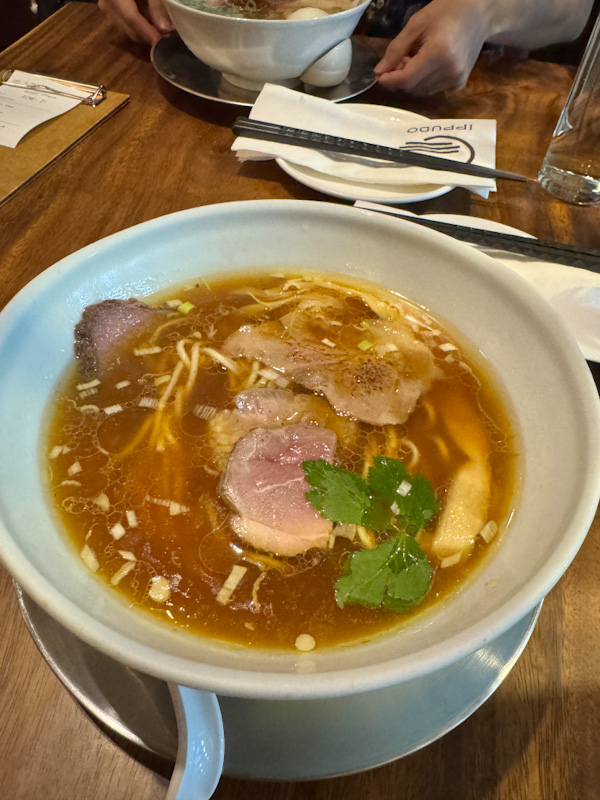
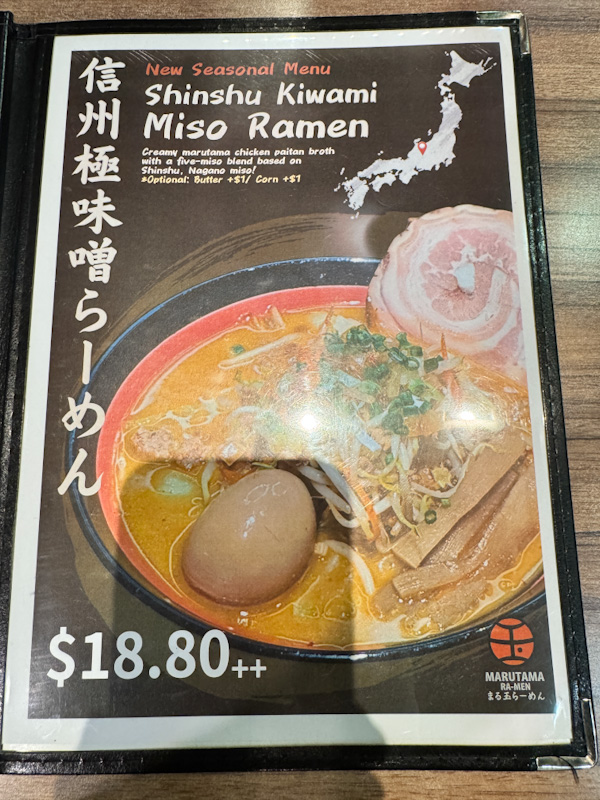
- Marutama Shinshu Kiwami Miso Ramen, 90/100 (20 Jun 2026, The Central)
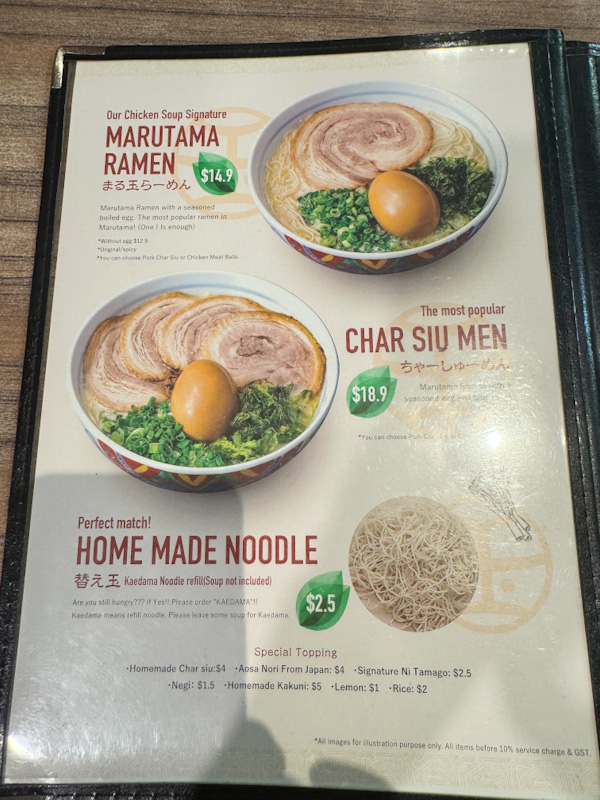
- Marutama Ramen, 60/100 (2 Jul 2022, The Central)
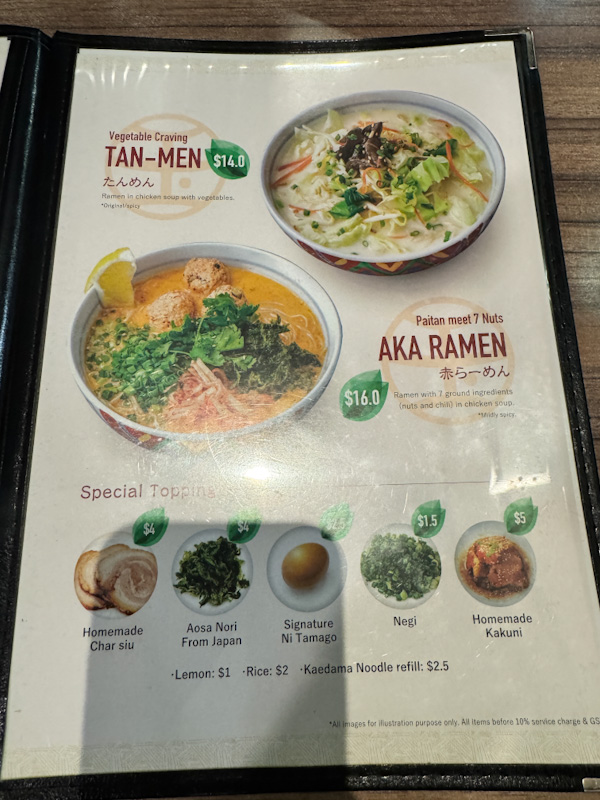
- AKA Ramen, 75/100 (2 Jul 2022, The Central)
- AN Ramen, 85/100, 55/100 (14 Nov 2021, Killiney)
- ZENBU Ramen, 70/100, 75/100 (14 Nov 2021, Killiney)
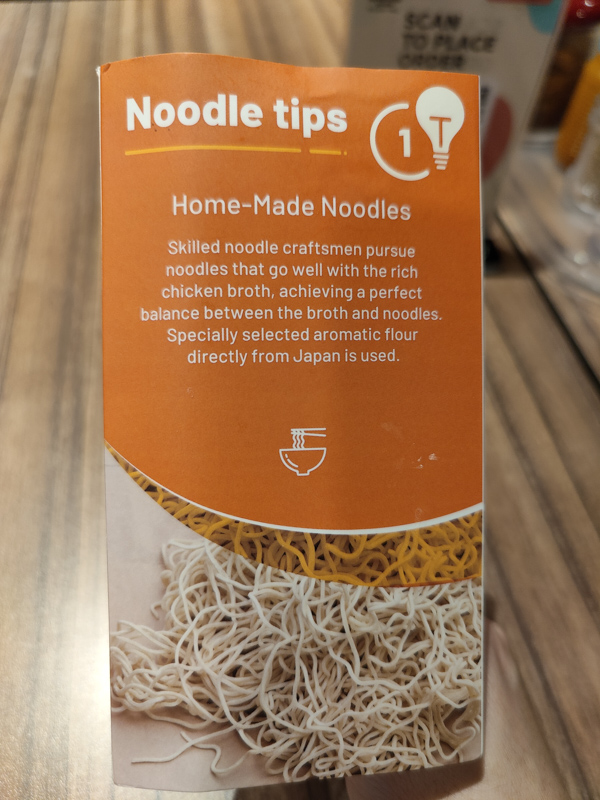
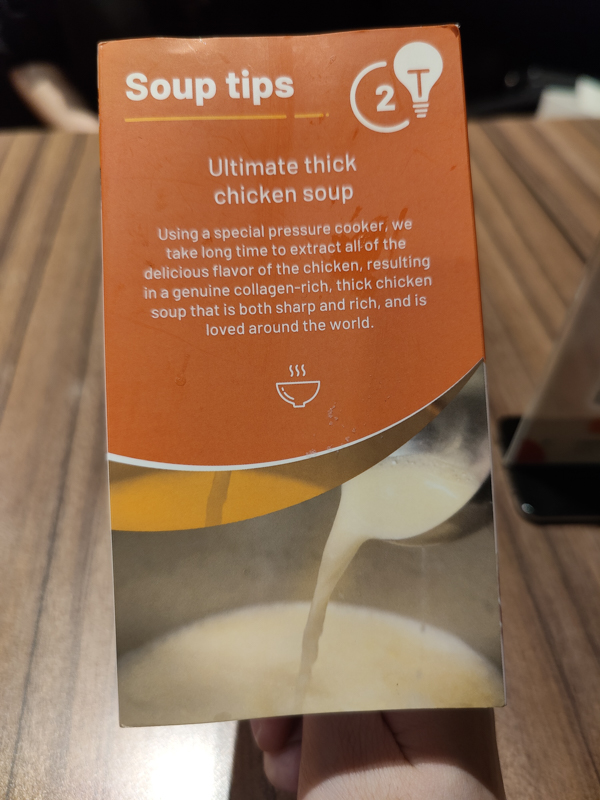
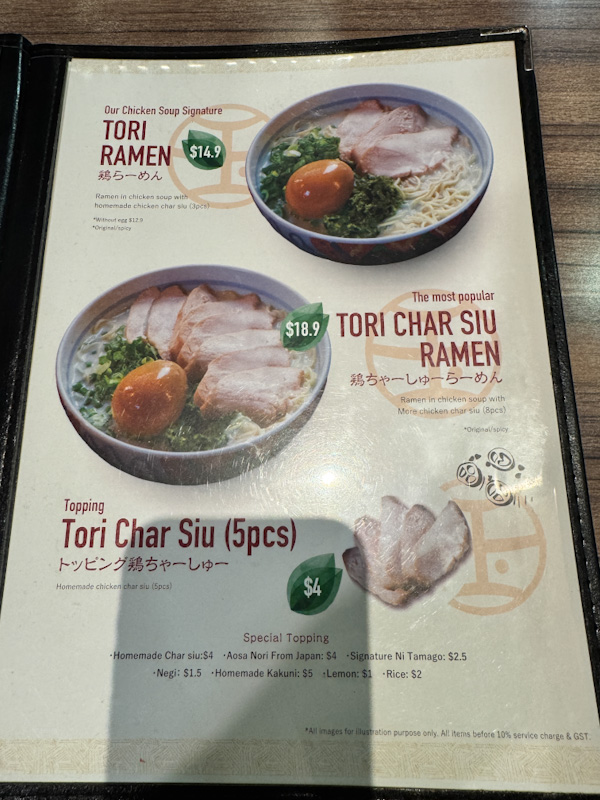
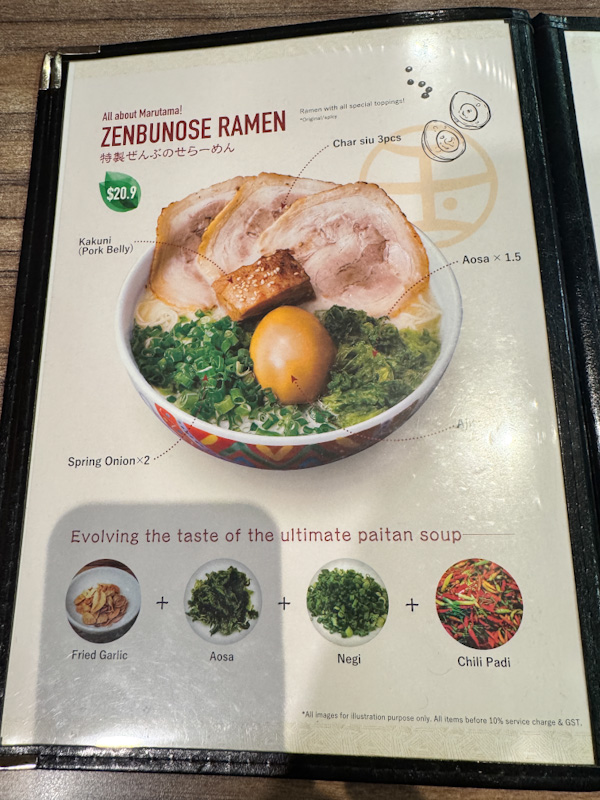
Marutama Ramen stands as a definitive milestone in the evolution of Singapore’s contemporary noodle scene, recognized primarily for its historical defiance of conventional broth standards. Established as one of the earliest specialty concepts to challenge the local hegemony of pork-centric Tonkotsu, this institution introduced local palates to the distinct complexities of Tori Paitan. Hailing originally from Kawaguchi, Japan, before anchoring its footprint firmly within the urban culinary landscape of Singapore, the brand has maintained a reputation built on structural consistency and a singular broth philosophy.
The operational identity of Marutama Ramen centers on a rigorous, multi-hour extraction process designed to emulsify chicken bones into a creamy, collagen-dense profile. Rather than relying on heavy fats or masking agents, the kitchen utilizes precise thermal regulation to draw out a pure, unadulterated poultry essence. This specialized focus has earned the establishment a dedicated following among purists who value clarity of intent and a disciplined departure from the ubiquitous, heavy pork bone varieties found elsewhere across the island.
Architecturally arranged to mirror traditional Japanese noodle bars, the dining spaces facilitate a streamlined, efficient experience that prioritizes technical execution over aesthetic distraction. The menu remains deliberately focused, utilizing an engineered selection of house-made noodles and classic accompaniments designed to showcase the primary soup framework. For those mapping the historical trajectory of Singapore’s ramen landscape, this establishment represents a crucial foundational node where technical restraint and poultry-based brewing methods first gained widespread critical acceptance.
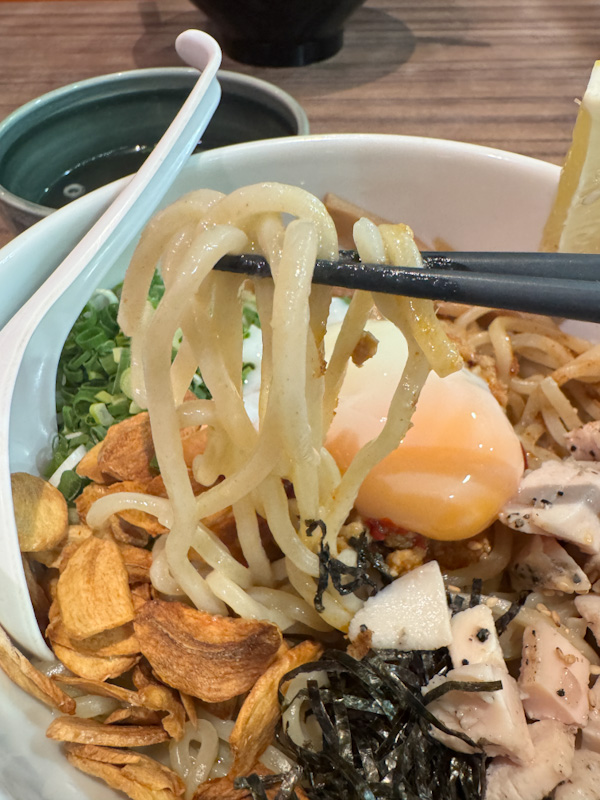
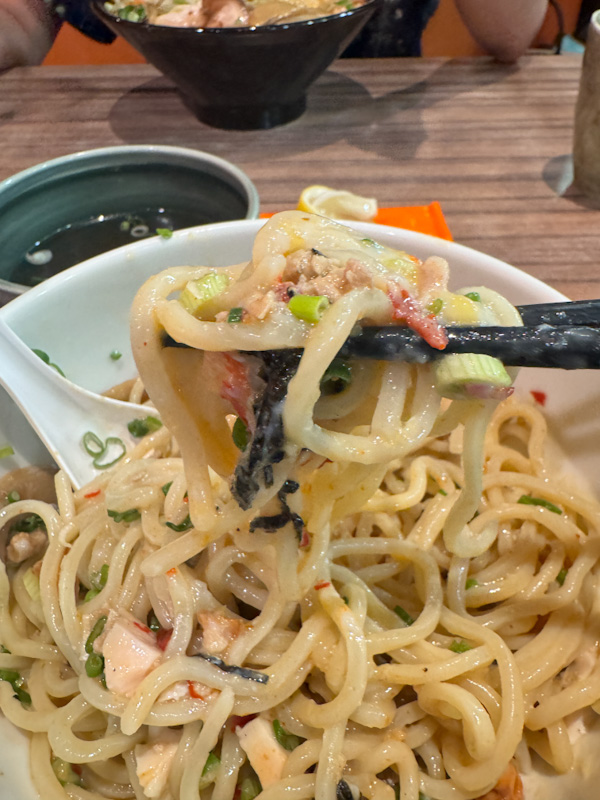
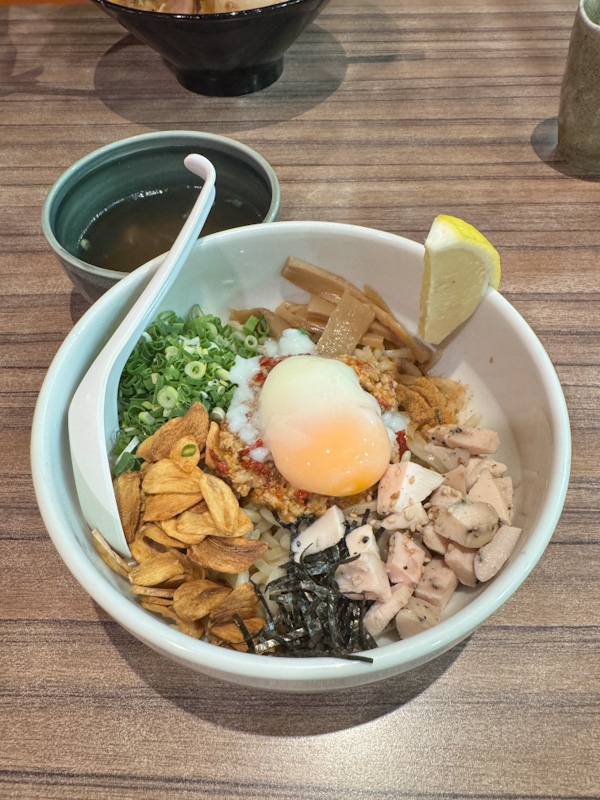
Spicy and Salted Chicken Mazesoba: 95/100
Noodle: 35/35
The foundation of this dry composition rests on a thick, squarish, machine-cut profile that immediately commands attention with its substantial geometry. Cooked to a precise al dente standard, the strands deliver a firm, muscular tensile resistance that yields to a mildly chewy exterior. The mouthfeel is satisfyingly dense, avoiding any doughy collapse and offering a clean snap upon mastication. Flavor-wise, the noodle exhibits a highly defined character, throwing off distinct nutty notes and an earthy wheat sweetness that prevents the structural starch from reading as neutral.
Sauce: 35/35
The sauce architecture is highly layered, relying on the ambient moisture of the components to form an immediate emulsion upon agitation. The head opens with a velvety, comforting creaminess derived from the integrated egg yolk, which softens the initial impact. As it transitions into the body, the mid-palate expands into a complex equilibrium of savory richness balanced by a sharp, bright sourness that cuts through the potential heaviness. The tail terminates with a lingering, creeping spiciness that gathers at the back of the throat, rounded out by a subtle, whispering sweetness. This progressive flavor development creates a compelling, dynamic profile that retains its grip from the first mix to the final bite.
Meat/Protein: 15/20
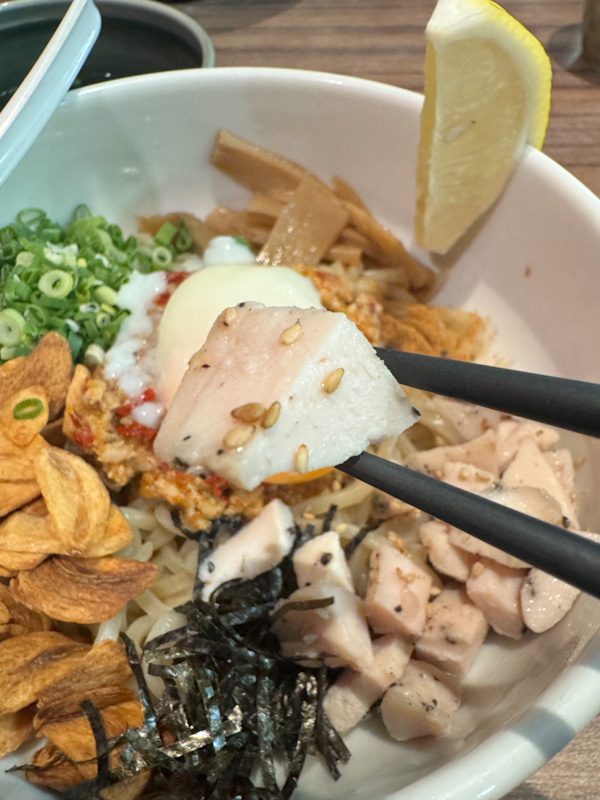
The primary protein element departs from the conventional sliced chashu format, deploying uniform, small cubes of chicken. The kitchen utilizes a lean cut, meticulously rendered to achieve an exceptionally soft, tender texture that defies the typical dryness associated with poultry breast. The mouthfeel remains moist and juicy, indicating precise thermal control during the cooking process. In terms of seasoning penetration, the cubes are lightly marinated to deliver a subtle savory umami flavor, acting as a clean, texturally pleasant component rather than a loud, dominant centerpiece.
Other Toppings: 10/10
The supporting cast is highly functional, acting as deliberate culinary levers to adjust texture, heat, and fat across the palate.
- Spiced chili minced chicken serves as the structural engine of the bowl, delivering the bulk of the robust seasoning and deep savory heat.
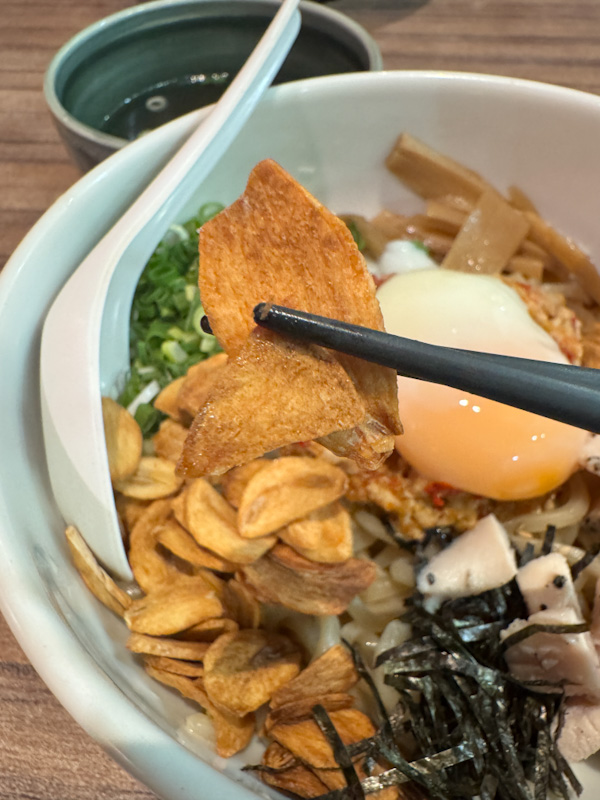
- An onsen egg introduces an essential dose of fat, coating the noodle strands to create a luscious, cohesive glaze when broken.
- Fried garlic chips provide a crucial aromatic lift and an immediate, brittle crunch that contrasts against the chew of the noodle.
- Tender, juicy bamboo shoots present a dual profile of natural sweetness undergirded by a savory undertone, completely free of any acrid, fibrous resistance.
- Finely diced negi contributes a sharp, piquant green brightness that pierces through the rich emulsion of the sauce.
- The accompaniment of a small side broth functions as an impeccable palate cleanser, soothing the palate with subtle shoyu notes and a warming, clean ginger finish.
Summary
This Spicy and Salted Chicken Mazesoba is a masterclass in dry noodle architecture, successfully balancing a heavy, spice-driven chicken mince emulsion against bright acidity and impeccable noodle geometry. It stands as a technically precise, highly addictive composition that rewards thorough mixing and deliberate appreciation.
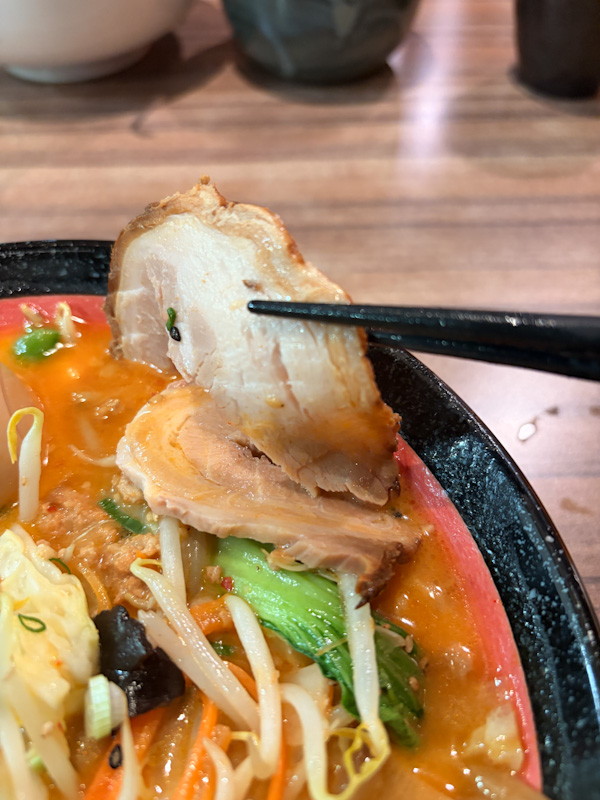
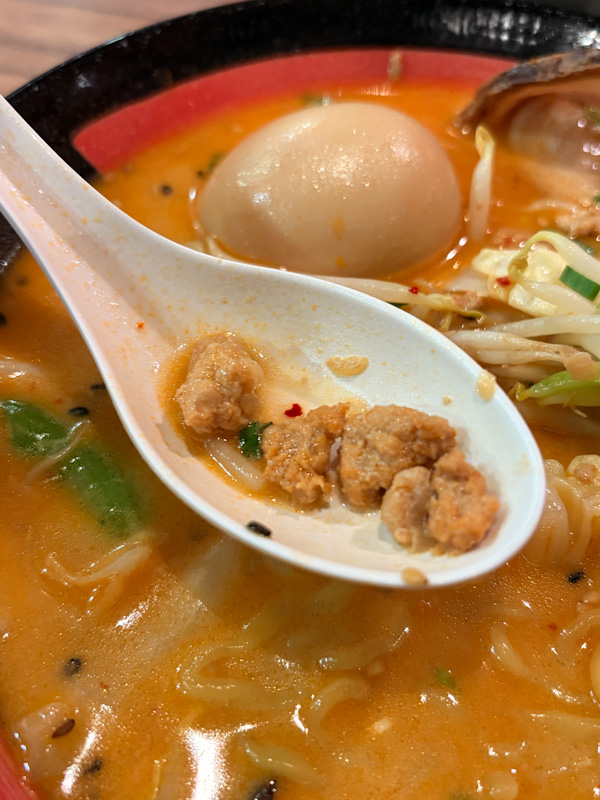
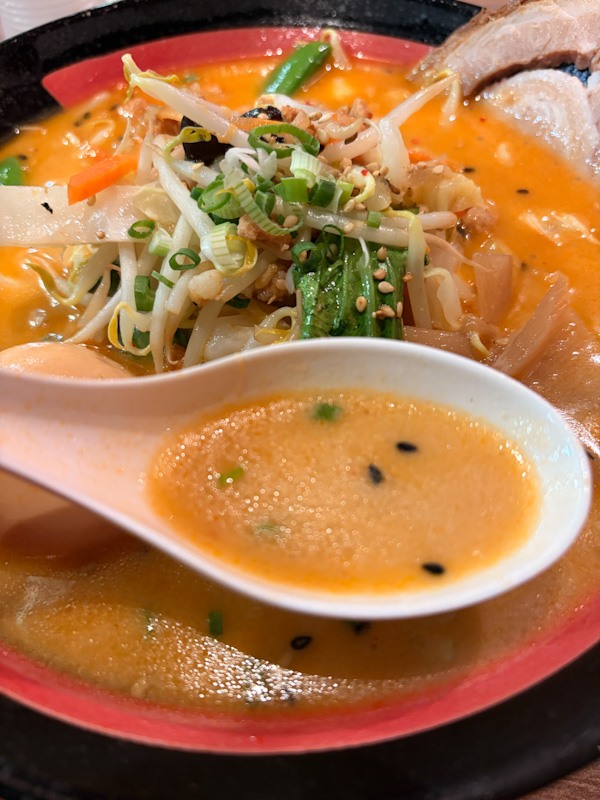
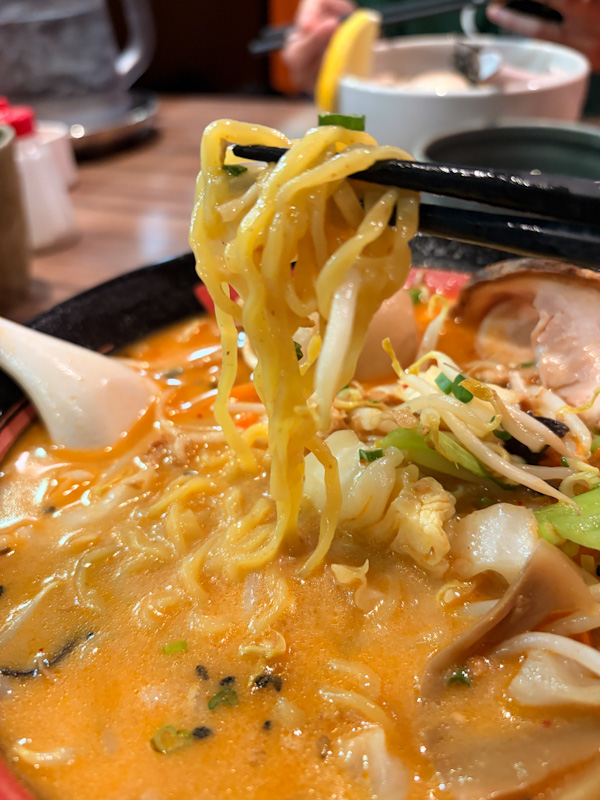
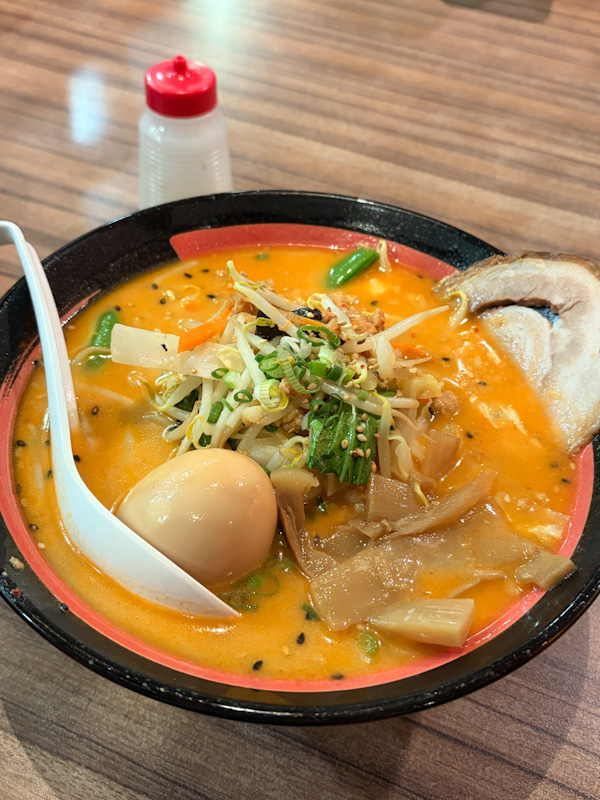
Shinshu Kiwami Miso Ramen: 90/100
Noodle: 30/35
The foundational canvas for this bowl is a medium-thick, flattish, and undulating wavy noodle. This specific geometry serves a dual purpose, acting as an efficient physical vehicle to lift the viscous broth while altering the surface-area contact on the palate. The hydration profile yields a texture that balances a dense, doughy core with a springy external elasticity. Upon mastication, the mouthfeel is remarkably tacky, momentarily sticking to the teeth in a manner that extends the chewing phase and prolongs flavor exposure. Beneath the textural mechanics, the starch showcases a clean, grain-forward profile, releasing a distinct earthy sweetness that complements rather than competes with the dominant profile of the broth.
Soup: 30/35
The broth presents a faithful interpretation of Nagano regional traditions, functioning as a highly balanced, clean multi-layered composition. The head opens with an immediate, aromatic nutty note that closely mirrors the fat distribution and aroma of premium peanut butter. Crucially, the brief sharpness of the initial impact contains none of the aggressive, acrid funkiness or overwhelming salinity spikes typical of heavily fermented red miso variants. The mid-palate body expands into a creamy, milky, and deeply savory landscape, underpinned by a deliberate sweet undertone that speaks to careful thermal regulation during the bone extraction process. The tail terminates gently, leaving a pleasant, lingering sweetness at the back of the throat. While the structural equilibrium is undeniable, the overall experience would achieve greater technical height if the emulsion possessed higher viscosity and a richer, more unctuous mouthfeel.
Meat/Protein: 20/20
The primary protein element is executed with flawless discipline, achieving complete structural breakdown through precise, low-temperature rendering. The thickness and cut are engineered to maximize surface area contact with the broth without losing structural cohesion on the chopsticks. Texturally, the meat is exceptionally tender, bypassing any fibrous resistance to create a uniform, melt-in-the-mouth sensation across the tongue. The seasoning penetration is deep and thorough, balancing a subtle, savory marination against the natural sweetness of the rendered fat, resulting in a flawless piece of chashu that sets a high standard for technical protein preparation.
Other Toppings: 10/10
The supporting garnishes act as functional levers to adjust sweetness, texture, and aroma across the bowl.
- The marinated egg is technically precise in its physical state, featuring an ideal custard-like yolk consistency. However, the depth of the marination is slightly thin, lacking the deeper saccharine notes needed to fully accentuate the rich umami of the egg.
- Bamboo shoots are expertly prepared, delivering a tender, juicy bite with a pleasant crunch. The flavor profile balances sweetness against a savory undertone, entirely free of the harsh, pungent aromas found in poorly processed menma.
- A portion of minced chicken adds a distinct secondary texture to the bowl, remaining firm and structurally distinct without tipping into dryness, providing a rustic, grain-like contrast to the smooth chashu.
- Generous topping of beansprouts and cabbage adds a refreshing vegetal note and crunch.
Summary
This composition stands as a highly balanced, authentic homage to Nagano brewing methods, distinguishing itself through an expertly calibrated miso profile and immaculate chashu execution. It firmly establishes itself as one of the premier miso ramen offerings available within the Singapore competitive landscape.
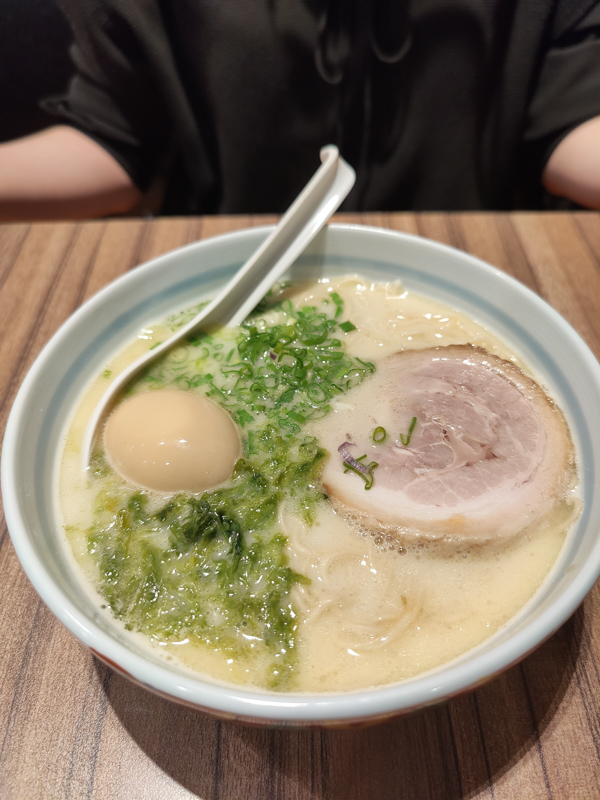
Marutama Ramen: 60/100
Noodle: 25/35
The kitchen deploys a distinct medium-thin, slightly wavy noodle profile that functions as the primary structural vehicle for the chicken-based broth. In terms of technical execution, the strands display an acceptable hydration balance, delivering a reliable tensile strength and a firm al dente snap upon mastication. The mouthfeel is smooth, providing a clean physical release without any premature structural softening. Flavor-wise, the starch is surprisingly expressive, releasing a pleasant, grain-forward wheat aroma that develops more clearly as you chew, ensuring the noodle contributes a solid baseline character rather than acting as a neutral carrier.
Soup: 20/35
The soup framework is built on a single-protein Tori Paitan extraction, aiming for a rich and unctuous chicken-based broth. While the initial sip introduces a heavy mouthfeel, the technical progression reveals room for refinement. The head opens with a straightforward savory note, but as it transitions into the mid-palate body, the broth lacks the complex layering, secondary flavor modifiers, and aromatic depth required to elevate it, resulting in a somewhat flat taste profile. The tail terminates with a highly pronounced, rustic poultry intensity in the aftertaste. This specific lingering chicken aroma presents a polarizing finish that may not appeal to diners who prefer a cleaner, more balanced exit.
Meat/Protein: 10/20
The primary protein element arrives as a modest, standard slice of pork chashu, which stands in stark contrast to the more generous cuts found in the premium Zenbu variation. The kitchen demonstrates reasonable precision regarding the physical cut, maintaining a decent thickness that preserves its structural integrity on the chopsticks. Texturally, the muscle fibers are well-rendered, yielding a soft, tender mouthfeel that avoids any fibrous or stringy resistance. The seasoning penetration is highly controlled, imbuing the meat with a gentle, savory profile that refrains from introducing an aggressive salinity spike to the bowl.
Other Toppings: 5/10
The secondary garnishes perform with mixed utility, acting less as complex flavor adjusters and more as simple culinary fills.
- The marinated soft-boiled egg is technically flawless in its physical execution, revealing an impeccable, gooey consistency and a brilliant golden yolk color.
- The egg marination is balanced with high accuracy, establishing a precise equilibrium between gentle saltiness and a subtle sweetness.
- Fresh spring onions contribute a necessary, piquant green brightness that cuts through the surface fat of the broth.
- A specialized leafy vegetable topping is integrated into the bowl, though it remains functionally inert, failing to deliver any significant flavor contribution or texturally relevant crunch.
Summary
This rendition of Marutama’s signature bowl delivers a technically sound noodle and a well-executed egg, but it is ultimately held back by a flat, unstratified chicken broth that lacks broader aromatic complexity. It functions as a straightforward, single-note poultry experience rather than a multi-layered masterpiece.
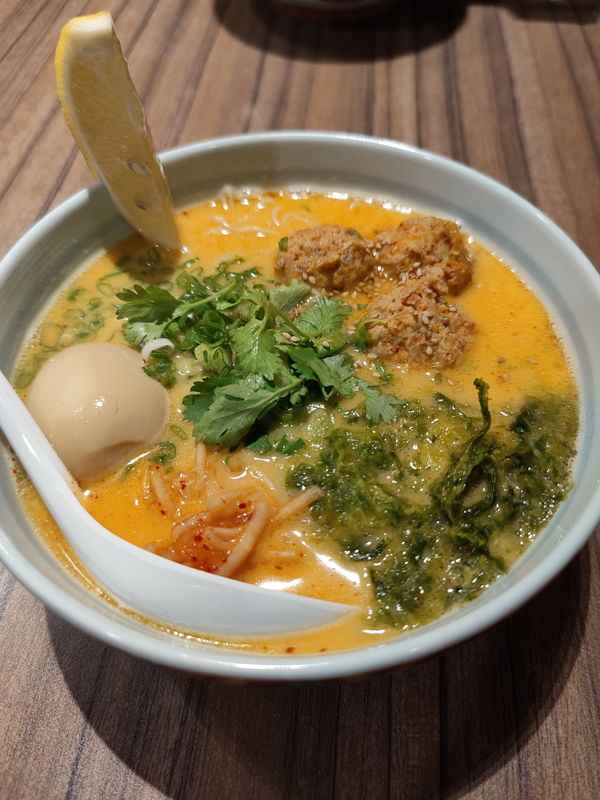
AKA Ramen: 75/100
Noodle: 25/35
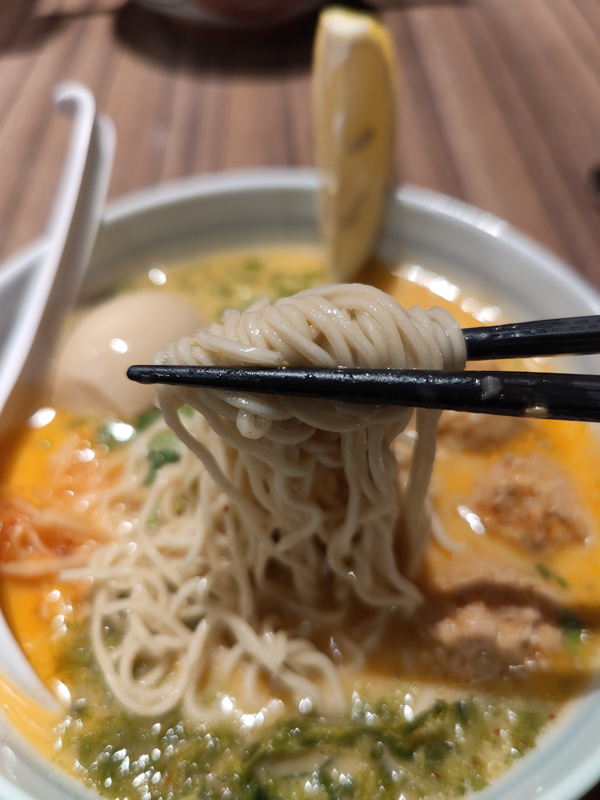
The kitchen utilizes a thin, slightly wavy noodle profile identical to the baseline structural starch served across the franchise’s Clarke Quay Central operations. However, technical execution varies across locations. While previous assessments at the Killney outlet revealed inconsistencies in firmness, this specific preparation exhibits a superior thermal calibration. The strands maintain an acceptable tensile bite and a precise al dente threshold upon mastication. The mouthfeel is notably cleaner, offering a firm rebound between the teeth that allows the subtle, grain-forward wheat character to develop fully as you chew, yielding a more convincing performance than past iterations.
Soup: 25/35
The soup framework is an innovative, single-protein poultry extraction modified by regional aromatics to deliver a rich, creamy, and mildly spicy profile. The head opens with an immediate wave of unctuous poultry fat, swiftly brightened by the inclusion of a fresh lemon element that introduces a refreshing, sharp citrus layer. As the broth develops across the mid-palate body, it demonstrates a balanced, multi-layered emulsion that resists the flat, single-note trajectory of standard Tori Paitan. While the combination of chili, citrus, and poultry fats might visually or conceptually parallel a traditional Tom Yum profile, the underlying architecture maintains a distinct Japanese twist. This precise calibration prevents the soup from descending into a generic, thin tom yum broth, ensuring it carries the necessary viscosity and deep savory depth to firmly anchor the ramen identity.
Meat/Protein: 15/20
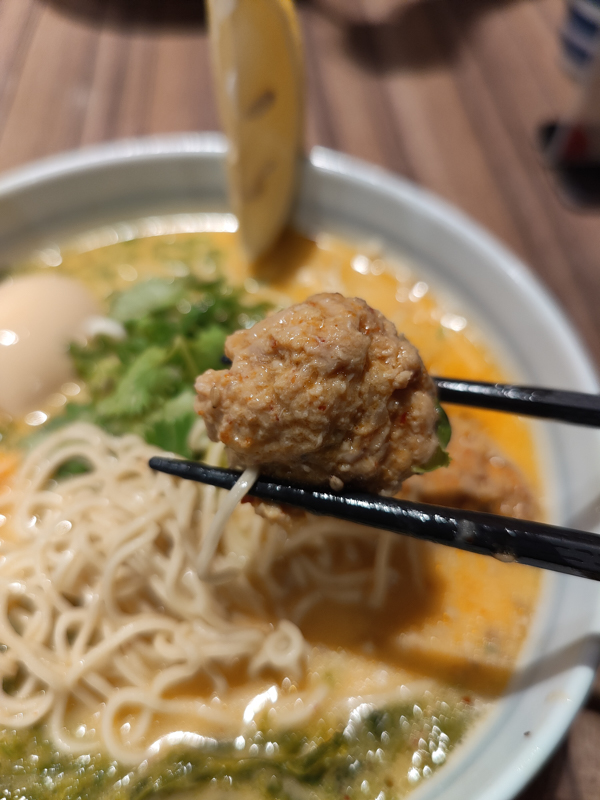
Departing from the conventional sliced pork chashu format, the primary hero protein introduces a creative structural pivot in the form of seasoned poultry meatballs. The texture and presentation lean heavily toward the mechanics of a traditional Balinese Satay Lilit, utilizing finely minced protein to achieve a soft, uniform bite with a moist interior. Seasoning penetration is deep and thorough, incorporating a complex blend of Southeast Asian spices and botanicals that elevate the flavor profile. While the execution is commendable, the integrated heat in the meatball registers slightly too high, occasionally introducing an aggressive spice spike that threatens to crowd out the more delicate, nuanced poultry notes of the surrounding broth.
Other Toppings: 10/10
The supporting garnishes are highly functional, selected with deliberate intent to modulate the fat, salinity, and heat across the bowl.
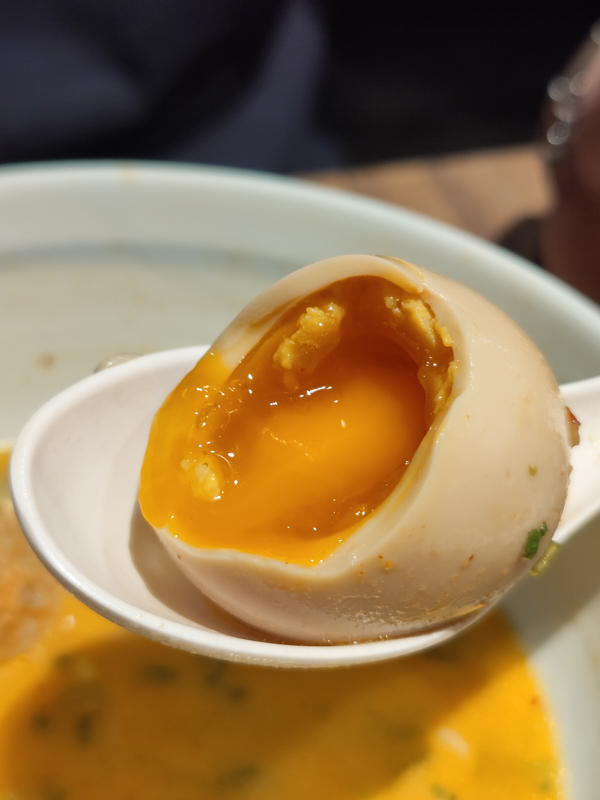
- The soft-boiled egg displays flawless technical execution, revealing a perfectly gooey, custard-like yolk consistency encased in a brilliant golden exterior.
- The egg marination is balanced with high precision, striking an exact equilibrium between low-salinity soy notes and a delicate saccharine undertone.
- Fresh parsley is introduced as a top-note aromatic, contributing a clean, herbal piquant brightness that slices through the unctuous weight of the emulsified broth.
- A portion of mushy Aosa seaweed functions as an exceptional texture modifier, absorbing the soup while releasing a deep marine umami and a refreshing oceanic element that enhances the overall depth of the dish.
Summary
This composition represents a compelling, highly unique fusion of classical poultry emulsification and regional Southeast Asian spice profiles. It succeeds on the strength of its well-calibrated acid elements and exceptional topping selection, delivering a distinctive, multi-layered bowl that pushes past standard franchise conventions.

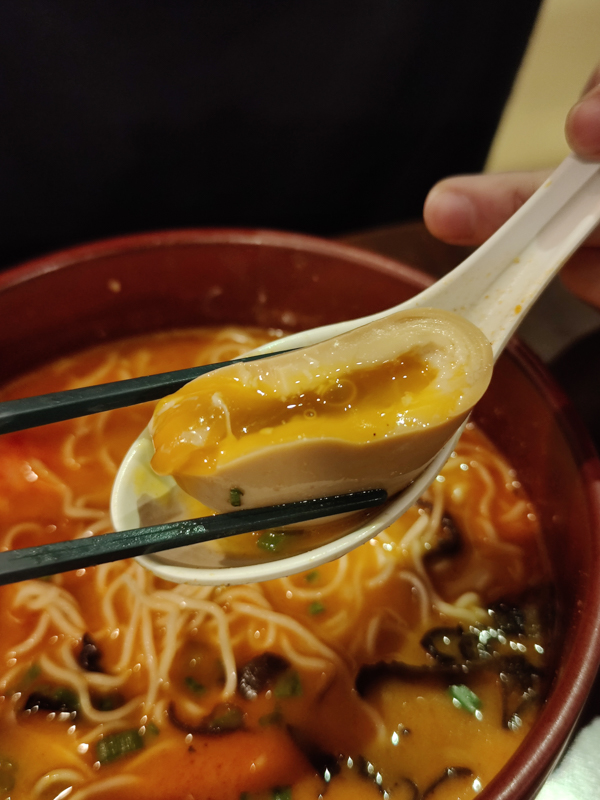
AN Ramen: 55/100
Noodle: 25/35
The kitchen deploys a thin, slightly wavy noodle profile that structurally occupies the middle ground between a traditional rigid Hakata straight strand and a classic Tokyo Shoyu wavy type. In terms of technical execution, the hydration levels provide a decent tensile resistance and baseline firmness upon mastication, preventing premature structural collapse in the hot liquid. The mouthfeel remains clean, though the overall precision of the bite is somewhat compromised by operational consistency, as floor staff do not query diners regarding their preferred level of noodle doneness during the ordering process.
Soup: 15/35
Exclusively available at the Killiney Road branch, the liquid base relies on the franchise’s signature single-protein poultry extraction methodology. The head opens with a commendable display of technical emulsification, yielding a creamy and savory chicken broth that demonstrates thorough bone-calcium extraction. However, the body of the soup undergoes a dramatic stylistic deviation, as the addition of specific regional seasoning modifiers shifts the visual profile and taste architecture heavily toward a Southeast Asian Tom Yum. While the formulation is technically well balanced for a Thai noodle dish, the dominant lemongrass, galangal, and acid notes bulldoze through the delicate poultry undertones. In short, it’s 80 percent Tom Yum and only 20 percent Japanese ramen.
Meat/Protein: 10/20
The primary hero protein departs from traditional pork chashu, opting instead for whole grilled prawns. The initial sear on the shellfish introduces an appealing smoky, charred aromatic note, yet this subtle flavor profile is quickly overwhelmed once submerged in the aggressive acid and spice of the modified broth. From a technical standpoint, the preparation reveals a significant flaw in butchery execution, as the prawns are served without being deveined, a lapse in basic kitchen craft that disrupts the cleanliness of the final mouthfeel.
Other Toppings: 5/10
The secondary garnishes are divided between classical Japanese precision and non-traditional elements that reinforce the soup’s fusion identity.
- The soft-boiled hanjuku egg exhibits flawless execution, featuring a perfectly gooey, custard-like golden yolk with excellent viscosity.
- The egg marination is balanced with high accuracy, establishing a precise equilibrium between salinity and saccharine notes while successfully avoiding an overpowering mirin aftertaste.
- Shredded black fungus is integrated into the bowl, providing a necessary, snappy physical crunch that contrasts against the uniform texture of the thin noodles.
- Fresh coriander is utilized as a prominent top-note garnish, a herb typical of the Tom Yum flavor profile that complements the liquid base but pushes the composition further away from classical Japanese parameters.
Summary
This bowl functions as a well-executed Thai-style seafood noodle soup, but it ultimately stumbles due to an identity crisis where the aggressive Tom Yum aromatics obliterate the underlying Japanese framework. It represents a fascinating conceptual crossover that falls short under rigorous, genre-specific technical scrutiny.
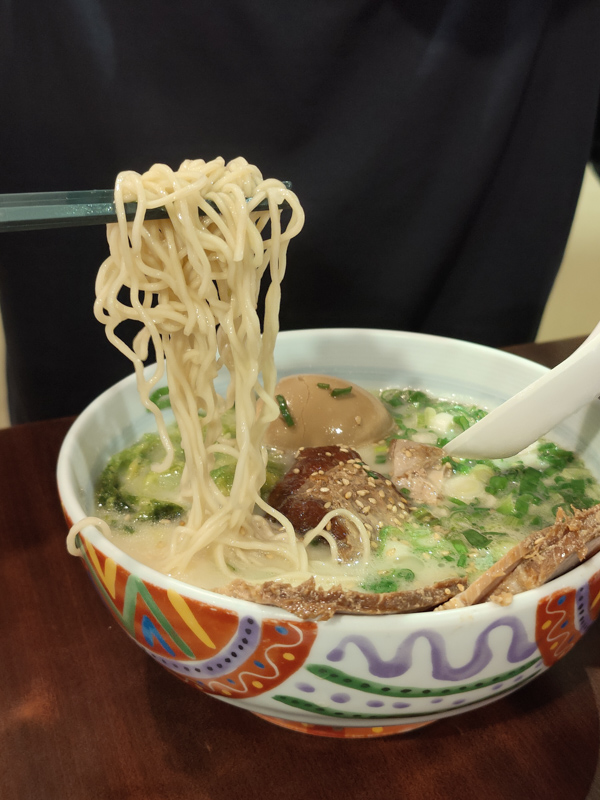
ZENBU Ramen: 75/100
Noodle: 25/35
The kitchen deploys a thin, slightly wavy noodle profile that visually and texturally occupies the middle ground between a traditional rigid Hakata straight strand and a classic Tokyo Shoyu wavy geometry. In terms of technical execution, the hydration levels provide a decent tensile resistance and baseline firmness upon mastication, preventing premature structural collapse in the hot liquid. The mouthfeel remains clean, though the overall precision of the bite is somewhat compromised by operational consistency, as floor staff do not query diners regarding their preferred level of noodle doneness during the ordering process. Beyond these baseline structural metrics, the noodle performs reliably but lacks a distinctive individual character or grain-forward wheat expression to make it truly remarkable.
Soup: 25/35
The liquid base relies on a single-protein poultry extraction methodology, yielding a classic Tori Paitan framework. Chicken-based broths typically reside on a lighter, more aqueous spectrum when contrasted against the unctuous density of pork-fat emulsified Tonkotsu or heavily fortified Shoyu and Miso variants. However, despite its visual lightness, the broth manages to avoid a watery profile, displaying an acceptable level of viscosity and a comforting, clean savory depth. The head opens with a gentle poultry aroma, transitioning into a balanced mid-palate body that satisfies without inducing palate fatigue. The tail terminates smoothly, though the overall composition ultimately lacks the complex layering, secondary flavor modifiers, and distinctive character necessary to leave a long-term sensory impression.
Meat/Protein: 20/20
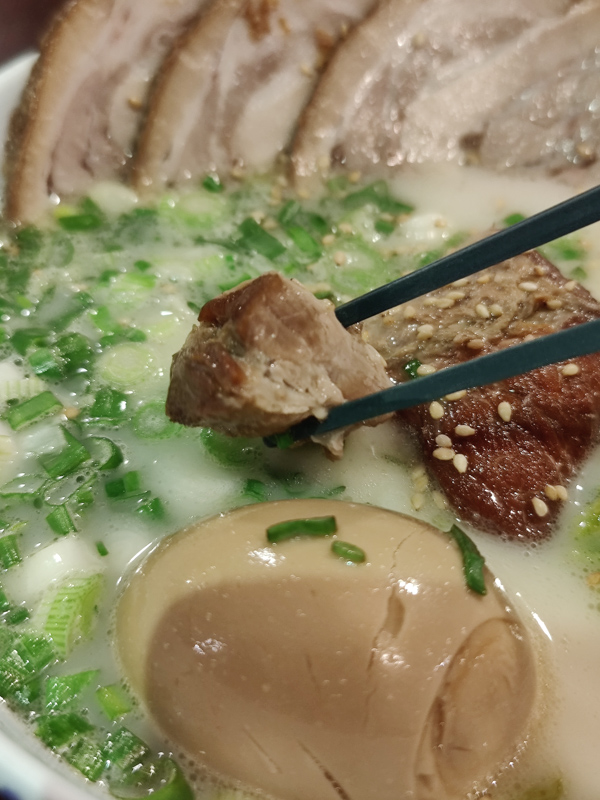
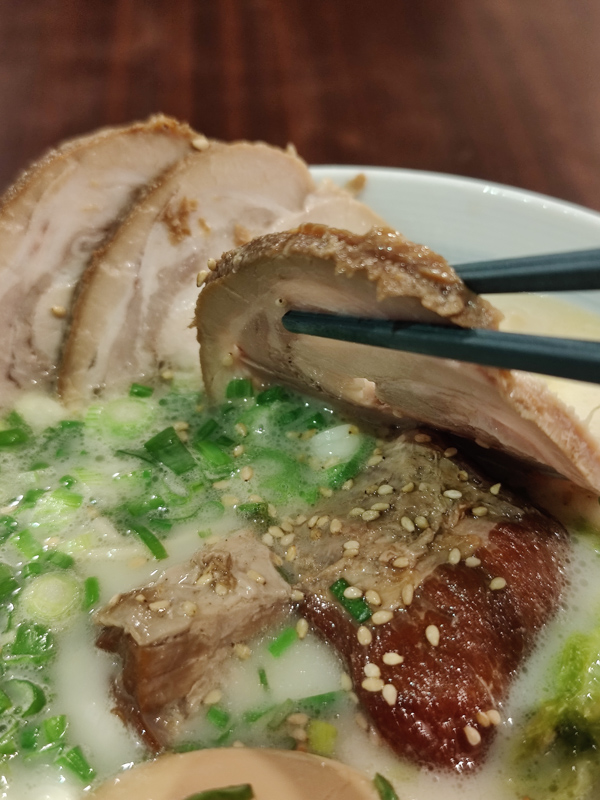
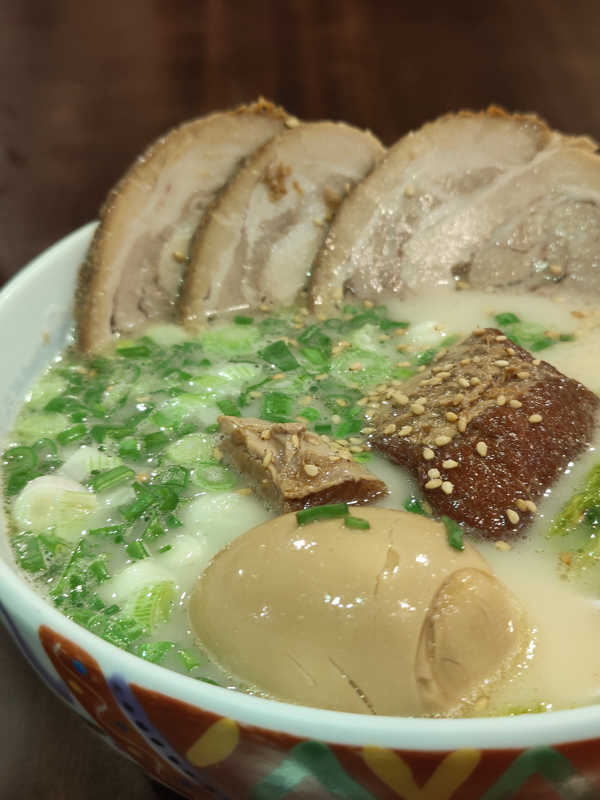
The protein component is presented as an expansive, multi-cut compilation that showcases excellent technical proficiency in meat preparation. The darker, chunky pork cuts undergo a thorough braising process that delivers a highly concentrated, flavorful umami punch, maintaining a firmer, slightly resilient structure. This sits in stark, deliberate contrast to the traditional chashu slices, which exhibit flawless low-temperature fat rendering, resulting in an exceptionally soft texture that completely melts in the mouth upon contact. This interplay between tough and tender structures creates an engaging textural counterpoint across the palate. The execution of the standard chashu is sufficiently masterful to anchor the entire protein category on its own technical merits.
Other Toppings: 5/10
The secondary garnishes perform with mixed utility, splitting the score between immaculate egg technicalities and poorly executed vegetal additions.
- The soft-boiled hanjuku egg exhibits flawless execution, featuring a perfectly gooey, custard-like golden yolk with excellent viscosity.
- The egg marination is balanced with high accuracy, establishing a precise equilibrium between salinity and saccharine notes while successfully avoiding an overpowering mirin aftertaste.
- A non-traditional leafy vegetable topping is integrated into the bowl, but it arrives severely overcooked and texturally flaccid.
- This vegetal element lacks independent flavor and structure, clumping together inertly when scooped and failing to deliver any functional crunch or piquant brightness to cut through the broth.
Summary
The ZENBU Ramen functions as an incredibly generous, toppings-forward showcase highlighted by flawless chashu rendering and an exemplary hanjuku egg. It delivers a deeply comforting, accessible poultry-based experience that satisfies the palate despite a baseline noodle profile and a straightforward, unstratified broth.
Disclaimer
One man’s meat is another man’s poison.
Find out more about our palettes and how we evaluate our ramen here. 😉