
WHAT WE ATE
- Kokoro Tsukemen (Non-Spicy), 55/100 (19 July 2026, Plaza Singapura)
- Ebi Katsu Mazesoba, 75/100 (19 July 2026, Plaza Singapura)
- Yuzu Kosho Kamo Ramen, 65/100 (14 Oct 2024, Plaza Singapura)
- Original Mazesoba, 90/100 (26 Dec 2023, Plaza Singapura)
- Salmon Miso Ramen, 50/100 (26 Dec 2023, Plaza Singapura)
- Iekei Ramen, 70/100 (2 Sep 2023, Suntec)
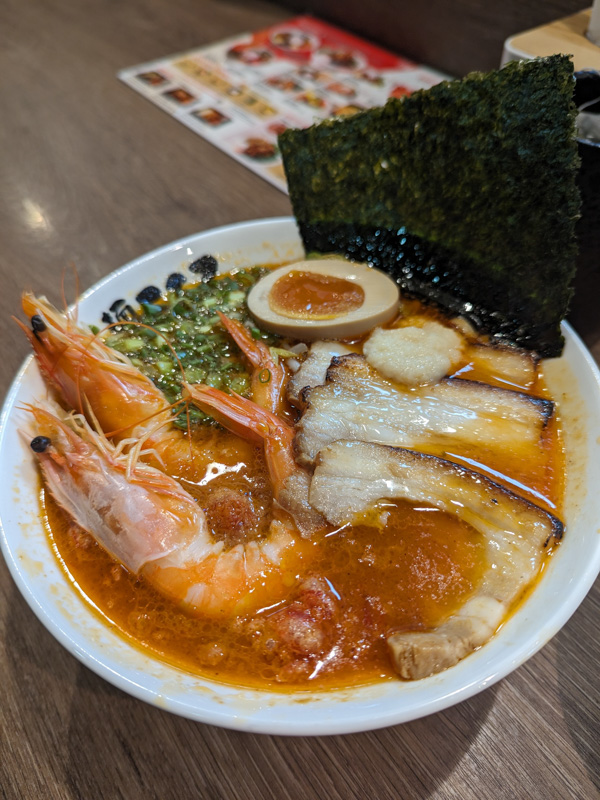
- ‘Super’ Ebi Ramen, 80/100 (2 Sep 2023, Suntec)
- Kokoro Tan Tan Men, 85/100 (6 Nov 2021, Plaza Singapura)
- Hojun Tonkotsu Ramen, 75/100 (6 Nov 2021, Plaza Singapura)
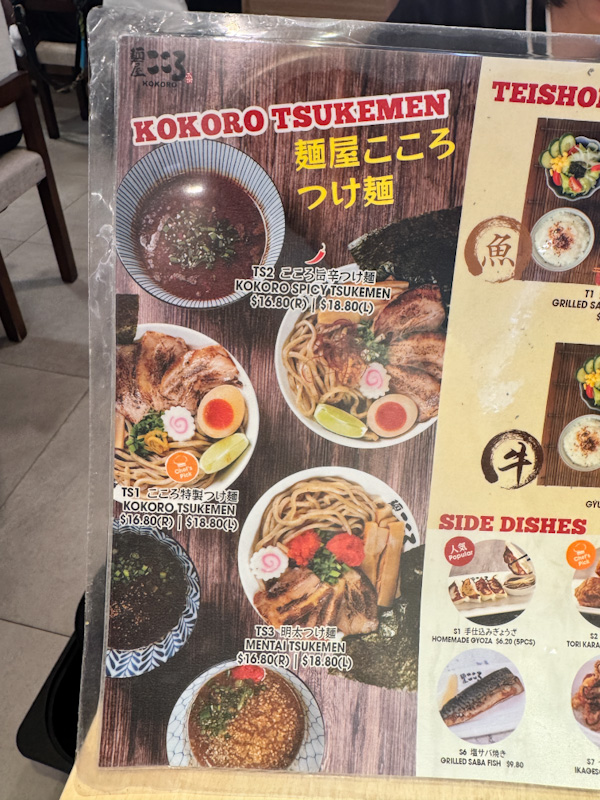
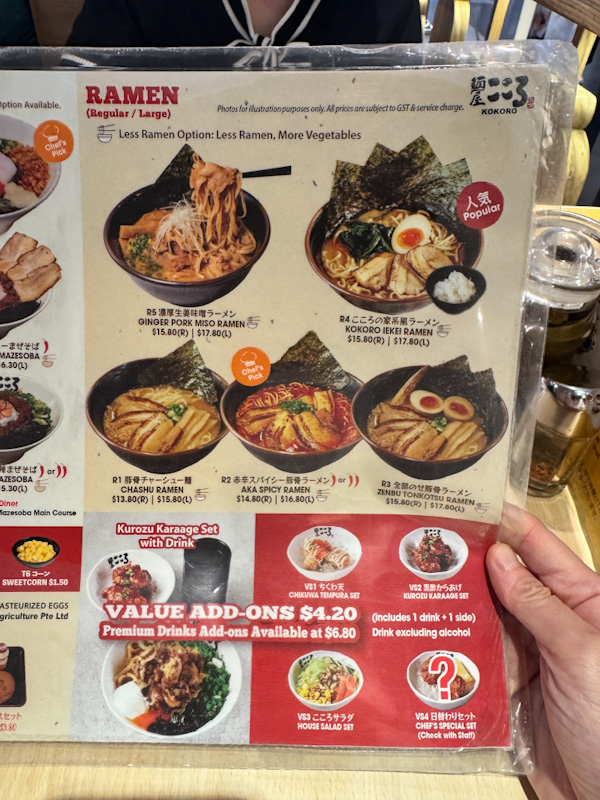
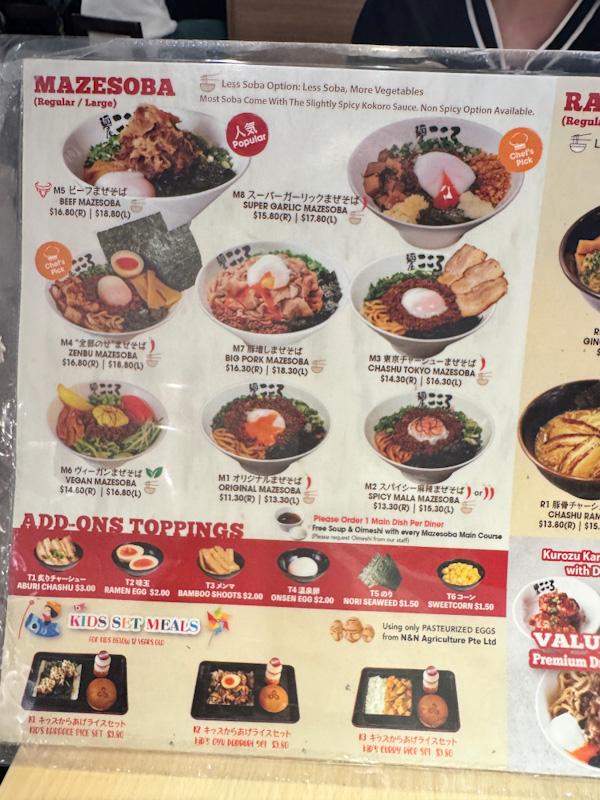
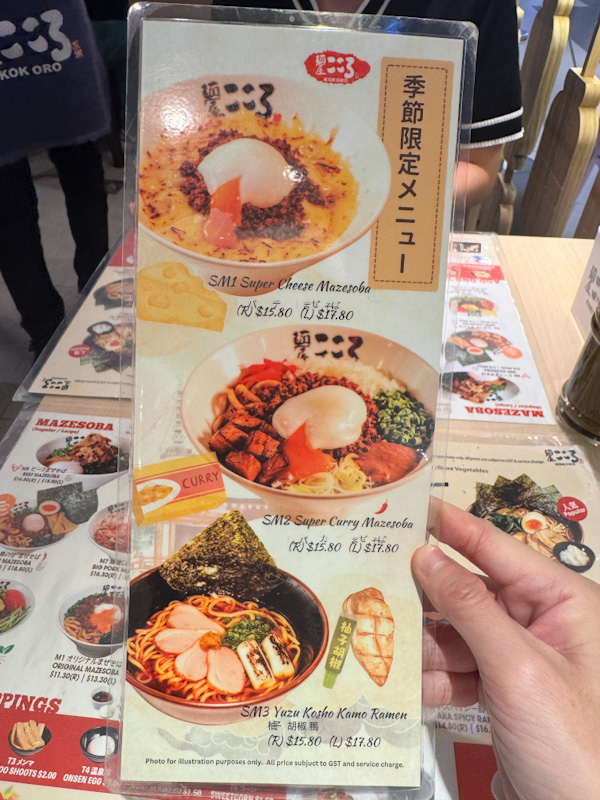
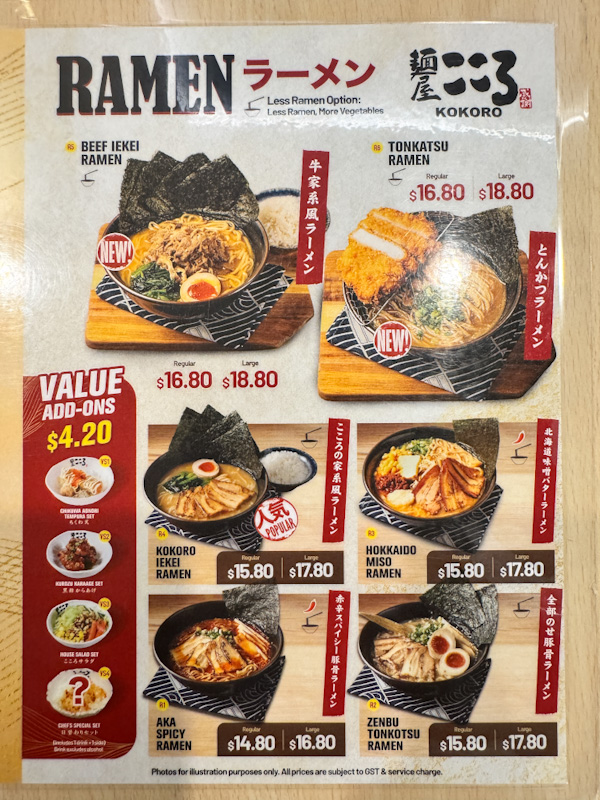
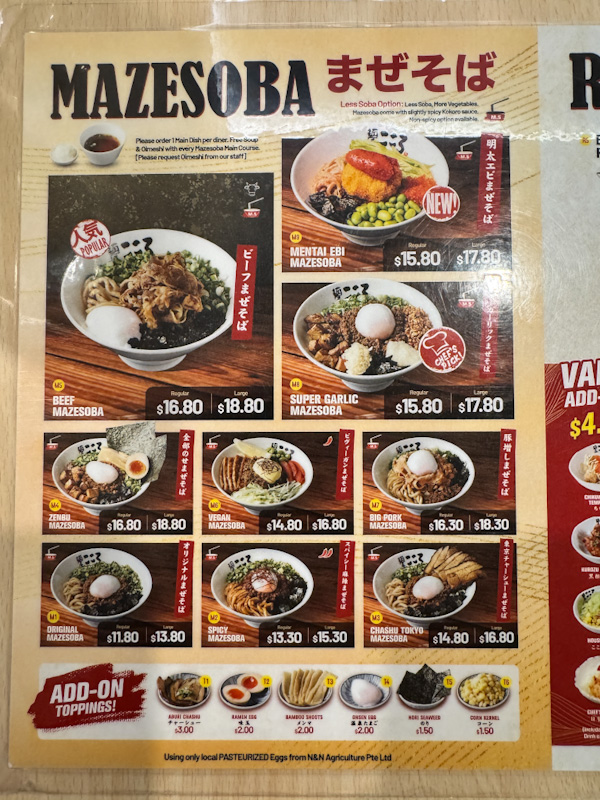
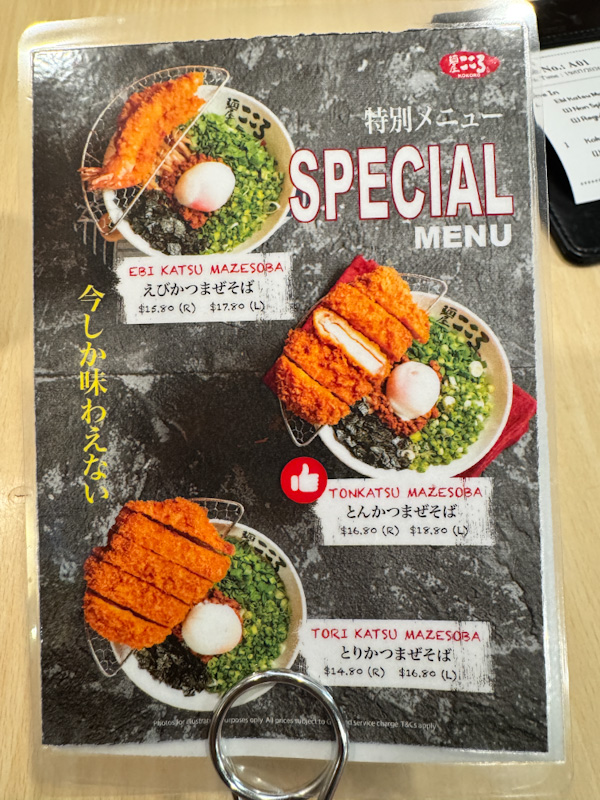
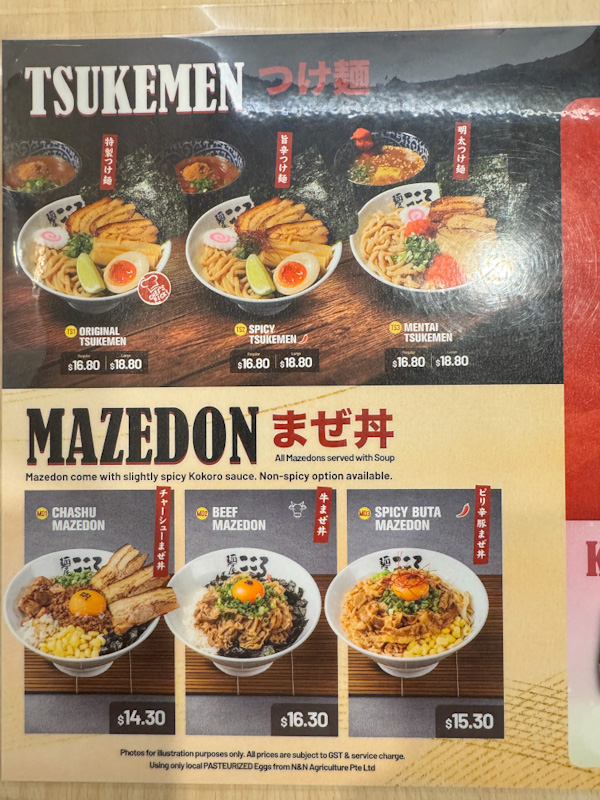
The contemporary Japanese ramen landscape in Singapore shifted notably with the introduction of Menya Kokoro, an establishment that established Tokyo-style mazesoba within the local culinary scene. Founded in Tokyo by Chef Takuma Ishikawa, who honed his skills under the originators of the modern dry-style movement, the brand arrived in Singapore to anchor a distinct sub-genre. By removing the traditional sea of broth, the concept relies entirely on the interplay of concentrated emulsified sauces, dense wheat strands, and a calibrated architecture of specialized toppings.
Operating across major commercial hubs like Suntec City, 100 AM in Tanjong Pagar, and Plaza Singapura, the kitchen focuses heavily on technical consistency. The core of their identity centers on a slow-cooked, deeply seasoned minced meat sauce prepared via specific Japanese techniques, paired with distinct components like ground saba fish powder, fresh chives, and sharp chopped garlic.
Rather than relying on the heavy liquid profile of a classic tonkotsu, the menu emphasizes visceral textures and intense flavor saturation. The structured assembly requires immediate, vigorous mixing at the table, allowing the starches of the thick, high-hydration noodles to bond directly with the robust, savory glaze. It is a highly deliberate style of dining designed for those who value textural viscosity and assertive, upfront umami over standard sipping broths.
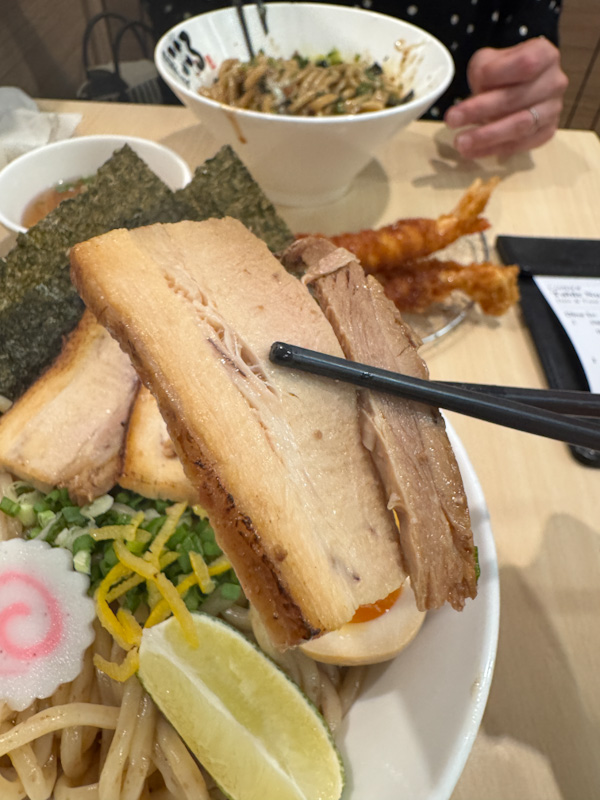
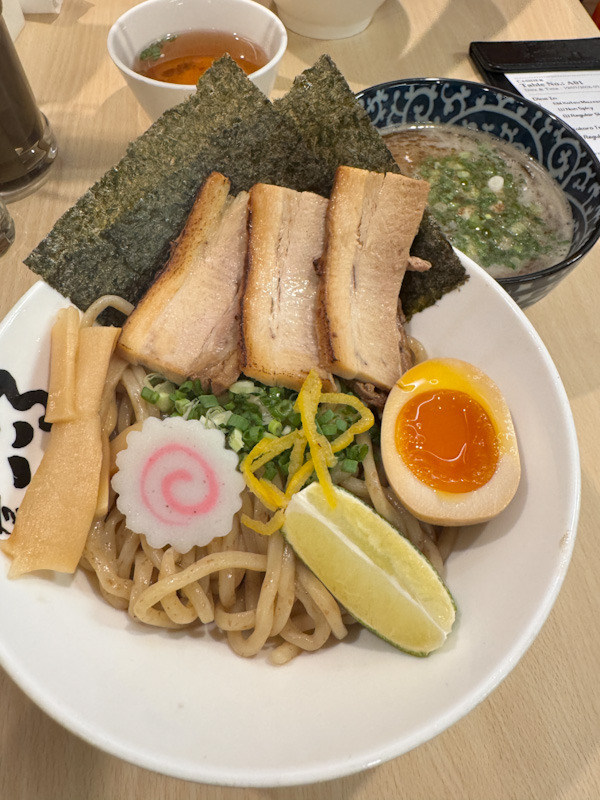
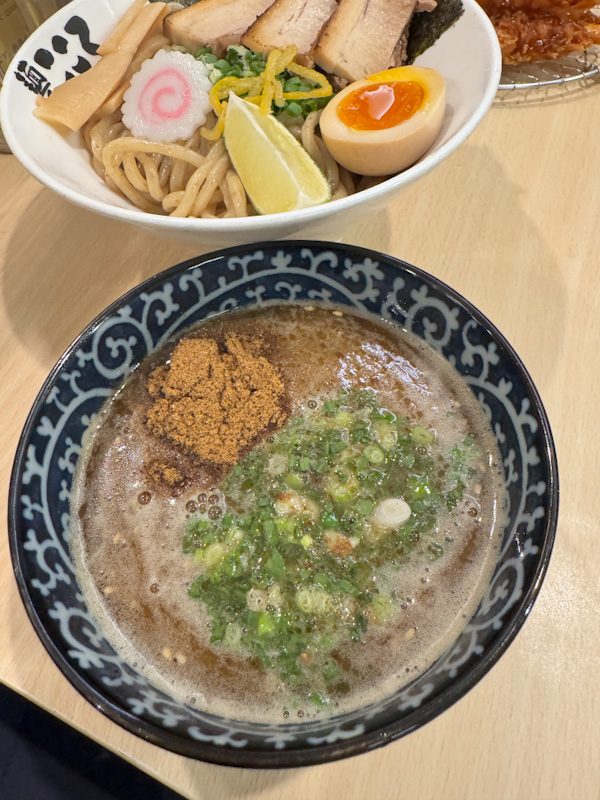
Kokoro Tsukemen (Non-Spicy): 55/100
Noodle: 30/35
The noodles arrive thick, oblong, and wavy, immediately signaling a structural weight that demands attention. The texture is dialed in with a firm, springy resilience that transitions into a distinct mochi mochi elasticity upon chew. On the palate, there is a clear, sweet wheat taste complemented by visible brown specks of whole grain milled into the flour. Alkaline presence is tightly controlled, avoiding any harsh or acrid kansui notes despite the intense springiness. The sheer density of the noodle hits a satisfying high point, though its potential is ultimately throttled by the physics of the bowl, because the soup is overly thin, the grain character of the noodle fails to truly project.
Soup: 10/35
The head opens with a bonito-forward profile, though the marine aroma lacks the punch required for a traditional tsukemen dip. As it moves into the body, the fluid introduces a sharp, salty baseline balanced by a distinct, sourish tang. The tail leaves a lingering sweetness that makes the combination highly appetizing in theory. However, the execution falls apart completely on viscosity. The broth is entirely too thin, lacking the emulsion and body needed to coat the thick, wavy contours of the noodle. Instead of clinging to the strands to create a cohesive bite, the liquid simply sheets off, leaving the noodles isolated and the overall flavor delivery fractured.
Meat/Protein: 10/20
The hero protein consists of a few medium-thick slices of pork belly, finished with an aburi torch on one side. The cut is heavily dominated by lean meat, which results in a firm, borderline dry texture that lacks the luscious breakdown expected of well-rendered pork fat. While it offers a straightforward, savory bite with honest meatiness, the execution feels rushed. The char marks are largely cosmetic, as the signature smoky aburi flavor fails to penetrate deep enough to leave a lasting impression on the palate.
Other Toppings: 5/10
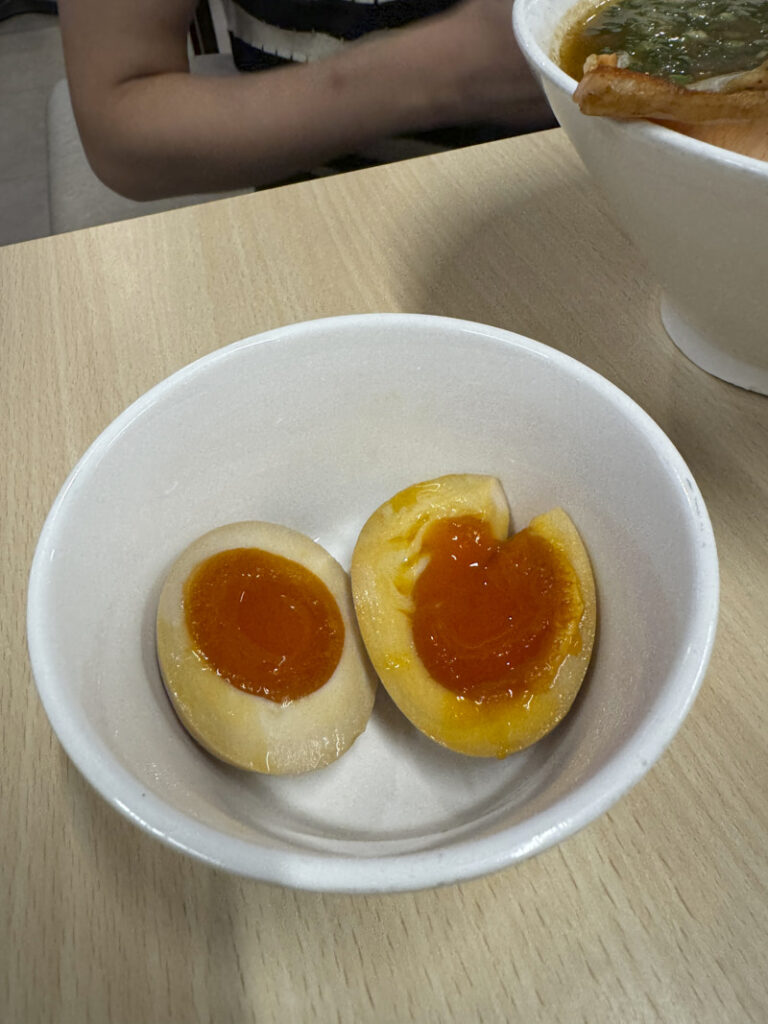
- The marinated egg is technically sound, featuring a sweet, savory equilibrium where the mirin is kept in check to let the yolk profile show through.
- Bamboo shoots are a highlight, delivering a juicy, crunchy texture entirely free of off-putting, funkier odors, carrying a clean savory umami.
- Fresh negi provides a clean, sharp crunch that introduces a subtle piquant lift to balance the heavier components.
- The seaweed slices are the weak link here, lacking structural crispness and failing to deliver the deep marine umami punch needed to elevate the dish.
Summary
This tsukemen boasts a highly capable, texturally excellent whole-grain noodle, but the bowl is fundamentally undermined by a soup that lacks the basic viscosity required to cling to it. While the flavors themselves are appetizing, the structural mismatch between a dense noodle and a watery broth relegates this to a disjointed dining experience.
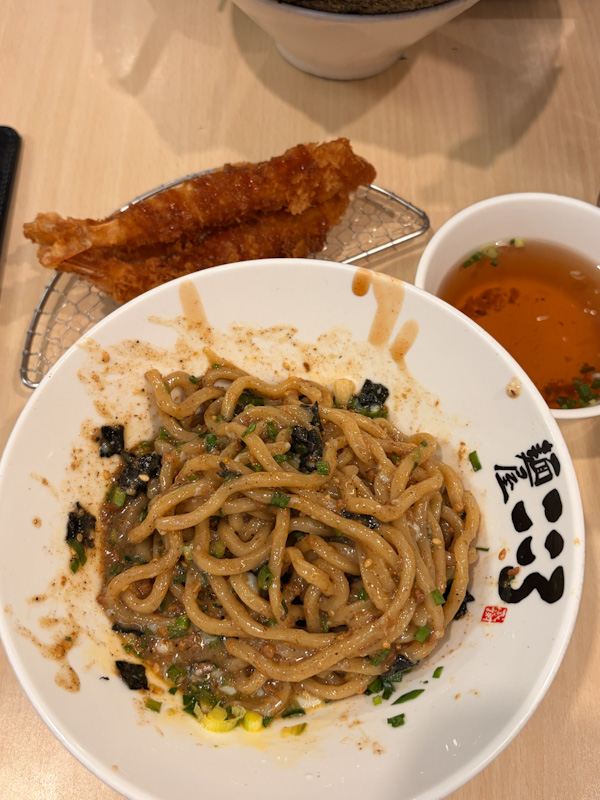
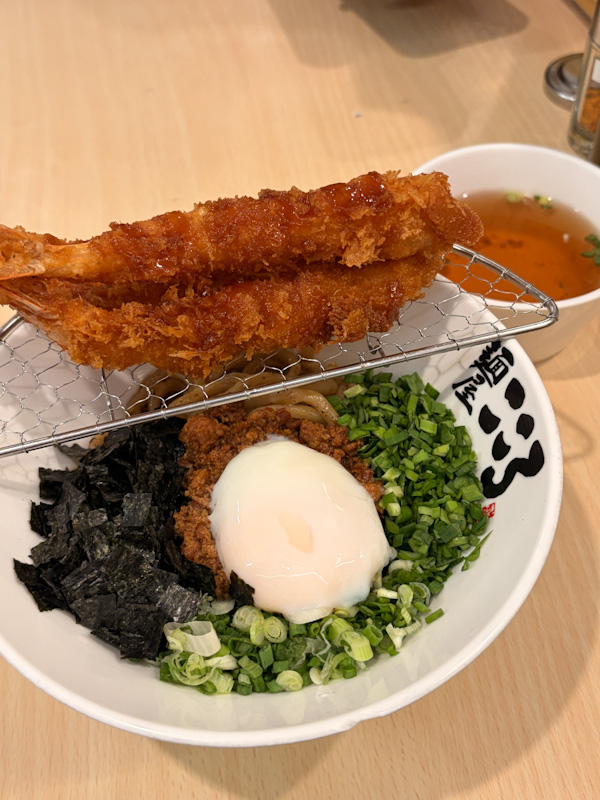
Ebi Katsu Mazesoba: 75/100
Noodle: 35/35
The noodles are thick, wavy, and distinctly udon-like in geometry, matching the substantial weight required for an excellent dry style. The execution here is flawless, offering a dense, hearty structure that delivers a satisfying mochi mochi elasticity and an addictive springy tension on the chew. A clean, subtle earthy wheat aroma emerges through the bite, entirely free of any acrid alkaline presence. Despite their thickness, the strands carry an ideal density that provides an excellent foundation for the bowl.
Sauce: 35/35
The sauce presents a thick, gravy-like emulsion that clings aggressively to the wide surface area of the noodles. The flavor progression is a masterclass in balance, opening with a bold head of savory bonito and a sharp, tangy kick of vinegar that awakens the palate without overwhelming it. The mid-palate body deepens into a complex matrix of nutty sesame and the electric buzz of peppercorn, managing sweet, sour, salty, and fiery notes simultaneously. The tail leaves a long, warm, lingering spiciness that keeps the flavor profile dynamic from the first mix to the final bite.
Meat/Protein: 10/20
The foundational protein relies on a heavily marinated minced meat base. Eaten in isolation, the mincemeat tilts significantly toward the salty side, but it functions effectively as an assertive flavor anchor once tossed through the heavy sauce and dense noodles. The primary divergence from convention is the addition of an ebi katsu. Unfortunately, the execution follows a generic template, featuring a deep-fried prawn cutlet drizzled with a standard, sweet plum sauce. While the katsu is fine on its own, its fruity sweetness and fried profile clash directly with the complex, spicy umami of the mazesoba glaze. This pairing operates strictly on visual impact rather than culinary innovation, forcing a technical downgrade for the overall protein component.
Other Toppings: 5/10
- The seaweed slices serve a largely aesthetic purpose, lacking the structural crispness and deep marine umami punch needed to stand out against the powerhouse sauce and seasoned meat.
- Fresh negi introduces a green aesthetic to the bowl, but the cut lacks the sharp crunch and piquant lift necessary to cut through the heavy elements.
- A single, modest scoop of rice is provided at the finish, serving as a functional tool to mop up the residual gravy.
- A small side bowl of light mushroom and soy broth accompanies the set, offering a clean, gentle palate reset between heavy bites of the main noodle.
Summary
This Ebi Katsu Mazesoba features an exceptional foundation of texturally perfect noodles and a masterfully complex, high-viscosity sauce. However, the dish is structurally compromised by a generic prawn cutlet pairing that prioritizes visual presentation over flavor harmony, holding back an otherwise stellar bowl.

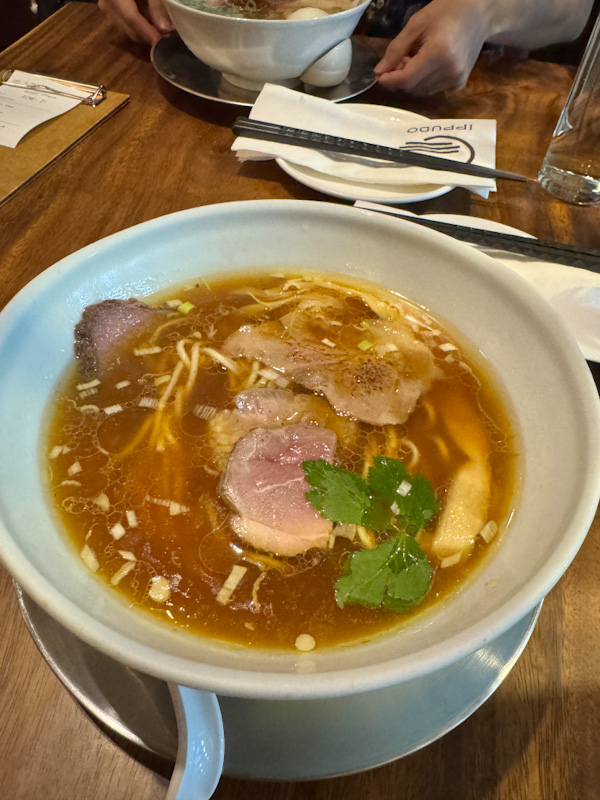
Yuzu Kamo Ramen: 65/100
Noodle: 25/35
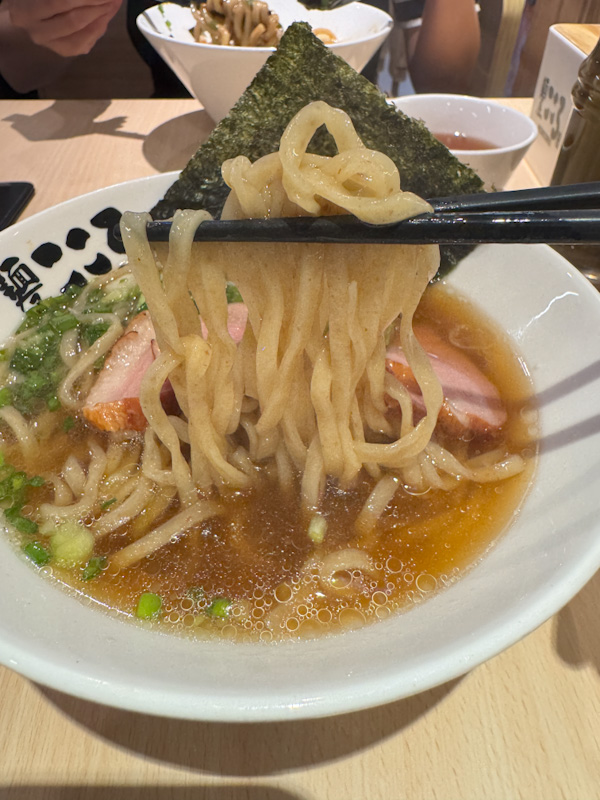
The noodles are medium-thick and flat, punctuated by small brown specks within the wheat that visually recall the rustic style found at Enishi. Structurally, the execution falls slightly short as the texture leans overly soft, lacking the firm, assertive tensile bite required to anchor the dish. While the baseline wheat taste offers a pleasant earthiness and the strands maintain a modest springy resilience without collapsing into mush during the meal, the geometry feels mismatched. The physical thickness fails to complement the broth, resulting in a less than satisfying mouthfeel and a weak slurp factor.
Soup: 25/35
In its baseline state, the broth is light, presenting a subtle salinity balanced by a faint trace of sweetness. The integration of yuzu kosho completely transforms the dynamic. The head opens with a bright, clean citrus aroma and a wave of sweet umami. The mid-palate body settles into a functional, mildly savory profile, while the tail delivers a sharp, lingering burn from the fermented green chili. Though the overall emulsion lacks deep complexity, the stark contrast between the crisp, acidic opening and the spicy finish creates enough engagement to sustain interest until the final drop.
Meat: 15/20
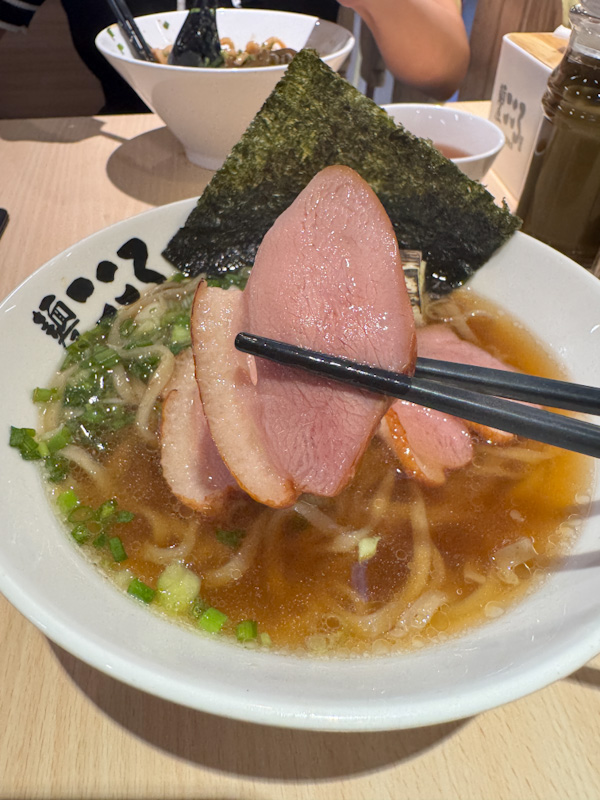
The hero protein features smoked duck, a logical selection for a kamo-centric bowl. The cut includes well-rendered fatty layers that contribute to a juicy, resilient mouthfeel. As the meat is masticated, it releases a progressive profile of savory notes tempered by a distinct, fruity sweetness reminiscent of honey-baked ham. It represents a solid, competent execution that integrates cleanly into the bowl, even if it does not push any technical boundaries.The hero protein features smoked duck, a logical selection for a kamo-centric bowl. The cut includes well-rendered fatty layers that contribute to a juicy, resilient mouthfeel. As the meat is masticated, it releases a progressive profile of savory notes tempered by a distinct, fruity sweetness reminiscent of honey-baked ham. It represents a solid, competent execution that integrates cleanly into the bowl, even if it does not push any technical boundaries.
Other Toppings: 0/10
- The seaweed delivers a standard layer of umami depth and holds its structural integrity well when submerged.
- Fresh spring onions introduce a mild, clean aromatic lift to the surface of the broth.
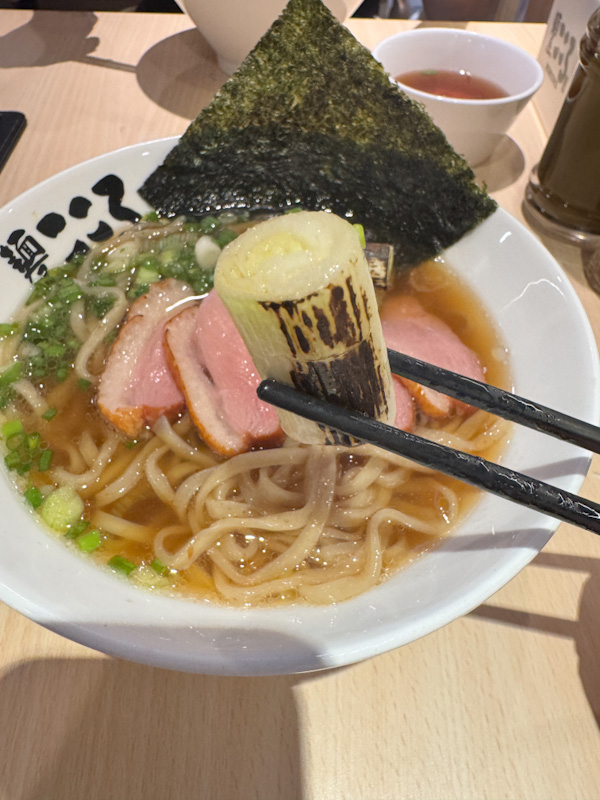
- The large pieces of negi fail dramatically in execution. Unlike the tender, sweet, and juicy iterations found at specialty kamo shops in Japan, these pieces are tough, highly fibrous, and bitterly acrid. This harsh, raw pungency directly clashes with the thermal burn of the yuzu kosho, completely disrupting the balance and degrading the overall flavor profile of the bowl.
Summary
This Yuzu Kamo Ramen presents a decent foundation with its transformed citrus broth and capable smoked duck, but it is severely hindered by an uninspiring noodle pairing. Ultimately, the outright structural failure of the acrid, fibrous negi disrupts what could have otherwise been a passable, refreshing bowl.


Original Mazesoba: 90/100
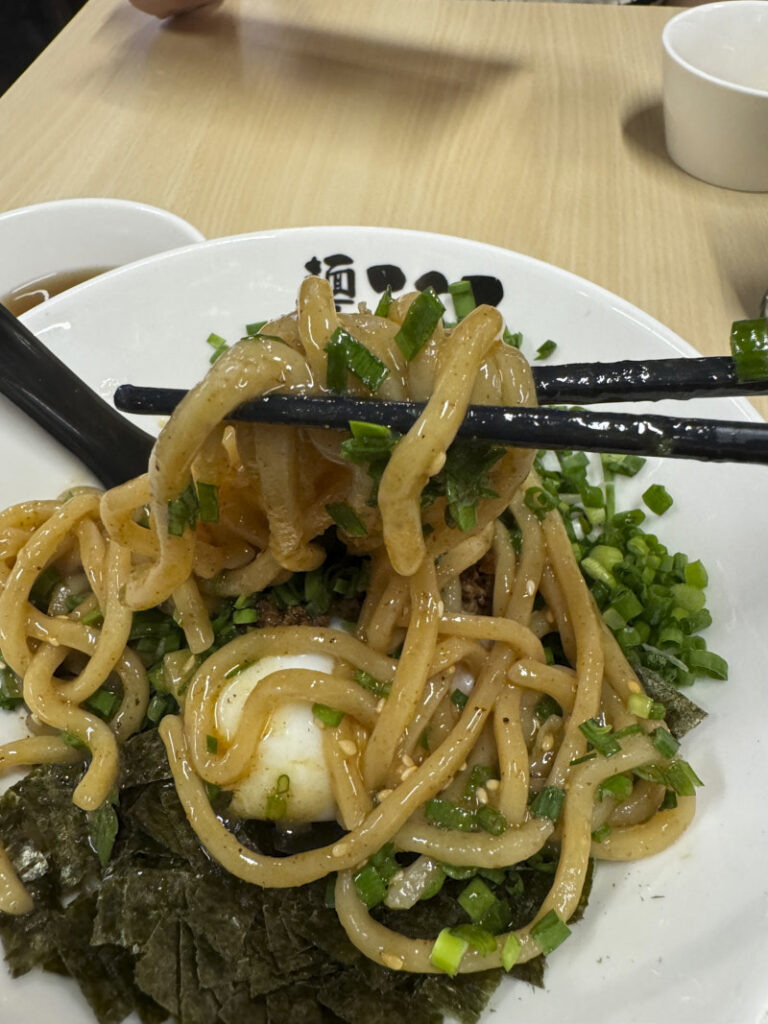
Noodle: 35/35
The kitchen deploys thick, substantial noodles that carry a distinct, heavy geometry reminiscent of traditional udon strands. Texturally, they possess a highly satisfying, bouncy elasticity that yields a dense, chewy, and robust mouthfeel on the palate. The structural integrity is excellent, offering a hearty resistance throughout the meal, while the baseline wheat profile comes through cleanly, marked by a subtle, rustic earthy aroma that adds honest depth to the grain.
Sauce: 35/35
The sauce presents a thick, gravy-like viscosity engineered for high clinging ability. The head opens with an immediate, high-impact aromatic punch of dried bonito, swiftly met by a sharp, tangy streak of vinegar that cuts the initial weight without turning overly sour. Across the mid-palate, the body expands into a complex profile where sweet, savory, and salty notes operate in unison, deepened by a calculated sesame richness and a subtle, electric prickle of peppercorn. The tail finishes with exceptional length, leaving a persistent, warming piquancy that creeps up the throat and invites immediate subsequent bites.
Meat: 15/20
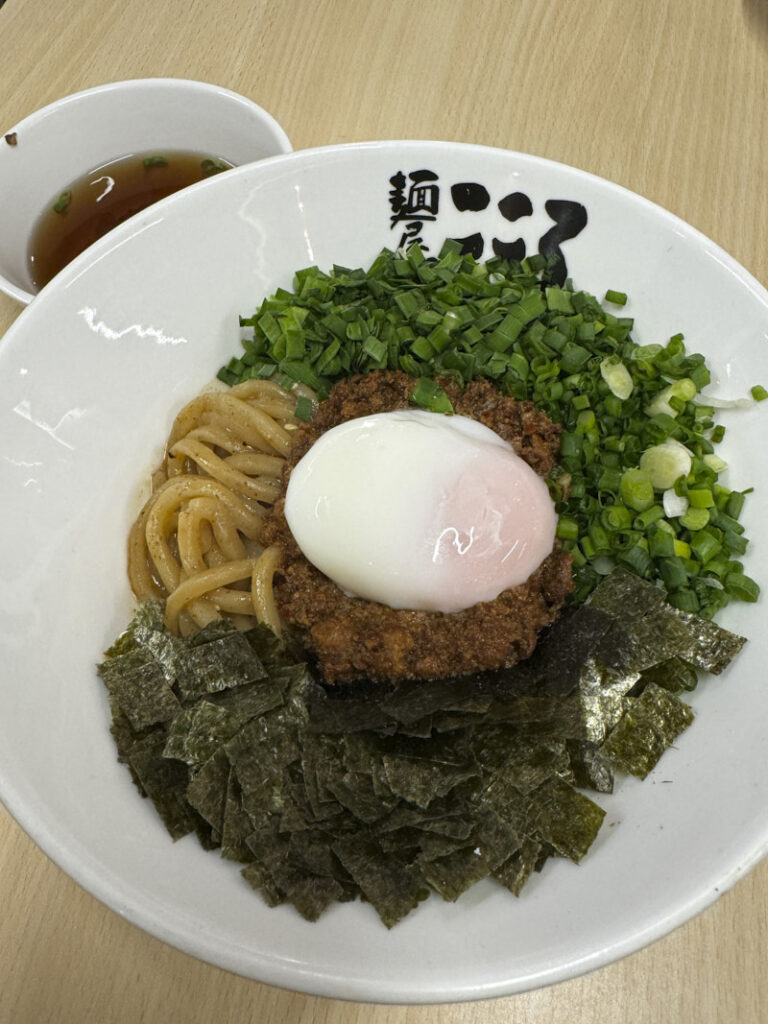
The primary protein consists of a generous portion of seasoned minced meat spread throughout the base. The blend is marinated aggressively, leaning heavily into a bold, forward salinity when tasted in isolation. However, this high concentration is a deliberate structural choice; once fully integrated into the bowl, the intense savoriness balances against the thick sauce and dense noodles, anchoring the dish with necessary weight.
Other Toppings: 5/10
The secondary garnishes lean more toward visual presentation than high flavor impact, requiring a few adjustments to match the intensity of the base.
- The seaweed sheets add a brief flash of color but lack the structural presence or deep oceanic salinity needed to stand out against the powerhouse combination of meat and sauce.
- Sliced negi introduces a touch of green, though it requires a sharper, crisper crunch and more assertive piquancy to cut through the heavy oils.
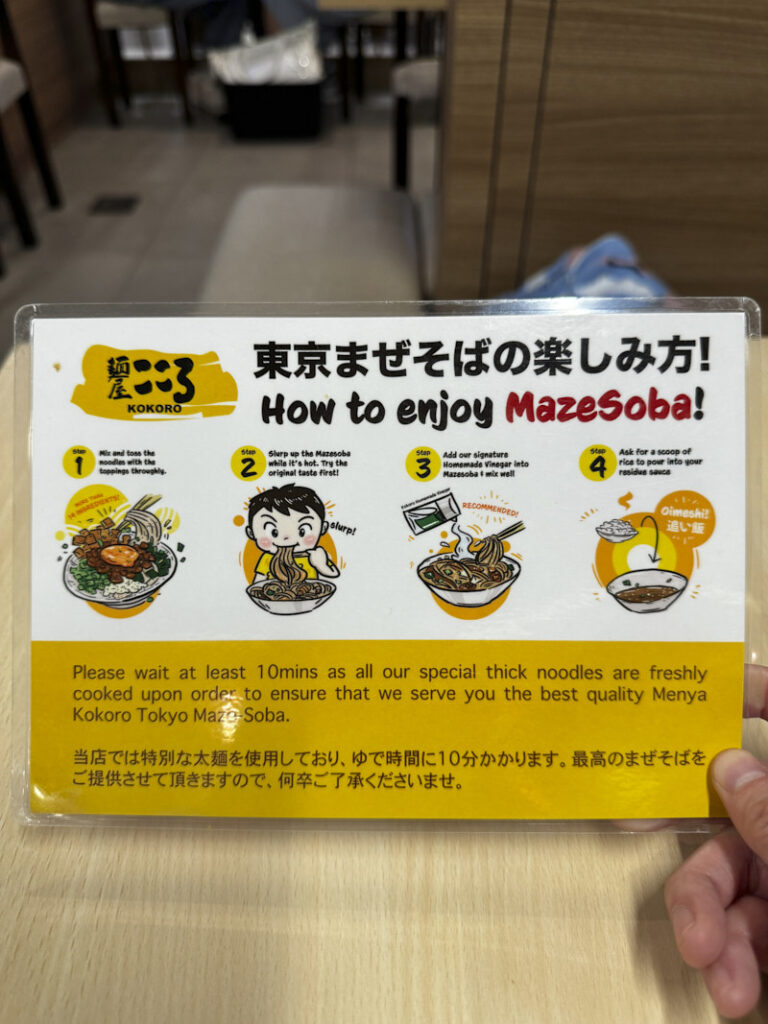
- The complimentary single scoop of white rice functions perfectly at the finish, mopping up the remaining emulsified gravy for a highly satisfying conclusion.
- The accompanying side broth provides a light, clean break for the palate, utilizing a clear soy sauce base and earthiness from mushrooms to reset the taste receptors.
Summary
This Original Mazesoba is a texturally dense masterclass in dry-style execution, driven by exceptionally chewy, udon-thick strands and a complex, multi-layered savory sauce. Backed by a high-impact minced meat foundation and a clever finishing rice tradition, it delivers a deeply satisfying flavor progression from start to finish.
Salmon Miso Ramen: 50/100
Noodles: 20/35
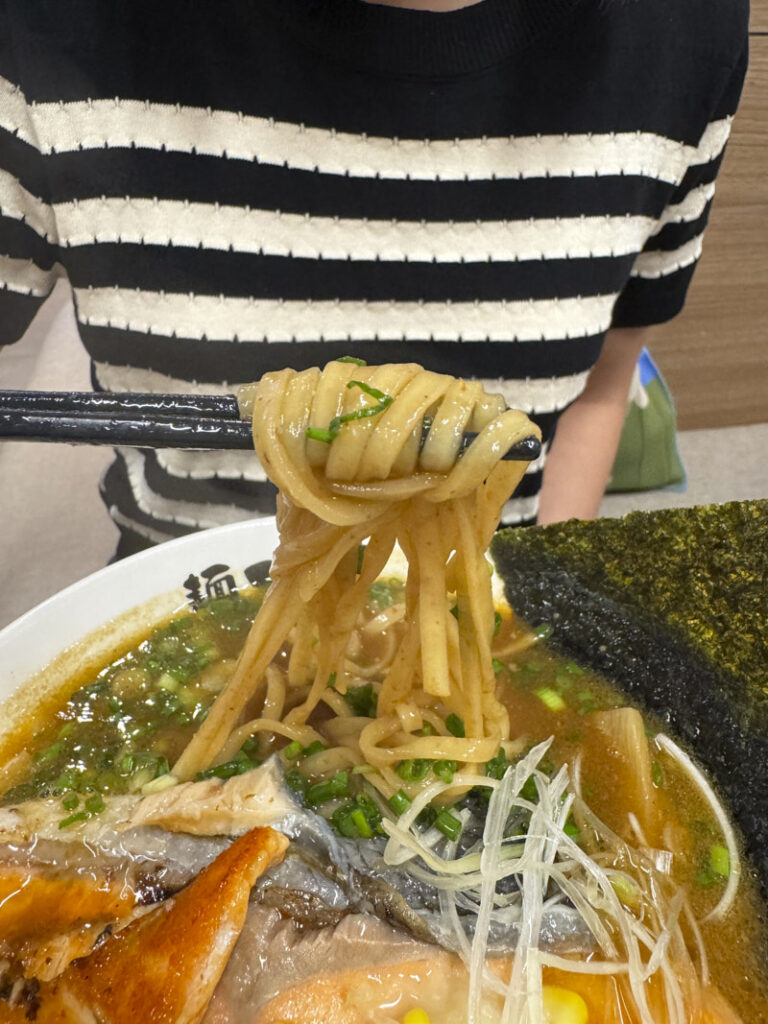
The kitchen utilizes noodles that lean toward the thin and flat side of the spectrum. Texturally, the strands lack a snappy, elastic tensile bite, registering with a mushier consistency than preferred during the chew. The baseline flavor profile manages to remain decent, delivering a subtle wheat sweetness that provides a functional canvas, though the lack of structural integrity prevents the noodle from holding its own against the weight of the liquid.
Soup: 25/35
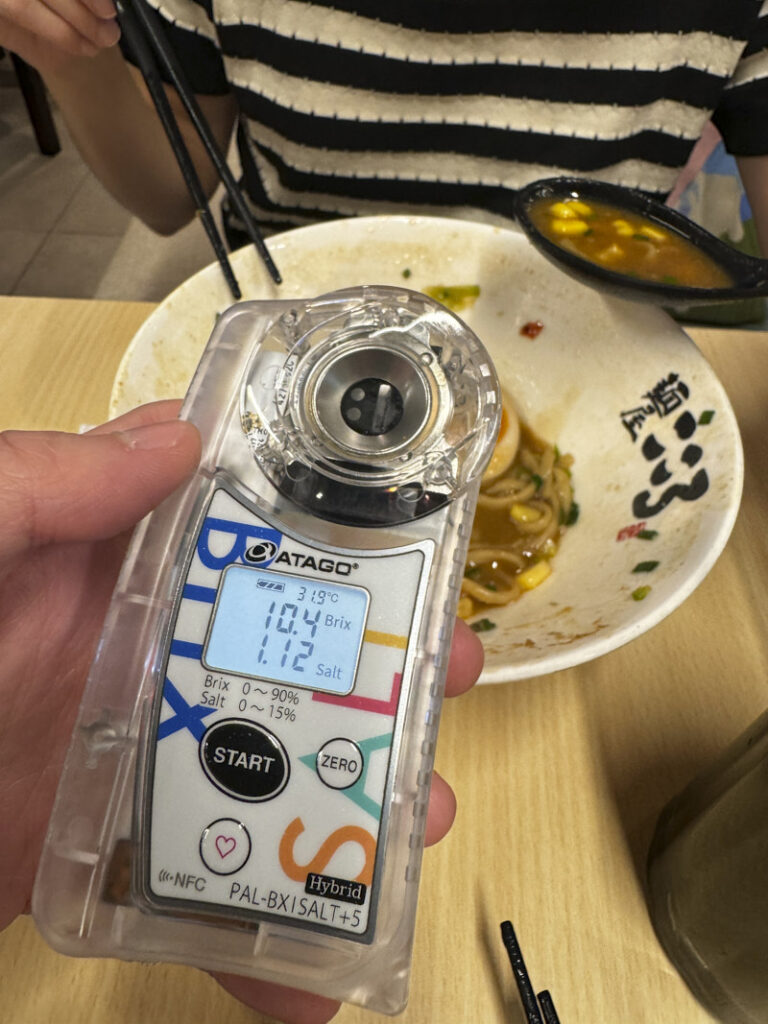
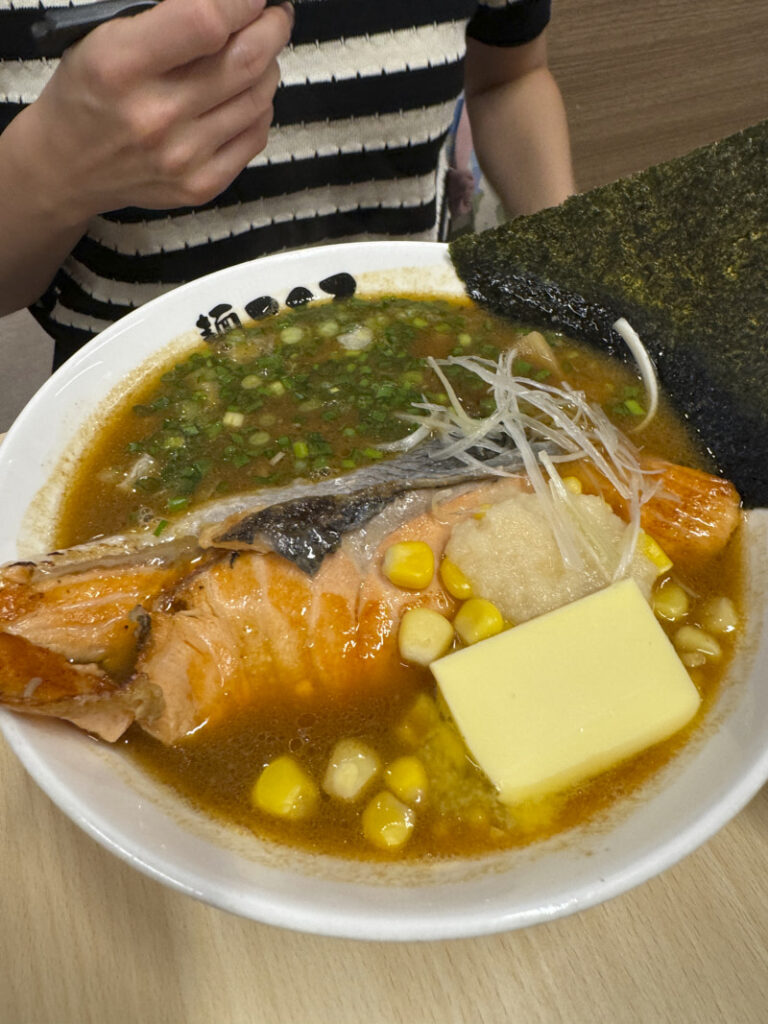
The broth presents a notably rich composition, registering a dense 10 brix on the refractometer. Rather than deploying a standard, straightforward miso profile, the blend introduces deep, earthy notes layered within its baseline sweetness. The body develops a dark visual profile compared to creamier miso variations, driven by an integrated mix of smoky bonito and savory shoyu flavors. While the head opens with promise, the overall interplay struggles to achieve a uniform balance, leaving the earthiness slightly disconnected from the underlying salinity.
Meat: 5/20
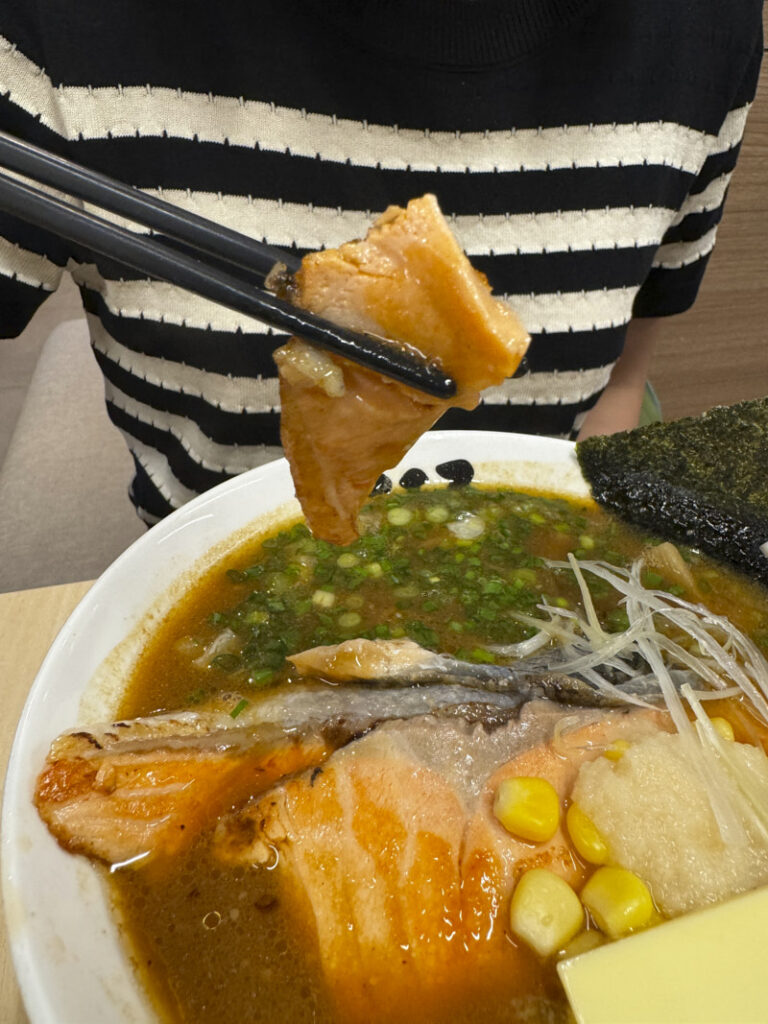
The hero protein consists of salmon slices that have undergone an aburi torching process. The execution falls short on technical execution, leaving the fish running dry and texturally fatigued. The seasoning penetration fails to emerge on the palate, resulting in a flat flavor profile where the natural clean oils of the salmon are lost, preventing the protein from anchoring the bowl with any real culinary authority.
Other Toppings: 0/10
The secondary garnishes offer a lackluster performance, failing to provide the clean contrast needed to lift the earthy miso base.
- The bamboo shoots cross into an overly fibrous territory, creating an unpleasant stringiness that lingers in the mouth, though their standalone flavor remains passably sweet.
- The sweet corn arrives average in quality, lacking the vibrant, refreshing sweetness required to break up the savory density of the soup.
Summary
This bowl delivers an intriguing, refractometer-verified 10 brix earthy miso and bonito broth that ultimately loses its footing. Compromised by a mushy flat noodle architecture, a dry aburi salmon execution, and flawed texturing across the garnishes, the final assembly struggles to achieve structural cohesion.


Iekei Ramen: 70/100
Noodle: 20/35
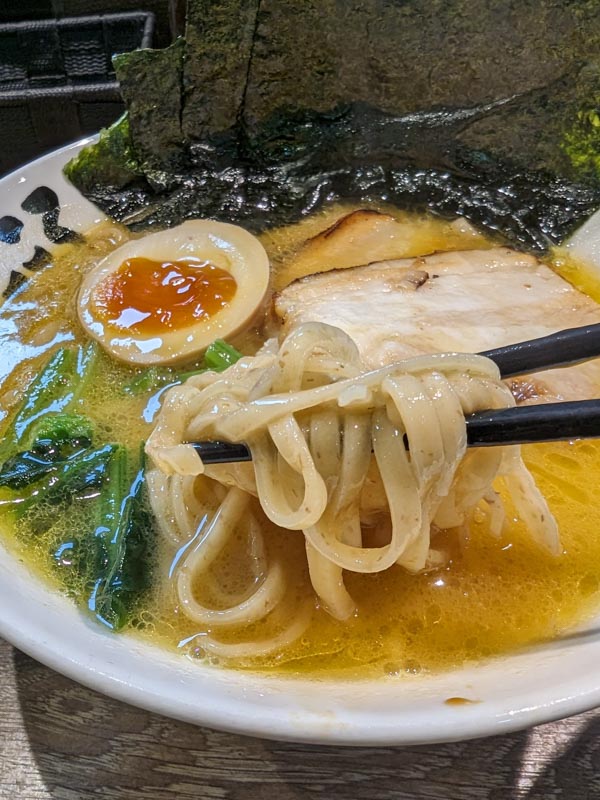
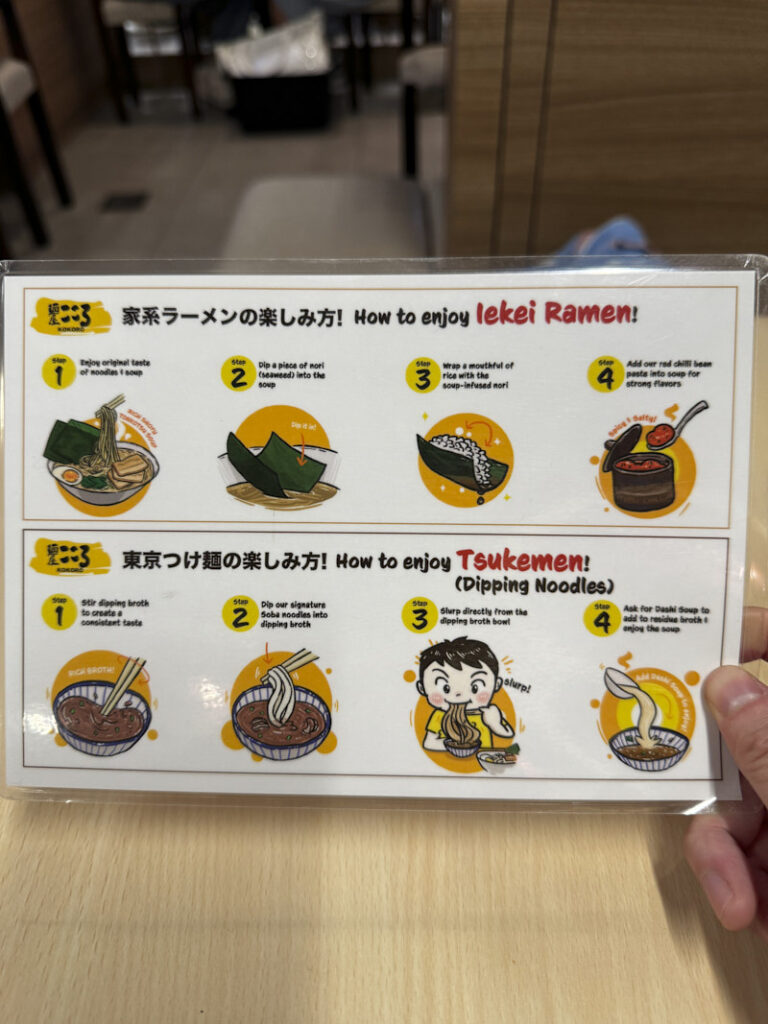
The kitchen utilizes a broad, flat, and thin noodle architecture that deviates from the thick, round strands traditionally found in classic Iekei styling. While they maintain a firm texture upon the initial chew, they lack a snappy, elastic tensile bite and tend to soften rapidly when submerged in the hot liquid over an extended period. The baseline wheat flavor is subtle and completely free of any harsh, acrid kansui taste, but the flat geometry acts as an ineffective vehicle for the soup, causing the noodles to turn somewhat mushy and become overwhelmed by the heavy broth. Intriguingly, the shop leans into the “homestyle” definition of Iekei by pairing this unique noodle with a complimentary side of white rice, which successfully transforms the remaining soup into a deeply satisfying, carb-heavy finish when mixed in at the end.
Soup: 25/35
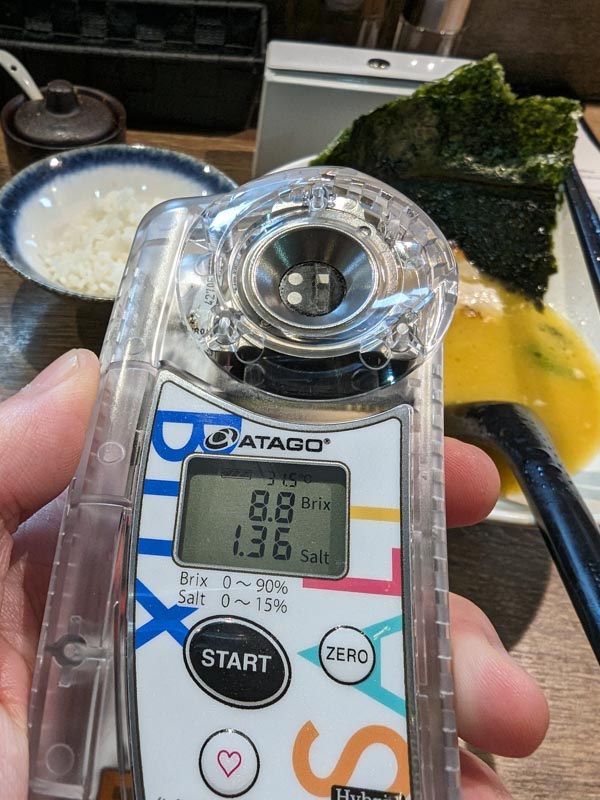
The head opens with a thick, rich consistency defined by a highly visible, glistening layer of aroma oil suspended across the surface. The body develops a robust sweet and savory essence, driven by a forward shoyu profile that anchors the mid-palate with distinct salinity. The experience is accompanied by a small side pot of chili paste, allowing for precise customization. A measured addition coaxes out a mild, pleasant warmth at the tail, while a heavier hand delivers a sharp, piquant burn directly to the back of the throat. Caution is required during integration, as over-indexing on the chili easily mutes the underlying dimensions of the pork bone and soy base.
Meat: 20/20
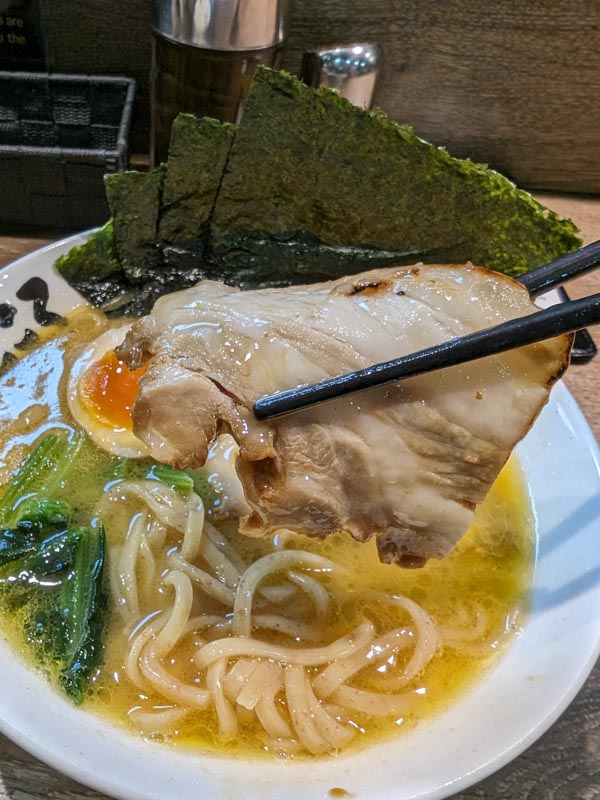
The primary protein is an exceptionally executed chashu crafted from fatty pork belly cuts featuring beautifully rendered, lightly charred edges. The lean portions are packed with flavor, deeply penetrating the meat with a balanced sweet and savory marinade that intensifies with every bite while remaining remarkably juicy. The fatty layers are equally disciplined, avoiding any tough, unrendered chewiness in favor of a pleasant, jelly-like texture that delivers a clean, luxurious break on the palate.
Other Toppings: 5/10
The secondary garnishes are kept minimal, offering a mixed performance in balancing the bowl’s heavy oil profile.
- The marinated egg is technically sound, featuring a rich, yielding center and a clean cure.
- The seaweed sheets retain their structural integrity well, adding an earthy, oceanic snap when dipped into the broth.
- The blanched spinach is a significant disappointment, arriving overcooked, mushy, and texturally flat, completely lacking the vibrant bitterness needed to cut through the pork fat.
Summary
This bowl offers a unique, mee-pok-adjacent interpretation of Iekei ramen anchored by a flawless pork belly chashu and a rich, customizable shoyu broth. While the flat noodle architecture and lackluster spinach hold it back from absolute balance, the traditional addition of finishing rice ensures a heavy, satisfying conclusion.


‘Super’ Ebi Ramen: 80/100
Noodle: 20/35
The kitchen utilizes a broad, flat, and thin noodle architecture for this bowl. While the strands maintain a baseline structural firmness during the initial chew, they lack the snappy, elastic tensile bite required to anchor a heavy soup profile. The pairing reveals a functional mismatch, as the flat, slightly soft geometry of the noodles fails to properly grab and complement the intense viscosity of the broth, causing the wheat presence to become somewhat lost underneath the liquid weight.
Soup: 30/35
The base features a pure prawn broth blended into a rich tonkotsu emulsion, spiked with a house-made chili paste. The head opens aggressively with a fiery, sharp piquancy that delivers an immediate kick to the back of the throat. As the body develops on the mid-palate, the initial thinness gives way to an intensifying depth, unfurling the natural sweetness of the prawn shell essence backed by the heavy, savory gravitas of the pork bone marrow. The kitchen handles the crustacean profile with high technical skill, completely eliminating the acrid, muddy odor often found in prawn head reductions to leave a remarkably clean, high-impact finish.
Meat: 20/20
The bowl is anchored by a generous combination of pork belly chashu and whole prawns. The chashu slices feature beautifully rendered, lightly charred edges that impart a clean smokiness to the lean sections, which remain juicy and release deep savory seasoning with every bite. The fatty layers are executed with precision, yielding a pleasant, jelly-like texture that provides a satisfying, clean break rather than unrendered chewiness. Accompanying the pork are neatly peeled prawns that boast a pristine visual presentation, delivering an accurate, standard snap and clean salinity that fills its role without flaw.
Other Toppings: 10/10
The dry garnishes provide crucial aromatic and textural contrast to break up the rich sea of prawn oil.
- Crisp sheets of seaweed introduce an earthy, oceanic depth when submerged.
- Sliced negi adds a brief flash of piquant green sharpness to cut through the pork fat.
- Fresh bean sprouts offer a clean, watery crunch that resets the palate between sips.
- A scattered handful of fried shallots delivers an excellent, sweet fragrance that deepens the aromatic opening of the broth.
Summary
This bowl delivers a high-impact, beautifully clean prawn and pork bone emulsion that builds impressive depth as you drink it. Backed by an exceptional dual-protein execution, it stands as a highly satisfying option despite a flat noodle choice that struggles to match the caliber of the soup.
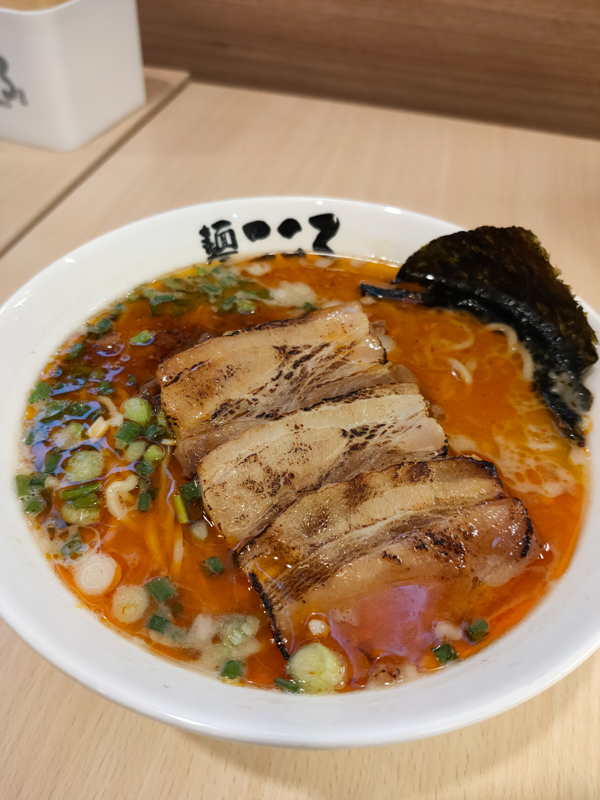
Kokoro Tan Tan Men: 85/100
Noodle: 20/35
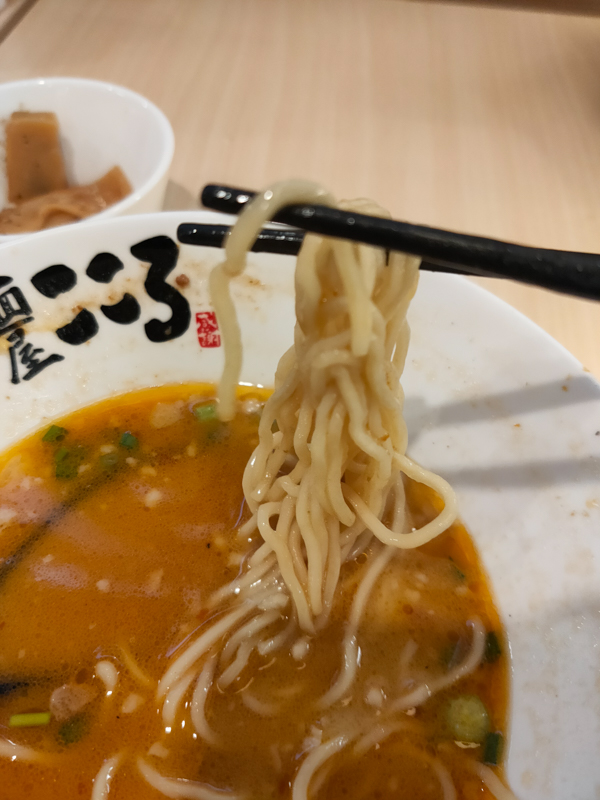
The strands display a subtle, gentle wave and sit precisely between a thin Hakata style and a standard Shoyu variant in terms of gauge. While the baseline wheat profile is relatively neutral rather than extraordinary, the thickness is functionally calibrated to match the weight of the soup. The noodle acts as a dependable vehicle, absorbing the liquid effectively and maintaining enough structural presence to ensure the texturally dense components do not overwhelm the palate.
Soup: 35/35
The head opens with an immediate aromatic announcement of heat, signaled by the chili indicator on the menu, sending a gradual warmth directly down the throat upon the first sip. Rather than deploying a flat, aggressive capsaicin flush that numbs the taste receptors, the body builds an intricate, multi-dimensional profile that evolves across the mid-palate. A deep, nutty undertone grounds the liquid, accompanied by a calibrated, electric numbing sensation that points directly to Sichuan peppercorn technique. The tail finishes with exceptional length and complexity, layering balanced piquancy against a robust savory foundation that invites immediate consecutive sips.
Meat: 20/20
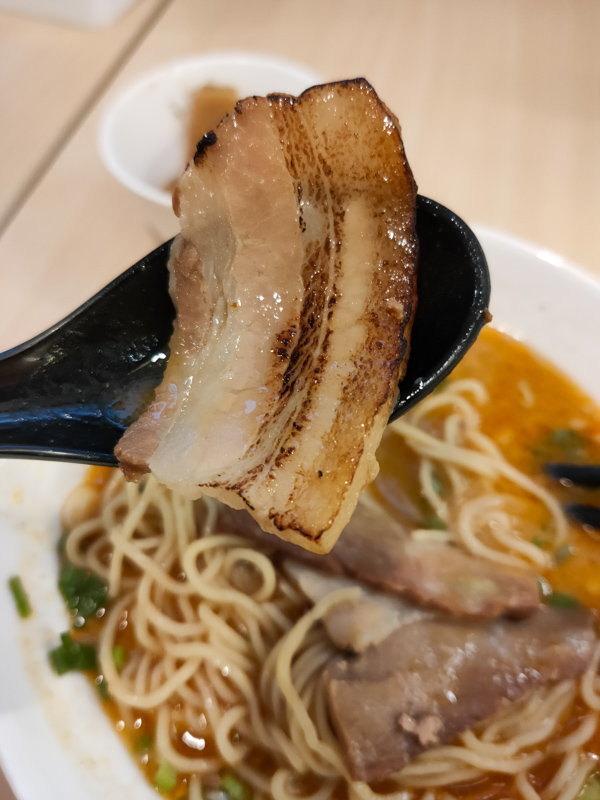
The primary protein is an unlisted, expertly executed cut of pork belly. While belly cuts frequently fail due to tough, under-rendered fat or a stringy, overly chewy texture, this preparation demonstrates flawless heat control. The meat registers as remarkably tender while retaining a deliberate, satisfying chew, allowing the embedded fat to dissolve cleanly. The seasoning penetration is deep, enhancing the natural sweetness of the pork and anchoring the entire bowl with substantial savory authority.
Other Toppings: 10/10
The secondary garnishes are arranged with precision, providing crucial structural contrast to the fiery base.
- The hanjuku egg is an absolute standout, featuring a flawless custard-like, runny yolk and a highly balanced marinade that leaves no harsh residual traces of mirin or sake.
- Crisp sheets of nori provide an earthy, oceanic snap, while fresh negi introduces a sharp green flash to cut through the fat.
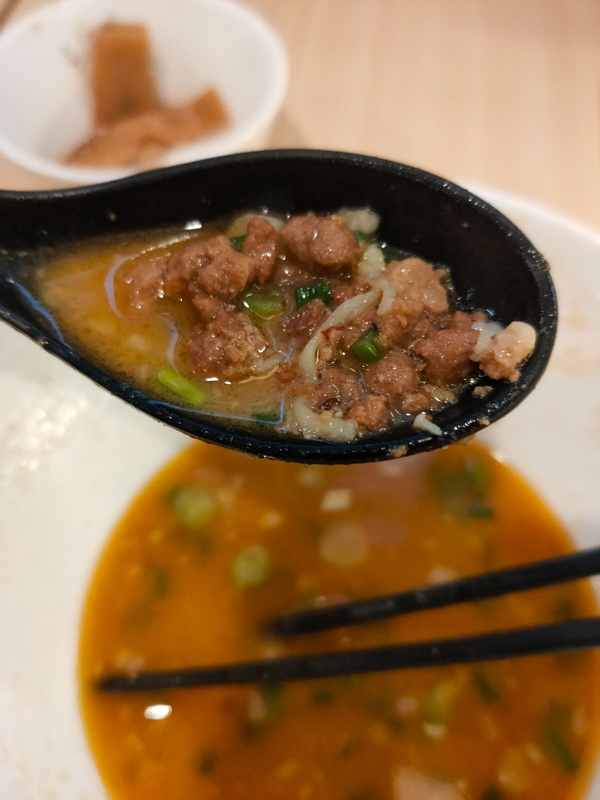
- The defining element is the generous layer of seasoned minced meat resting at the bottom of the bowl, which charges every spoonful with intense savoriness and a concentrated spicy kick.
- Large, tender pork clusters remain suspended in the final layers of the liquid, providing a texturally rewarding finish that makes polishing off the entire bowl irresistible.
Summary
This iteration of the Tan Tan Men stands as a masterclass in layered piquancy, successfully balancing a complex Sichuan-influenced numbing heat against a rich, nutty foundation. Anchored by technically flawless pork belly and a deeply satisfying minced meat finish, it delivers an exceptional, crave-worthy depth from the first sip to the last drop.

Hojun Tonkotsu Ramen: 75/100
Noodle: 20/35
The noodles feature a subtle, gentle wave and land precisely between a thin Hakata style and a standard Shoyu variant regarding thickness. While the baseline wheat taste is relatively neutral rather than extraordinary, the physical thickness is well-matched to the heavy profile of the broth, acting as a functional conduit that carries the flavors effectively without becoming lost in the bowl.
Soup: 25/35
The head opens with a pronounced garlic aroma accompanied by sharp, noticeable fragments of black pepper. As it develops into the body, the broth leans toward a thinner viscosity that lacks a rich, uniform emulsion across the mid-palate. However, the black variant introduces a distinct garlic sauce that builds a unique profile, separating it from standard black tonkotsu interpretations through the combination of burnt garlic bitterness and piquant black pepper heat. The tail finishes with a lingering warmth, though a higher density would improve the overall depth.
Meat: 20/20
The hero protein is a confidently executed slice of pork belly. While belly cuts risk turning tough or overly chewy if the fat rendering is neglected, this iteration is prepared with excellent technical precision. The texture strikes a deliberate balance, remaining slightly chewy yet tender enough to release its savory-sweet marinade easily with every bite, anchoring the bowl with necessary structural weight.
Other Toppings: 10/10
The functional garnishes perform reliably to contrast the weight of the pork and garlic elements.
- The menma stands out significantly; free from the off-putting, pungent odor or fibrous strings that often plague bamboo shoots, these cuts are satisfyingly juicy to chew on and yield a mild, lingering sweetness.
- The hanjuku egg is perfectly prepared, featuring a gooey, runny center and a well-balanced marination that delivers subtle salinity without overpowering the palate.
- Sliced negi adds a brief flash of piquant green brightness, while the black fungus provides a clean, springy crunch.
Summary
The Menya Kokoro Tan Tan Men delivers a unique garlic and black pepper profile backed by an excellent pork belly execution. While the broth itself would benefit from a thicker, more consistent mid-palate weight, the overall structural assembly remains a satisfying choice for those seeking an alternative to traditional tonkotsu.
DISCLAIMER
One man’s meat is another man’s poison.
Find out more about our palettes and how we evaluate our ramen here. 😉
Pingback: Kanada-ya – Ah Boy Like Ramen
Pingback: Review of Kanada-ya
Pingback: Review Of Nantsuttei Ramen
Pingback: Top 17 Best Ramen in Singapore 2023: A Comprehensive Review of Over 100 Bowls